


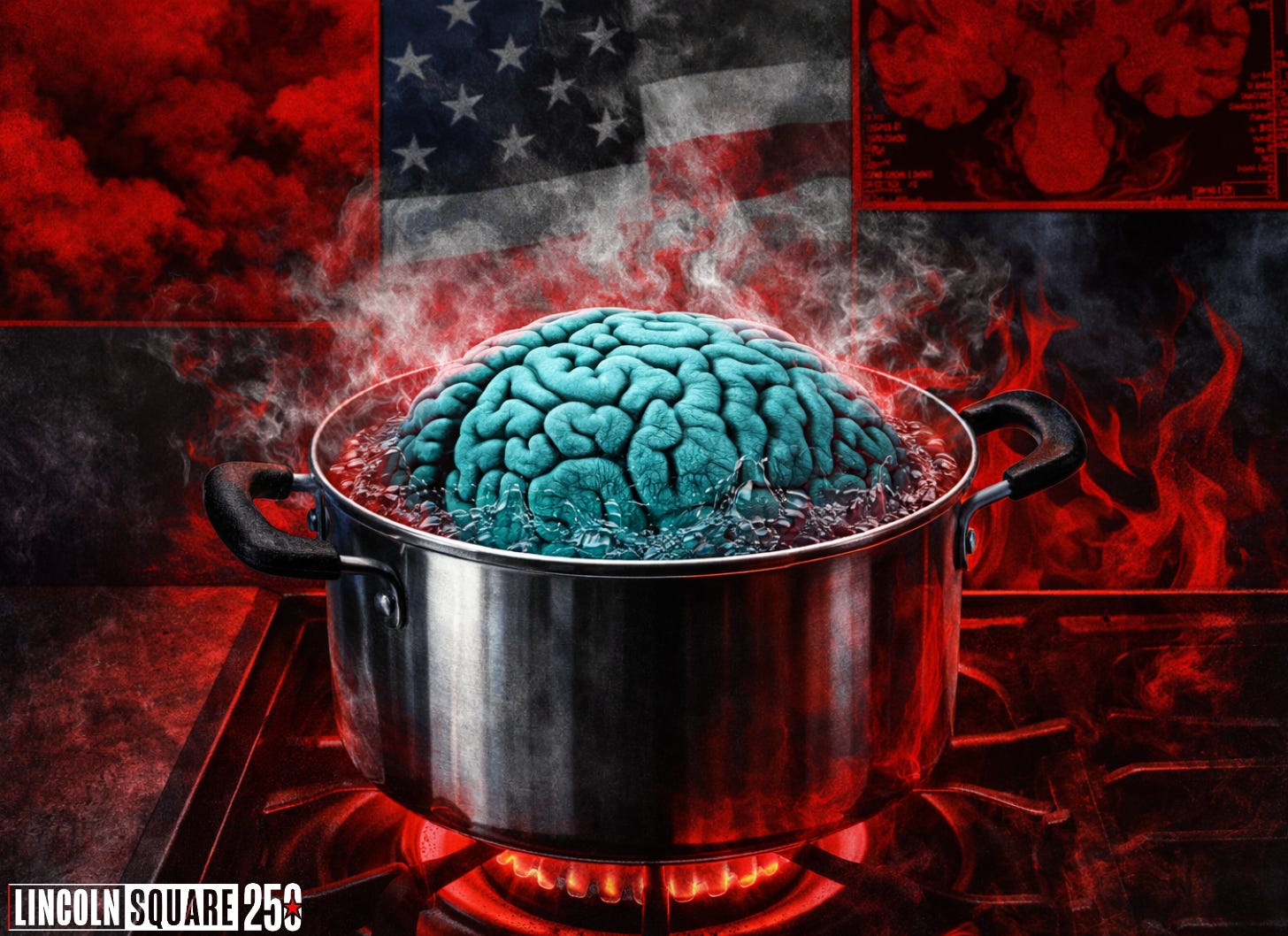
Last month, Cecilia Vega, the correspondent CBS fired from 60 Minutes this spring, stood in front of a room of her peers at the National Association of Hispanic Journalists conference and said something that should terrify anyone who still cares about facts.
She said that under new Editor-in-Chief Bari Weiss, she was pushed to include claims in her reporting that her own team could never verify: footage of protesters assaulting suspected undercover ICE agents that her producers watched frame by frame and never found and a quote from Minneapolis Mayor Jacob Frey about fighting ICE that he never said. “That never happened,” Vega said. “We could not find any instance of the mayor saying something like that.”
CBS disputes her account and says none of it made air. Of course, Vega isn’t the only journalist who’s recounted how Weiss’ regime tried to push MAGA talking points into stories; Scott Pelley dropped the dime on her after he, too, was fired.
When ‘60 Minutes’ Caved, That Told Trump Everything He Needed to Know

Susan J. Demas is Lincoln Square’s Executive Editor and a 25-year journalism veteran. Subscribe to her Substack.
But what does it say that we’ve reached a point where one of America’s biggest newsrooms, staffed by people whose entire job is verifying facts, burned so much time chasing footage that didn’t exist because of misinformation circulating online?
If trained journalists with fact-checkers and lawyers can nearly get rolled by the version of events propagandists manufacture on social media, what chance does the rest of us have, scrolling in bed after midnight, taking most posts at face value?
That’s the question I’ve been grappling with for two years, ever since I mostly got off social media. After years of living online, covering right-wing extremism, the rise of Donald Trump, and mass death during the pandemic, I knew it was time to touch grass.
I could feel what the feed was doing to me, and I wanted my life back — the version with actual people in it, not usernames. I wanted dinners where nobody checked their phones, arguments that ended in a hug instead of a screenshot, and friendships that didn’t run through an algorithm.
When I’ve dipped back in occasionally to check on people I used to follow religiously, the pattern has been remarkably consistent, and it splits almost perfectly by platform. On X, people I used to consider reasonable have slid into full right-wing conspiracy territory — not gradually, but as if someone flipped a switch.
Fortunately, I don’t have to spend much time in that Nazi hellhole, as most accounts I respect have abandoned it and moved on to Bluesky. And while the vibe there is unmistakably better (how could it not be?), I’ve still noticed a bleak pattern among influential users: most have narrowed down to two modes, dunking on mainstream Democrats as sellouts and traitors, or basically writing fan fiction about whichever progressive candidate is having a moment.
After all, trashing establishment Dems earns you instant clout from three key groups: the mainstream media that turns it into fodder for their “Dems in disarray” bangers, right-wingers who despise progressive policy but revel in any criticism of Democrats (it’s especially useful when the call is coming from inside the house), and leftists who love anything that validates their priors.
