The One Scandal Trump Can’t Outlast
While King Charles chooses institutional survival over his brother, the U.S. faces a growing rift within MAGA over the Trump administration trying to move on from the Epstein files.
Kristoffer Ealy is a political scientist, political analyst, and professor in Southern California. He teaches American Government and political behavior, with a focus on political psychology, voting behavior, and political socialization. Subscribe to his Substack, The Thinking Class with Professor Ealy.
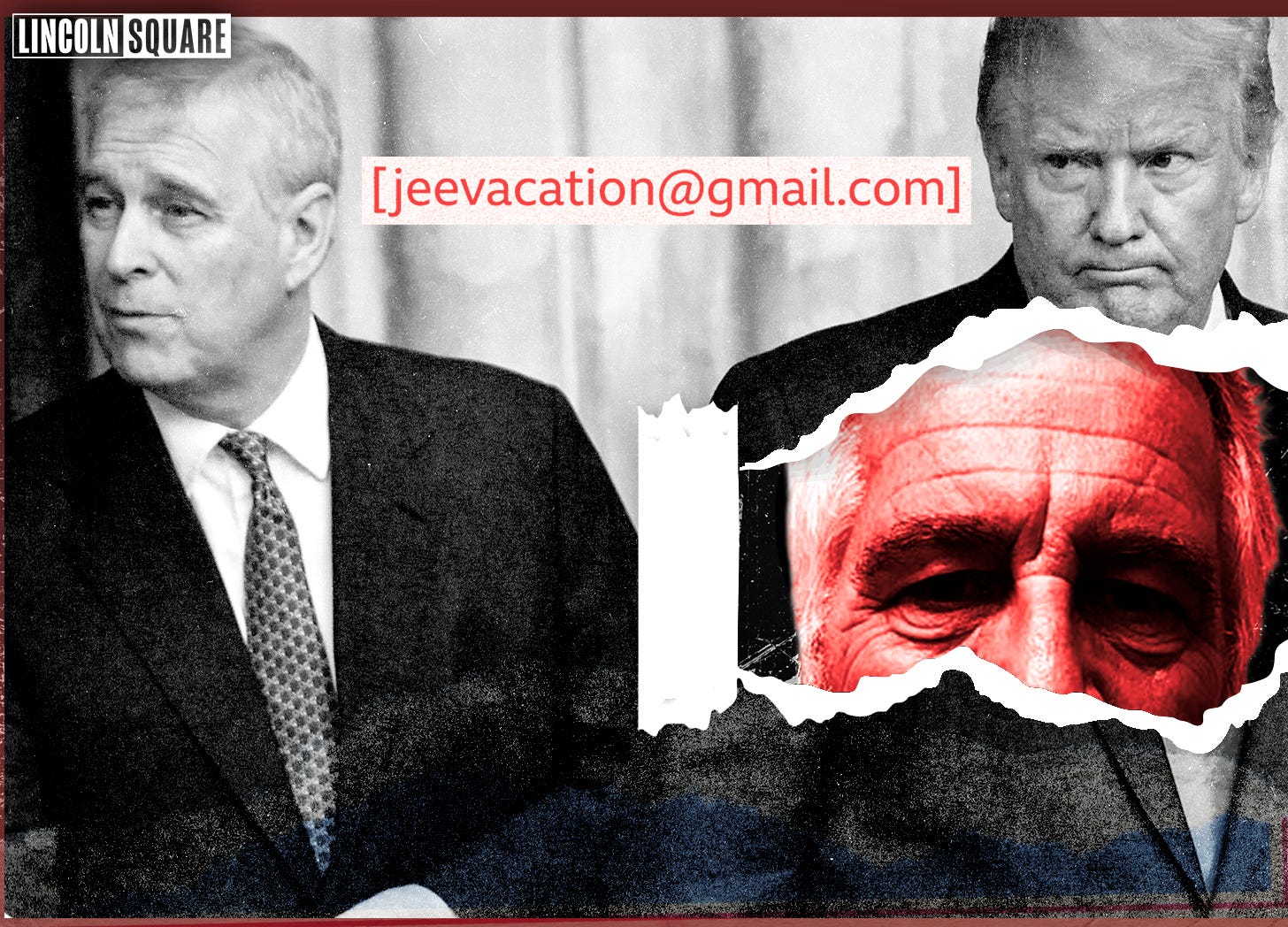
For years now, I’ve said the same thing about the Epstein files, and every time I say it, people react like I’m clinging to an old scandal that the world has already processed and moved past.
The assumption seems to be that scandals have expiration dates — that public memory functions like a streaming queue where yesterday’s outrage quietly disappears once a new episode drops.
But the Epstein files have never behaved that way. They don’t fade. They don’t resolve. They sit there — partially revealed, partially hidden — gaining weight every time another court filing surfaces or another government official insists there is nothing more to see. Most political controversies decay because attention moves on. The Epstein files grow stronger precisely because closure never arrives.
And I’ll be honest: even I initially questioned why parts of MAGA were suddenly acting like these documents were the Rosetta Stone of political revenge, especially after Trump brushed them off like they were nothing. But I keep getting the same reaction — not MAGA readers treating this like a scavenger hunt — it’s people genuinely surprised that out of all the things Trump has done, this is the scandal that finally seems to stick. They’ve watched him skate past criminal convictions like they were parking tickets. They watched him get found civilly liable for sexual abuse and still posture like the victim. They watched him brag about assault on tape and turn it into a personality trait. So the disbelief is almost existential: how is it that this — the Epstein files, redacted and litigated and constantly resurfacing — became the one blemish he can’t bully, meme, or “witch hunt” his way out of?
The answer is that the files operate less like evidence tied to a completed case and more like a living archive that keeps expanding every time institutions attempt to seal it shut. Every redaction raises new questions. Every delay produces fresh suspicion. Every official assurance that the matter has been handled only reminds the public that something remains unresolved. Americans have spent years trying to treat Epstein as a singular villain whose death conveniently ended the story. The documents themselves refuse to cooperate with that narrative. They continue to suggest networks, access, protection, and proximity among people accustomed to consequences rarely applying to them.
Enter Prince Andrew Albert Christian Edward Mountbatten-Windsor.
If you are going to get caught up in one of history’s most sprawling abuse investigations, you would ideally want to be a person with some talent for lying. Andrew is not that person. He is, by any observable measure, one of the worst liars in the recorded history of public figures — and the bar he was competing against included a man who told the American public he did not have sexual relations with that woman while the evidence was literally at the dry cleaner.
In November 2019, Andrew sat down for a BBC Newsnight interview that has since become the gold standard for what happens when a person who has never faced real consequences attempts to freestyle their way through a crisis. He deployed an alibi so specific it bordered on performance art: he claimed to have no memory of meeting his accuser Virginia Giuffre because on the night in question he had been at a Pizza Express in Woking celebrating his daughter’s birthday. He said this with the confidence of a man producing an ironclad receipt. It is a sentence that should not be possible — no one has ever defended themselves against allegations of association with a sex trafficking network by citing a mid-range Italian restaurant chain in a commuter town in Surrey — and yet there it was, delivered without irony, to a national television audience.
He also claimed he could not have been sweating in the photographs in question because he had a medical condition — acquired, he explained, following a traumatic experience during the Falklands War — that prevented him from sweating. He said this. Out loud. On purpose. The nation’s immediate and collective response was to note that they had seen him sweating. Journalists noted it. Former associates noted it. Eventually, photographs of Andrew visibly sweating emerged, which performed the journalistic function of a mic drop but with more perspiration.
The interview was so catastrophically, transcendently bad that it forced him to step back from royal duties. Not the allegations themselves — the interview about the allegations. He managed to make his own defense worse than the charges.
Which is why the detention of Prince Andrew matters far beyond royal gossip or tabloid fascination. Monarchies do not willingly humiliate themselves. The British Crown has survived wars, abdications, divorces, and decades of scandal precisely because it understands the art of containment. Embarrassment is usually absorbed quietly, redirected politely, and buried beneath tradition. The institution survives because it rarely allows scrutiny to reach the level of criminal exposure. So when Scotland Yard begins contacting former royal protection officers and asking what they saw or heard during assignments connected to Jeffrey Epstein, something fundamental has changed. Someone inside the machinery concluded that protecting the monarchy required allowing investigation rather than suppressing it.
That decision is not moral enlightenment. It is institutional survival instinct. Britain appears to have recognized that public trust erodes faster when elites appear immune than when elites face scrutiny. Scotland Yard investigating a prince sends a message more powerful than any press release ever could: legitimacy requires demonstrating that even proximity to the Crown does not place someone beyond questioning.
Malcolm Nance captured the shock of that moment bluntly. Speaking about Andrew’s detention, Nance stated that conduct serious enough to force the British state to move against a member of the royal family strongly suggests allegations involving sex with minors. That is Malcolm Nance’s assessment, not mine — but the fact that a national security analyst felt comfortable saying that out loud tells you how extraordinary this situation has become. A prince was detained. Former royal protection officers are being questioned. International investigators are coordinating across borders. Britain — the country that practically invented elite damage control — is treating Epstein adjacency as something warranting criminal scrutiny rather than polite containment.
And that’s where the American comparison becomes impossible to ignore.
Because while British institutions appear willing to risk embarrassment in order to preserve credibility, the United States has spent the same period demonstrating how thoroughly political loyalty can paralyze accountability. Americans watched Attorney General Pam Bondi appear before Congress in February 2026 and respond to questions about Epstein-related investigations like her job description had been rewritten overnight from “chief law enforcement officer” to “professional subject-changer.” Direct questions got indirect answers. Requests for clarity were met with attitude. Oversight became a personal insult. Transparency became something to be “handled,” like a PR problem that needed to be walked back before it infected the brand. Victims sat in the room while Bondi carried herself like they were the inconvenience — like the audacity wasn’t what happened to them, but the fact that Congress had the nerve to ask her about it on camera.
And her whole posture was erratic in the way only a person looks when they came prepared to control a narrative and then realized, mid-hearing, that the narrative was controlling them. One minute she’s deflecting, the next she’s snapping, then she’s pivoting into unrelated talking points like she’s trying to find the exit in a burning building. It wasn’t confidence. It was damage-control panic dressed up as indignation. The performance didn’t project authority — it projected the fear of someone who knows that the more the Epstein question stays alive, the more likely it is to swallow everyone who ever thought proximity to power was a get-out-of-consequences card.
The performance was striking not simply because critics objected — that was predictable — but because frustration began emerging from within Trump’s own political coalition. Conservative commentators who rarely align suddenly found common ground in skepticism. Calls for greater disclosure appeared in corners of MAGA media not known for demanding accountability from Republican administrations. Representative Thomas Massie voiced dissatisfaction. Online figures whose careers depend on defending Trump began asking uncomfortable questions.
Then came perhaps the most unintentionally revealing moment of all: Kyle Rittenhouse — a young man whose national prominence followed the shooting deaths of two individuals during unrest in Kenosha before being acquitted under self-defense law — publicly criticizing Bondi’s handling of Epstein questions. American politics reached a strange place when someone whose fame emerged from armed chaos in the middle of a street looked at the Justice Department and concluded the official explanation didn’t pass scrutiny. When doubt begins appearing inside loyalist circles rather than outside opposition, something deeper than partisan disagreement is occurring.
Donald Trump has survived political disasters that would have destroyed any conventional presidency. Criminal convictions failed to dislodge loyalty. Civil liability for sexual assault produced outrage without political collapse. Recorded boasts about behavior once considered career-ending became rally applause lines. Investigations accumulated without consequence because Trump’s political strength has never depended on respectability; it depends on identity reinforcement. Supporters interpret attacks on Trump as attacks on themselves, transforming scandal into solidarity.
But the Epstein files represent a different type of threat entirely. They are not accusations alone. They are documentation — fragmented, incomplete, contested, but persistent. Trump cannot simply insult them into irrelevance. He cannot campaign against court records. He cannot fully reframe documents that continue resurfacing through judicial processes beyond campaign messaging. Each redaction fuels curiosity. Each delay reinforces suspicion that disclosure remains politically dangerous.
The files linger like an unresolved subplot everyone keeps trying to skip past, refusing to disappear no matter how loudly officials insist the story is finished. They exist outside the normal rhythm of political scandal because they are anchored in unanswered institutional questions rather than temporary outrage. Trump has cracked nearly every code of modern scandal management — deflection, counterattack, narrative inversion — but documentary persistence operates differently. It waits.
And while it waits, a prince sits somewhere contemplating the fact that he told the world he couldn’t sweat, that he was eating garlic bread in Woking, and that this — somehow — is where his story ended up. Not quietly retired. Not gracefully managed. Detained. Questioned. Named.
When readers tell me Trump’s loyalists will never abandon him, I always respond the same way: political movements rarely collapse through mass conversion. You do not need everyone to turn. You need enough uncertainty to spread. Loyalty erodes quietly before it breaks publicly. Doubt enters private conversations long before it appears in polling data.
And those conversations are already happening. I have received messages from self-identified Trump supporters asking how damaging the Epstein files truly are. That question alone signals movement. The certainty that once defined political defense has begun encountering hesitation.
Now there is a clearer answer available.
The files are damaging enough that a prince was detained.
Trump frequently claims that full disclosure would ultimately implicate Democrats more severely than Republicans. If that assertion is true, then the solution is obvious: release everything. Unredact the records. Allow investigators to pursue evidence wherever it leads regardless of party affiliation. Accountability that fears transparency is not accountability; it is risk management.
King Charles appears to understand that institutions survive scandal by confronting it rather than denying it indefinitely. Britain risks embarrassment now to preserve legitimacy later. The American approach increasingly appears reversed — delay disclosure, attack critics, and hope attention migrates elsewhere.
History suggests that strategy rarely succeeds forever.
The Epstein scandal has already outlived Epstein himself. It survived administrations, lawsuits, settlements, and media fatigue. Attempts to bury it have extended its lifespan rather than ending it. Each unanswered question renews interest. Each institutional hesitation deepens suspicion that something remains unresolved.
Prince Andrew learned that lesson the hard way. He had every advantage — a title, a palace, a institution built over centuries to manage exactly this kind of crisis. He had handlers and lawyers and a monarchy that has outlasted empires. And he walked into a television studio and told the world he couldn’t sweat.
The documents remain.
They accumulate.
They wait.
The Epstein files do not need headlines to survive. They do not require outrage or partisan fury. They only require time.
And time — more than loyalty, messaging, or political defiance — is the one opponent Donald Trump has never been able to defeat.


I admit to being one of those readers who keeps telling friends that Trump's MAGA cult will never abandon him. And I still believe that, no matter what this authoritarian creep does to our country or the world. I also believe there is nothing--absolutely nothing--Trump won't do in an effort from keeping any damning Epstein evidence about him becoming public. Even start a war, if it provides distraction. My question is: what will it take before those in power--Congress, the judiciary--as opposed to us without great power, but who speak out daily against the biggest asshole in American history, stand up to this guy once and for all? My worry is how much damage Trump will create before this happens. Nevertheless, I appreciate this essay, as I am always searching for hope during this dark time.
Yes. And frankly after #MeToo was prematurely strangled by the discomfort of powerful men, those of us that haven't had their day in court and never will aren't going to let this slide. Those women (and a couple of men) need some semblance of justice and I personally intend to keep ringing the Epstein bell until that finally happens. A lot of other folks that are MeToo are doing the same.