


Dr. Rob Davidson is the Executive Director of The Committee to Protect Health Care, a Michigan-based ER physician, and co-host of Paging America.
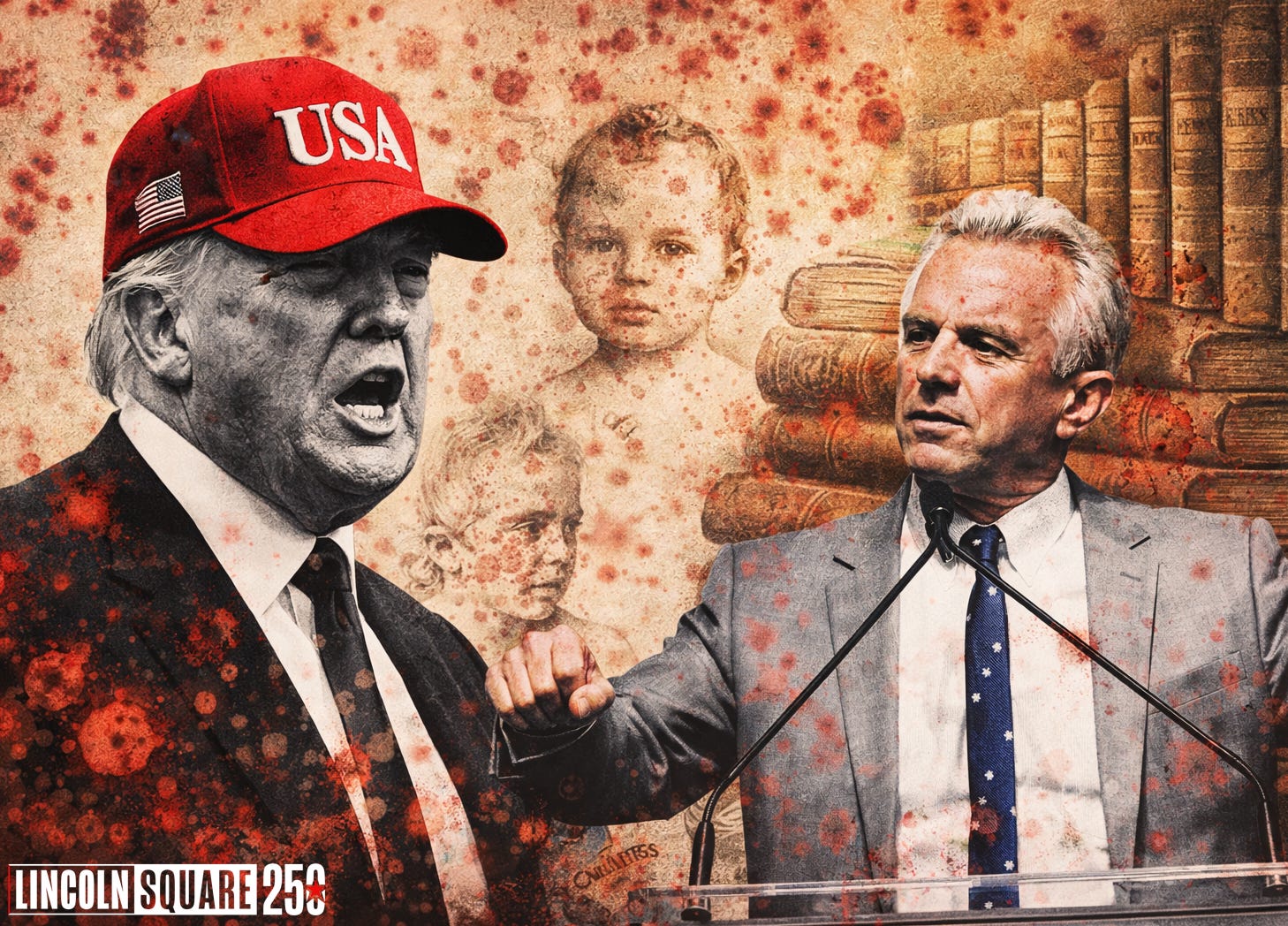
I’ve been an ER doctor for nearly three decades. And like most physicians my age, I’ve never seen a case of measles.
I remember learning about the capacity for the measles virus to attack the immune system and leave patients vulnerable to diseases to which they previously had immunity. It was fascinating as a student interested in the mechanisms of disease, but it was taught as medical history in a classroom that did not translate into current clinical practice.
Attending physicians shared stories of kids with encephalitis and severe pneumonia that were chilling, but again, seemed like mere medical history.
The elimination of measles in 2000 was a seminal moment in the US and represented the culmination of nearly 4 decades of a vaccination program against the disease. I was in the middle of my Emergency Medicine residency that year and remember the older docs celebrating that milestone. They understood the significance more than those of us in training ever thought we could. Not treating patients with measles was simply an expectation we had when embarking on our careers in medicine in 2001.
After a quarter century, this week the US officially lost its measles elimination status. And now after half of a lifetime treating tens of thousands of patients in mostly rural communities, I find myself reading and watching lectures about the pathophysiology, diagnosis, and treatment of measles.
Some diseases have a specific treatment. For bacterial pneumonia, I can give antibiotics. If someone is having a heart attack, I can get them to a cath lab as quickly as possible to restore blood to their ischemic heart. And if you’re having a stroke, and I see you within 4.5 hours, I can give you a drug that meaningfully increases your chances of a better long-term recovery.
But for measles, and many vaccine preventable diseases, the treatment I can offer is supportive. Support the patient, treat the secondary infections caused by their failing immune system, and if they and their family are so inclined, say some prayers that they recover. We have to just stand by and support as our patients’ bodies fight as hard as they can to live, while scared families watch by their sides.
RFK Wants Cancer to Win

It would be one thing, and an accurate one, to say Robert F. Kennedy Jr. is going to get people killed.
We didn’t get to this moment arbitrarily. There was not a new strain of measles that evaded the safe and effective vaccines that I received in the 1970s and I gave to my kids in the 2000s. We got here because of a concerted effort by a group of individuals hell-bent on scaring parents into making dangerous decisions for the health of their own kids that, because of the need for herd immunity to thwart transmission throughout communities, resulted in dangerous conditions for us all.
Many of you may know the name Andrew Wakefield. While anti-vaccine rhetoric did not start with his fraudulent and later retracted 1998 paper in The Lancet linking the MMR vaccine to autism, the credibility of the publication and the media attention garnered by it turned a fringe movement into mainstream anti-vaccine activism.
And groups like the National Vaccine Information Center and Children’s Health Defense, the latter having been led by current Health and Human Services Secretary Robert F. Kennedy Jr. for nearly a decade – carried the movement forward, preying off the fears of parents simply wanting to do what’s best for their children.
When RFK Jr. ran for President, he adopted Make America Healthy Again (MAHA) as his campaign slogan. Polling by KFF shows us that in May of this year only 10% of self-identified MAHA voters said vaccine safety was their top issue. This was eclipsed by lowering health care costs and reducing chemical additives in the food supply, two fronts on which Kennedy has failed miserably. But Kennedy and leaders in the administration, including President Trump, have maintained anti-MMR rhetoric as a mainstay in public messaging.
RFK Jr.'s Summer Sh*t Show

Jennifer Schulze is a longtime Chicago journalist. She’s on Bluesky @newsjennifer.bsky.social. Subscribe to her Substack, Indistinct Chatter.
In August, Trump held a press conference in which he flatly stated that the MMR vaccine could be “quite lethal,” Three months later, the U.S. lost its elimination status.
Despite the efforts of career epidemiologists and scientists at CDC and HHS working to promote vaccination against measles, no number of academic papers or entries on a government website can compete with clips of the President saying MMR could be “quite lethal” being shared across people’s social media feeds.
In the wake of the loss of measles elimination status, this entire discussion begs the question: “Where do we go from here?” Roughly one-third of Americans trust the healthcare system, while nearly 90% say they trust their doctor or primary care provider. As this administration has undermined the efforts of doctors to protect their patients from deadly diseases, their actions have also led to 2 to 3 million people losing health insurance and $1 trillion in Medicaid cuts.
In addition to electing leaders who do not peddle conspiracy theories about safe and effective vaccines, enacting policies that lead to universal primary care and universal healthcare must be prioritized if we intend to get back to where we’ve been for the last quarter century.
For now I’m going to dust off the old history of medicine books, because under the Trump administration, their content is becoming less and less historical every day.

We seem to be going backwards. Not keeping the most vulnerable safe when we have a vaccine is horrendous. My mother had polio. It changed her life forever. She would have given anything for a vaccine.
Thank you for the article, We have according to local news three deaths to measles they happen to be children.