


Brian Daitzman is the Editor of The Intellectualist. Subscribe to his Substack.
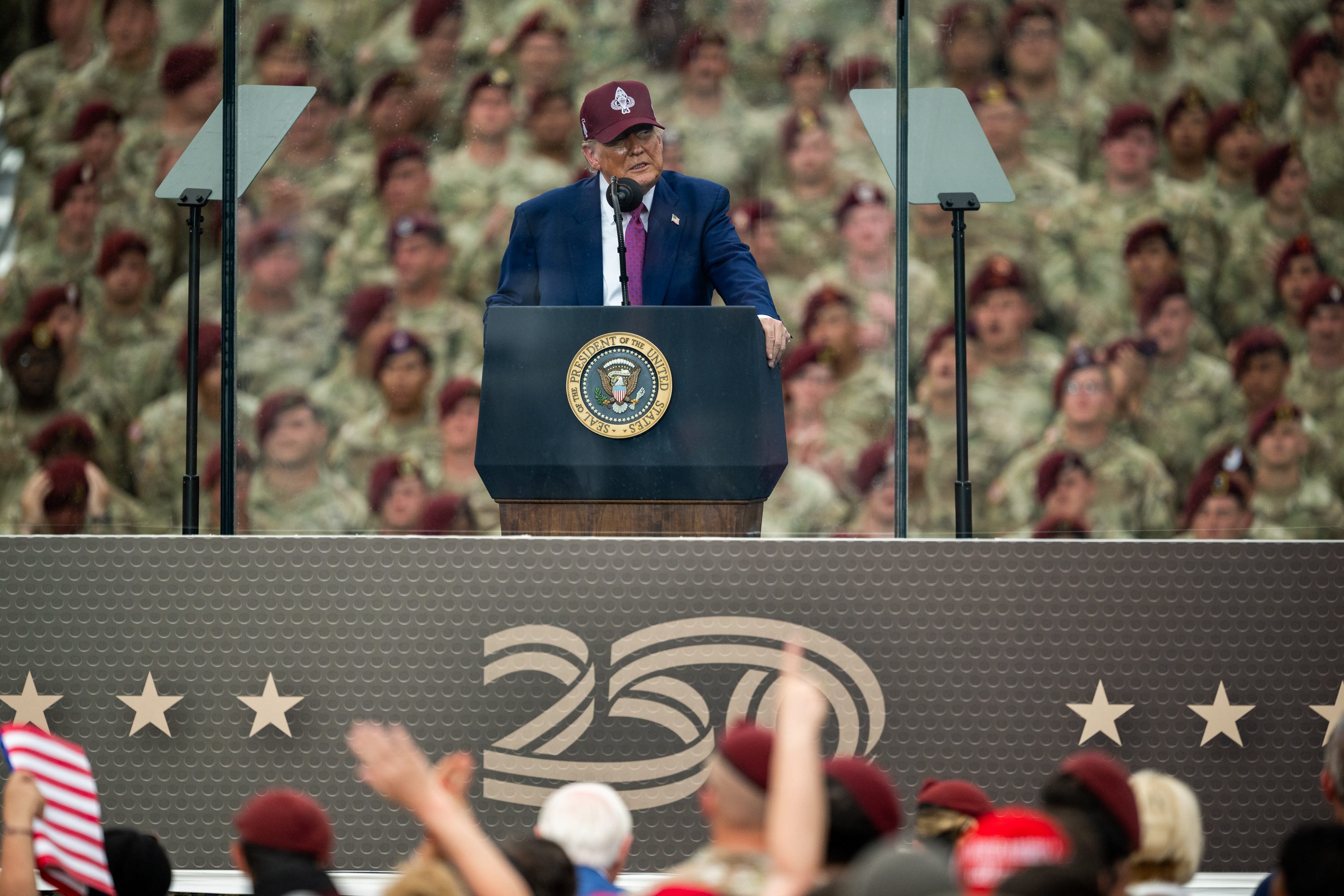
For the first time in modern history, the United States is no longer classified as a liberal democracy. Data shows changes under President Donald Trump’s second term are accelerating the same pattern of institutional erosion seen in democracies that later failed.
Democracies rarely fall all at once, and they rarely announce their decline clearly. They do not collapse in spectacle, with tanks in the street or constitutions abruptly discarded. They erode through the gradual weakening of institutions—courts, legislatures, and legal protections—designed to constrain political power.
The formal structure often remains intact. Elections continue. Laws remain on the books. But the system beneath them begins to change.
This is not a metaphor. It is a documented pattern. Comparative research on democratic decline shows that systems rarely break overnight. They weaken. Courts lose independence. Legislatures lose influence. Civil liberties erode. Executive power expands, even as elections continue.
The Varieties of Democracy (V-Dem) Institute is one of the most comprehensive efforts to measure these changes. Drawing on expert-coded assessments across hundreds of indicators and more than two hundred countries, it measures how power is exercised and constrained over time, allowing comparisons across systems and revealing patterns not visible in single events.
Because V-Dem measures how institutions function in practice rather than rhetoric or isolated incidents, its findings carry weight. It does not ask whether elections occur. It evaluates whether the basic conditions that make elections meaningful—independent courts, legislative oversight, civil liberties, and freedom of expression—are strengthening or weakening.
According to V-Dem’s 2026 Democracy Report, that pattern is now observable in the United States.
Much of the shift is tied to institutional changes during President Donald Trump’s second term, particularly the expansion of executive power and the weakening of legislative and judicial constraints.
