


Kristoffer Ealy is a political scientist, political analyst, and professor in Southern California. He teaches American Government and political behavior, with a focus on political psychology, voting behavior, and political socialization. Subscribe to his Substack, The Thinking Class with Professor Ealy.
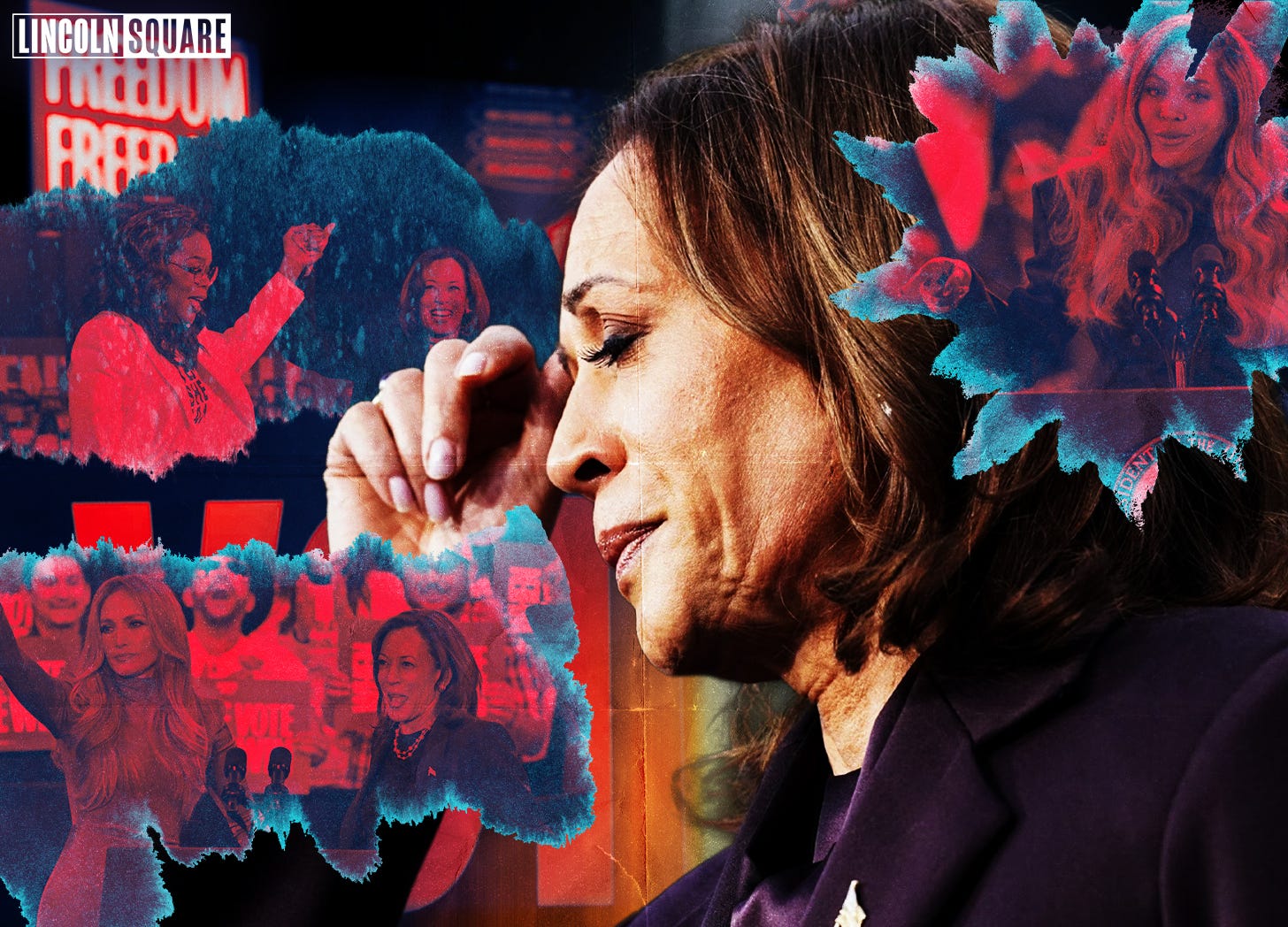
I spent all of last year replaying Kamala Harris’s loss in 2025 like it was a missed free throw I couldn’t stop watching in slow motion.
Not because I think she was some flawless political unicorn. But because when you look at what she was on paper—youthful, charismatic, sharp, photogenic, relatable, and genuinely capable of prosecuting an argument—she should have been a strong general-election candidate. And yet she was also a woman, and also Black, and that still functions as an unspoken tax in American politics that a lot of people pretend they don’t impose while imposing it anyway. We can call it “electability concerns” if we want to keep the language polite, but the psychology is obvious: implicit bias, stereotype threat, and good old-fashioned motivated reasoning—people reverse-engineering their discomfort into “strategic analysis.”
The part that keeps gnawing at me is that Democrats keep replaying the loss too—except they keep using it as a Rorschach test. Everyone finds their favorite villain. It was the broken Democratic infrastructure—field operations that look strong on paper but collapse under the weight of turnout reality, message discipline that disappears the moment Twitter gets bored, a donor ecosystem that confuses “expensive” with “effective,” and a media environment that treats democracy like a content farm. It was inflation anxiety. It was misinformation. It was “messaging.” It was enthusiasm. It was the youth vote. It was men. It was the left. It was the center. It was everything except the most dangerous conclusion of all: sometimes we lose because the other side is willing to burn the house down to win, and we keep showing up with a fire extinguisher and a debate club rubric.
But one of the weirdest postmortems—the one that made me blink like I was reading satire—was hearing Democrats say Harris was hurt because she had too many celebrity endorsements and seemed too tied to Hollywood elites.
And all I could think was: Democrats continue to learn the wrong lessons.
Because “celebrity endorsements” didn’t defeat Harris. Not even close. What defeats Democrats is always some combination of structural disadvantage, turnout mechanics, perception warfare, and internal panic that turns strategic thinking into superstition. But sure—let’s blame the famous people. That’s easier than admitting the party infrastructure needs rebuilding from the precinct level up.
Which leads to one of the age-old questions that’s constantly debated but rarely dissected in a serious way: do celebrity endorsements help or hurt candidates?
Standing next to celebrities doesn’t detox a brand. Sometimes it reinforces the worst stereotype: “elite club,” “rich people party,” “out of touch.” If you already have an image problem, the move is not “add famous.”
I kinda already knew the answer. But in April of 2025, I started doing my own research—and when I say “my own research,” I do not mean “my own research” like a MAGA vaccine expert who watched three YouTube videos, misread a Facebook meme, and now thinks they’re qualified to run the FDA. I mean actual research: political behavior, persuasion psychology, voter confirmation bias, cognitive dissonance, availability heuristic, representativeness heuristic, affect heuristic, and the real-world history of how celebrity has been weaponized in American elections.
And once you start looking at it honestly, you realize the answer isn’t “yes” or “no.” It’s: it depends on the celebrity, the candidate, the audience, the moment, and whether everyone involved can avoid acting like a damn child.
So let’s get one thing straight before Democrats start daydreaming about running Dwayne “The Rock” Johnson or Oprah for office like politics is a casting call. That fantasy is adorable in the way a toddler is adorable when they insist they can drive because they watched Fast & Furious once. But it’s not serious.
