


By Dr. Rob Davidson, MD, MPH
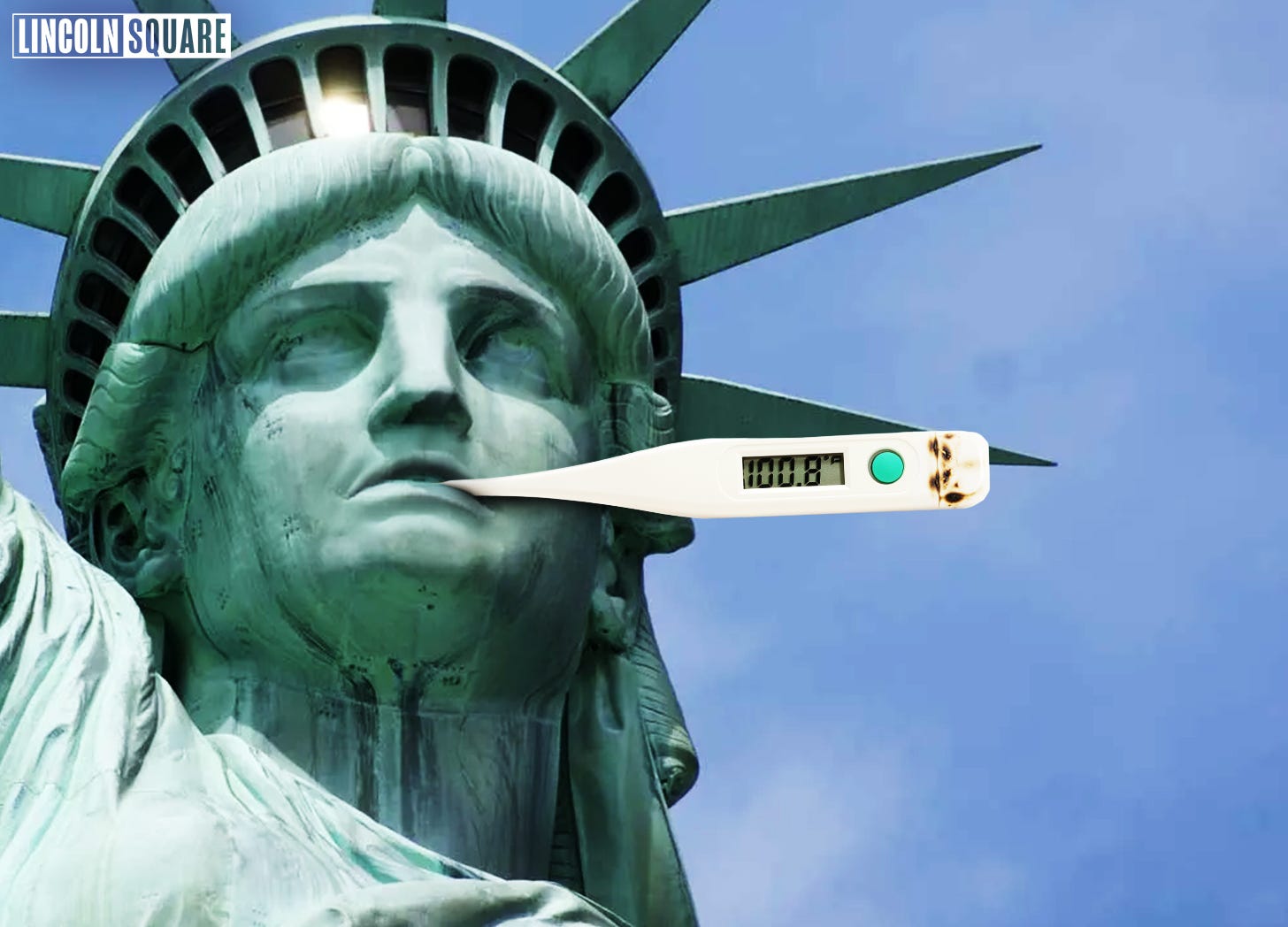
Throughout history, physicians have played a lesser-known but unique role in confronting authoritarianism. Our profession asks us to observe carefully, follow evidence, protect vulnerable people, and speak the truth even when doing so is uncomfortable or unpopular. Those responsibilities do not disappear when political power threatens the health of our patients. In fact, they become more important.
Today, American physicians are facing one of those moments.
President Donald Trump’s executive order seeking to reshape federal childhood vaccine policy — including limiting the vaccines recommended for children and directing the separation of the measles, mumps, and rubella (MMR) vaccine into individual doses — represents a direct intrusion of political ideology into medical decision-making. The response from physicians has been striking.
The president of the American Academy of Pediatrics (AAP), Andrew Racine, emphasized that pediatricians recommend vaccines at specific ages based on when children’s immune systems respond best and when they are most vulnerable to disease. He urged parents to make vaccination decisions in consultation with their child’s pediatrician. Likewise, the American Public Health Association (APHA) responded with “grave concerns” that the very action Trump demands in his EO “ leaves the American public, especially our children, more vulnerable to preventable illness and death.”
Racine and the AAP, the APHA, and countless physicians speaking out today are following a long tradition. Throughout history, physicians have recognized that their obligation to patients sometimes requires them to confront political power.
Consider Rudolf Virchow, often called the father of modern pathology. In 1848, after investigating a devastating typhus epidemic in Upper Silesia, Virchow concluded that poverty, social exclusion, and political failures — not simply biology — were responsible for the crisis. He returned to Berlin convinced that medicine could not be separated from the political conditions affecting people’s health. During the revolutionary upheaval that followed, he became politically active. His philosophy was captured in his famous observation that “medicine is social science and politics nothing but medicine on a grand scale.”
Virchow understood something that remains true today: health does not exist in a political vacuum. And when political power threatens health, physicians cannot always remain apolitical.
That lesson has been repeated under some of history’s darkest regimes.
German neurologist and psychoanalyst John Rittmeister became part of the resistance to the Nazi regime. In 1942, he distributed anti-Nazi notices condemning the regime’s propaganda and its war, knowing the extraordinary risks involved. He was arrested and executed later that year.
In Chile under the military dictator Augusto Pinochet, physicians treated people who had been subjected to torture and other abuses by the regime. In the early 1980s, American physician Jonathan Fine traveled to Chile with a delegation seeking the release of physicians who had been “disappeared” by the dictatorship. Fine and others would go on to help establish Physicians for Human Rights, an organization founded on the principle that physicians have a responsibility to defend human rights.
And this tradition continues today. In Russia, more than 1,000 physicians signed an open letter demanding the release of Dr. Nadezhda Buyanova, who was sentenced to prison after allegedly making comments critical of Russia’s war against Ukraine. They risked their own freedom and safety to defend a fellow physician and the principle that medicine should not be subordinated to political repression.
These examples aren’t perfectly analogous to what is happening in the United States today. We aren’t living under Nazi Germany, Pinochet’s dictatorship, or Vladimir Putin’s Russia. But that’s precisely why we should pay attention to the warning signs before authoritarianism becomes entrenched, and why we should speak out.
Physicians have already been entering this sphere of advocacy in the Trump era. During COVID, when bodies were stacking up in the ICU, and refrigerator trucks were brought in for morgue overflow, we pulled back the curtain, so to speak, sharing our experiences with the public. When Trump suggested people inject bleach… we rejected such absurd, dangerous suggestions. When he used his influence to undermine trust in the vaccine that helped finally protect health care workers who’d been putting our lives on the line, and helped reduce the numbers of sick in our hospitals, we made our voices heard.
But in Trump’s second term, we’re witnessing not just profound ineptitude and disinformation, but an increasingly aggressive concentration of executive power. And now political power is reaching directly into the exam room.
For generations, physicians have been told to leave politics at the exam-room door. But what happens when politics walks through that door first? What happens when a president with no medical training attempts to dictate vaccination policy contrary to the recommendations of pediatricians and the evidence on which those recommendations are based?
At that point, telling our patients the truth is not partisan politics. It is our professional responsibility.
We do this every day. Physicians rely on evidence and expertise to make decisions on behalf of our patients. We push back when pharmaceutical companies put profits ahead of patients. We challenge insurance companies when their policies interfere with appropriate care. We fight hospital administrators when financial considerations threaten patient safety. We accept that responsibility because our patients trust us to put their health before someone else’s interests.
We must bring that same courage to this moment.
History shows us that authoritarianism does not always arrive all at once. It can advance through the gradual erosion of institutions, expertise, norms, and the willingness of professionals to speak when those things are threatened. Physicians have repeatedly been among those willing to stand up because our profession gives us both a unique vantage point and a unique obligation to do so.
We will listen to our patients. We will follow the evidence. We will protect children. And when political power threatens any of those responsibilities, we will speak up.
Dr. Rob Davidson is a Michigan-based ER physician, the executive director of the Committee to Protect Health Care, and co-host of the Paging America podcast.

Time for intelligent, educated people to support modern medicine from idiotic attacks. Vaccines, antibiotics and public sanitation have saved so many lives that used to be lost to disease.
When RFKJr "healthy cooking show" featured his favorite breakfast--" a cheeseburger w 3 eggs-- I nearly threw-up. And he is running HHS😱😱😱