

What You’re Really Saying When You Say You’re Done Talking
Moral clarity without relationship leaves only judgment. And judgment without connection won’t fix what’s broken.

By Trygve Olson
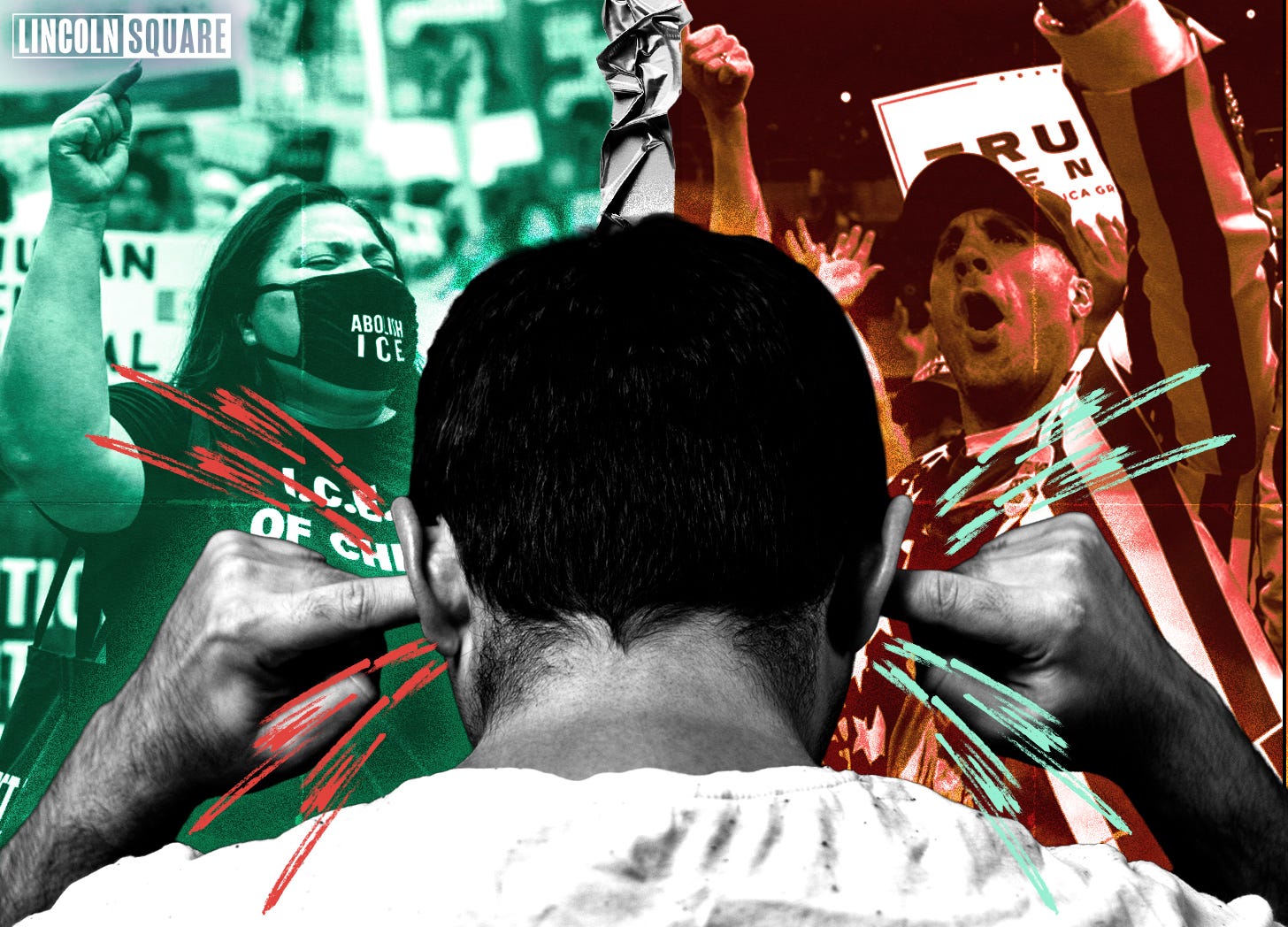
I wrote a recent piece about how one in five Americans has ended a relationship over politics, and two in three are avoiding political conversations altogether. I argued that this isn’t just a political crisis — it’s a relational one.
The response on Bluesky and X? It proved the point better than anything I could’ve written.
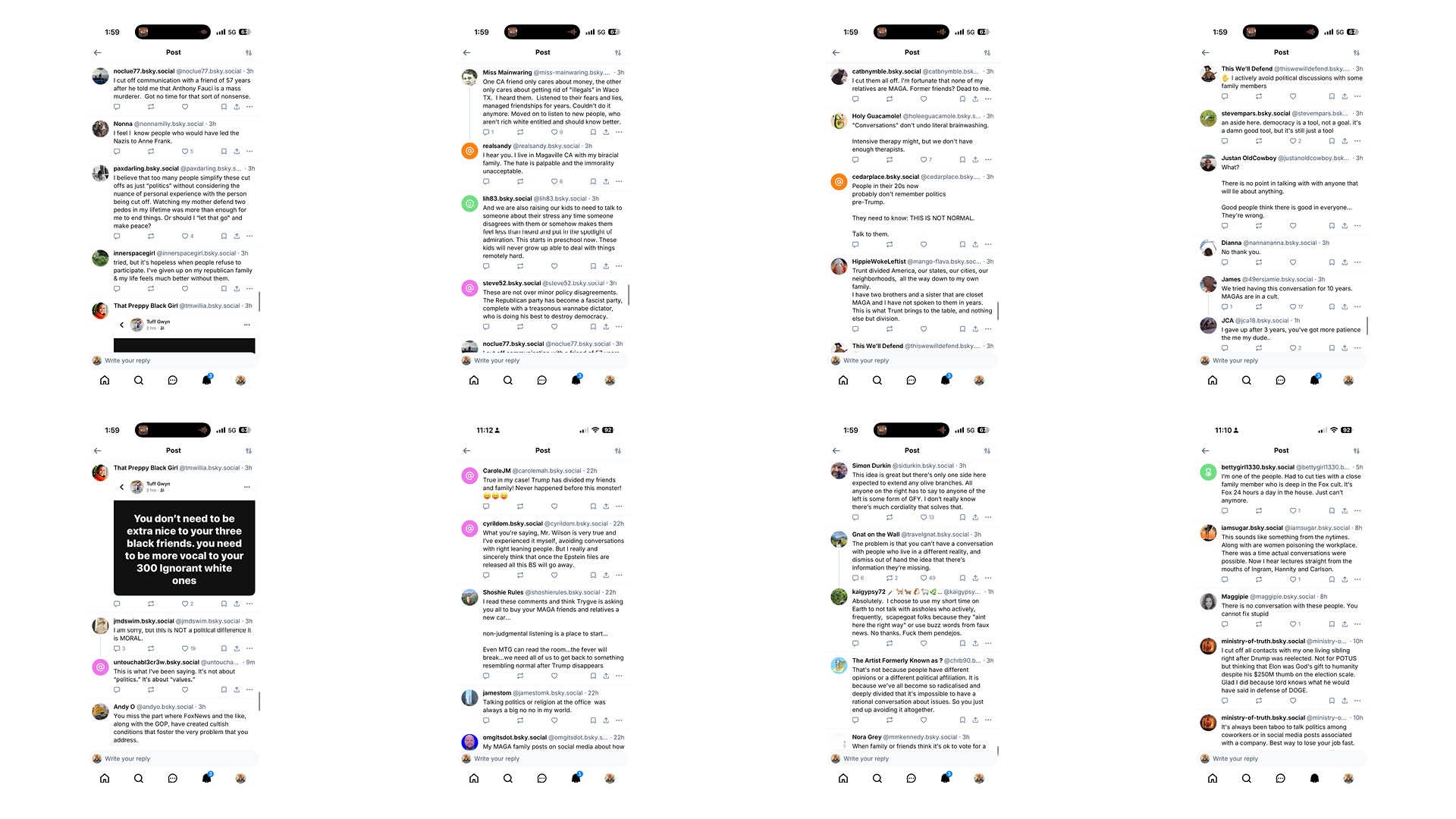
Here’s the refrain I heard over and over:
“I’m done. I’ve tried. They’re brainwashed. They’re evil. There’s no point.”
That kind of certainty feels like a source of strength.
But it’s something else: a demand for binary moral order.
And here’s the hard part — that demand, even when born of legitimate pain, mirrors the very thing it claims to oppose.
When you say:
“I won’t talk to anyone who disagrees with me because it means they’re morally broken.”
What people hear is:
There are only two kinds of people — good and evil. Mine and theirs.
That’s not moral clarity. That’s zero-sum thinking.
And it’s the root logic of authoritarianism and what you claim to oppose — not just at the ballot box, but in the most intimate parts of our lives.
Because if politics is binary, your options are limited:
Violent repression
Or violent upheaval
And both start the same way: with the belief that no one on the other side is worth understanding.

So Let Me Ask Some Questions — not to Argue, but to Coach.
What if someone who saw your comment was wondering if they were too far gone to be spoken to again?
What if someone on the edge of doubt, reading what you wrote, decided not to reach out — because you confirmed their worst fear: that there’s no coming back?
What if the very language you’re using to draw a moral line is the thing hardening the divide?
I’m not saying you have to sit down with someone who dehumanized you.
I’m not saying you owe reconciliation to people who abused your trust.
But I am saying this:
If your moral clarity leads you to write off 74 million Americans as irredeemable — on either side of our political divides — you’re not defending values.
You’re practicing the same all-or-nothing logic that broke us in the first place.
And the people watching — your kids, your neighbors, your former friends — hear you.
They hear that there’s no road back.
That once you’re out, you’re out.
That belief is everything.
And they take note. Not just of your politics — but of your capacity for grace.
This isn’t about being soft.
It’s about being strategic with your values.
Because values don’t live in what we shout.
They live in what we practice.
Three Things You Can Do Today
1. Ask yourself how your actions align with your values.
Do the ways you treat people in your daily life — colleagues, neighbors, strangers — reflect the same moral stance you take in your political arguments? If you believe in dignity, decency, and fairness, are you practicing those things in conversation… or just using them as weapons?
2. Ask how the people you love actually live.
Think of someone you care about who votes differently. How do they live their life? What gap exists between their political positions and their personal values? Have you ever helped them see that disconnect — or even tried to understand why it’s there? Have you done it by asking geniously curious questions about why they feel that way? Or did you simply preach at them what you think, without trying to understand why they feel differently?
3. Ask what was really said — and what was really heard.
Think about someone you’ve become estranged from. What were they hearing when you spoke? What were you hearing from them? Relationships don’t break because of what we say. They break from how what we say is received.
Ultimately, we aren’t remembered for how we saw ourselves.
We’re remembered for how others experienced us — especially in the hard moments.
Trygve Olson is a strategist, pro-democracy fighter and a founding Lincoln Project advisor. He writes the Searching for Hope Substack. Read the original column here.


 | A guest post by
|
While I appreciate Mr. Olson publishing this piece on Christmas Day, I respectfully disagree with him. The current period we are living through is not in any way typical in American history. It just isn't. What we are experiencing is a group of authoritarian creeps who have grabbed hold of tremendous political power, and are using it in an attempt to destroy American democracy. His three "Things You Can Do Today" are simply rehashes of points we have heard a hundred times before in the last decade, ever since Trump descended down his gaudy escalator. I do not hate those individuals who are part of the MAGA cult. When this Trumpian nightmare is finally over, I'm not going to ostracize anyone I've met who wore the red baseball cap. But in the meantime, if standing up for liberal democracy, and all it represents, offends someone's sensibilities, I don't care. I'm going to keep opposing everything Trump and his lickspittles represent. That is NOT "practicing the same all-or-nothing logic that broke us in the first place" as Mr. Olson writes.
I must agree in large part with Stephen. I met with anger and screaming from my MAGA mother in the years before she died in 2023. One cannot speak rationally to an irrational cult member, it’s too threatening for them. They would rather burn the house down than listen. That’s what my mother did. She wouldn’t get her covid booster shots and she died from Covid while calling the hospice nurse a liar when told she had covid. MAGA and miserable to her death. I would rather use my energy getting democrats and independents out to vote against tyranny. It’s what I do.