


Kristoffer Ealy is a political scientist, political analyst, and professor in Southern California. He teaches American Government and political behavior, with a focus on political psychology, voting behavior, and political socialization. Subscribe to his Substack, The Thinking Class with Professor Ealy.
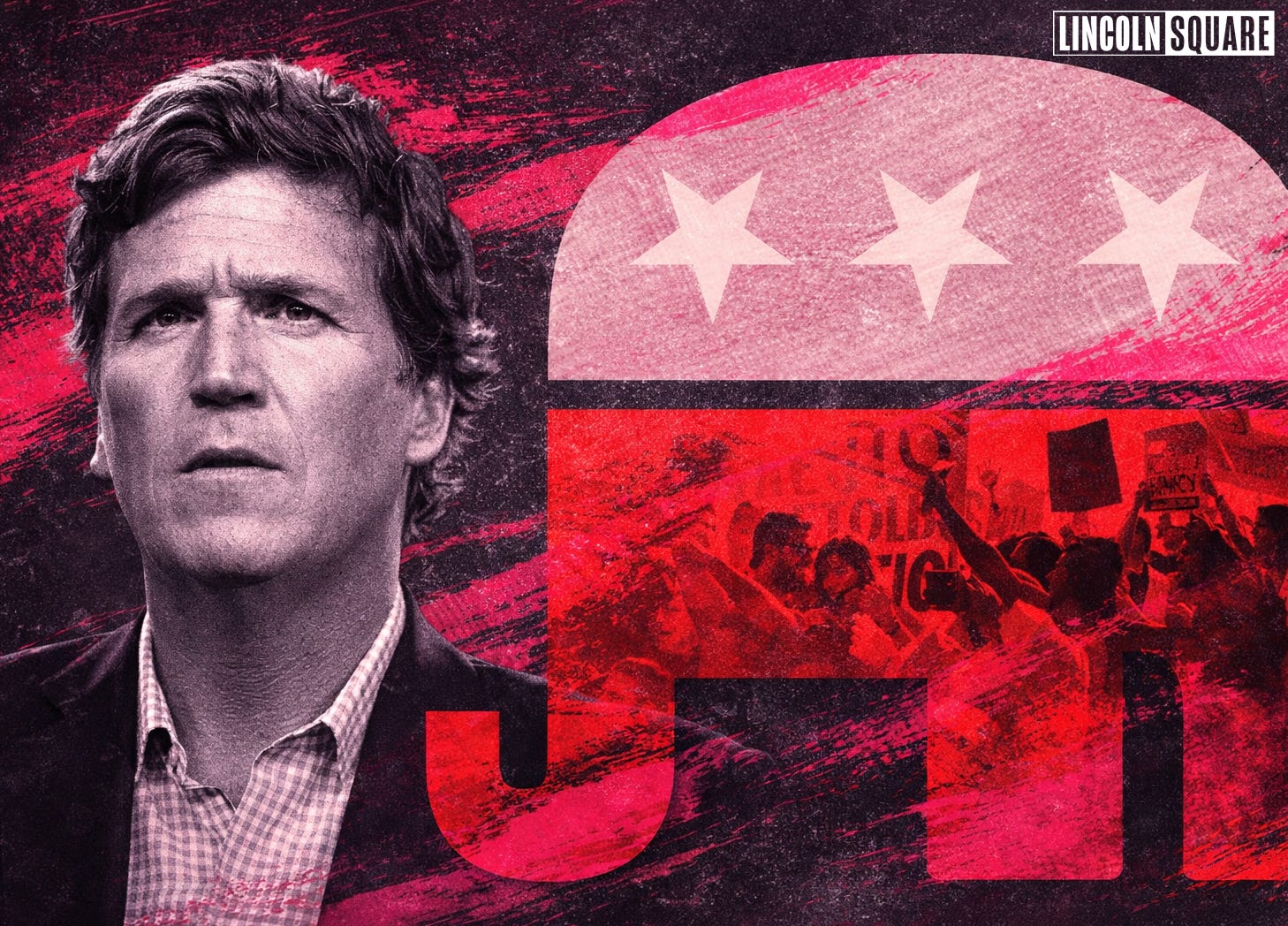
During a June 18 appearance on the Can’t Be Censored podcast — a show that, it should be noted, Tucker Carlson somehow managed to book despite apparently wandering through life with no earthly idea what comes next — the man delivered what portions of the media immediately began treating as a historic political moment. He was done with the Republican Party. He would not support it. He would not endorse it. He was, in his own word, out.
“I would not support the Republican Party,” he said. “There’s no chance I would support the Republican Party. I’m out. And if I’m out, then I think a lot of other people are out.”
And then, almost as a decorative garnish placed delicately on top of the entire performance, came the line that was supposed to make all of this feel raw and human and unscripted: “I don’t know what I’m going to do.”
This was, apparently, the same man who successfully arranged a podcast appearance, delivered a carefully timed political declaration, informed millions of people that he was leaving the Republican Party, hinted that others might follow him out the door, and somehow wanted us to believe he was standing in the middle of a career crossroads with his pockets turned inside out and no map home.
I am going to need everyone to sit down for what I am about to say next.
Tucker Carlson absolutely, unequivocally, one hundred percent knows what he is going to do. This man has his next seven dinners planned before the current one is finished. He does not wake up in the morning without a strategic framework for the afternoon. Saying Tucker Carlson does not know what he is going to do next is like saying a chess grandmaster is just moving pieces around because they look pretty. The “I don’t know what I’m going to do” is not a confession. It is a product. It is a man who has spent thirty years in professional media deploying strategic ambiguity like a finely tuned instrument, playing it for an audience that he has correctly calculated will find the uncertainty endearing rather than suspicious. It keeps every door open simultaneously. The disaffected right hears a man betrayed by his party. The anti-war left hears a potential ally. The independent voter who wants to feel like someone is finally being honest hears authenticity. Tucker Carlson is not lost. Tucker Carlson is auditioning. And the audition is going exactly the way he planned it.
To understand what is actually happening here, you have to go back. Not to Fox News. Not even to the Fuentes interview. You have to go back to 2003, when a younger, bow-tied Tucker Carlson sat on the set of CNN’s Crossfire looking less like a political analyst than a prep school debate captain who had just discovered his father’s bourbon cabinet. He informed the American public, with the unearned confidence of a man who had not yet been proven spectacularly wrong about anything that mattered, that “we know today for certain that Iraq has weapons of mass destruction. They have chemical and biological weapons.”
He said this on national television. To millions of people. As a statement of fact. He was not hedging. He was not speculating. He was not presenting one side of a debate. He was not even performing the modern cable news ritual of saying “some people say” before repeating something insane. He was functioning as a delivery mechanism for the Bush administration’s central lie about a war that would go on to kill hundreds of thousands of people, destabilize an entire region, torch the United States military’s credibility, and make the Republican Party so politically toxic that serious scholars were publicly asking whether the GOP would ever win another presidential election.
He eventually got around to acknowledging all of this. “I think it’s a total nightmare and disaster,” he told The New York Observer in 2004, “and I’m ashamed that I went against my own instincts in supporting it. It’s something I’ll never do again. Never.” And look, fair enough. People are allowed to be wrong and say so. The problem is that the lesson Carlson appears to have extracted from that experience is not “I should examine my positions more carefully before I help sell a war to the American public.” The lesson he took is “I should be more careful about which wars I attach my name to, and I should pay closer attention to when the political winds have shifted far enough that the cheerleading has become a liability rather than an asset.” That is a completely different lesson. One of those lessons is about integrity. The other one is about brand management. Tucker Carlson has been enrolled in brand management ever since.
