


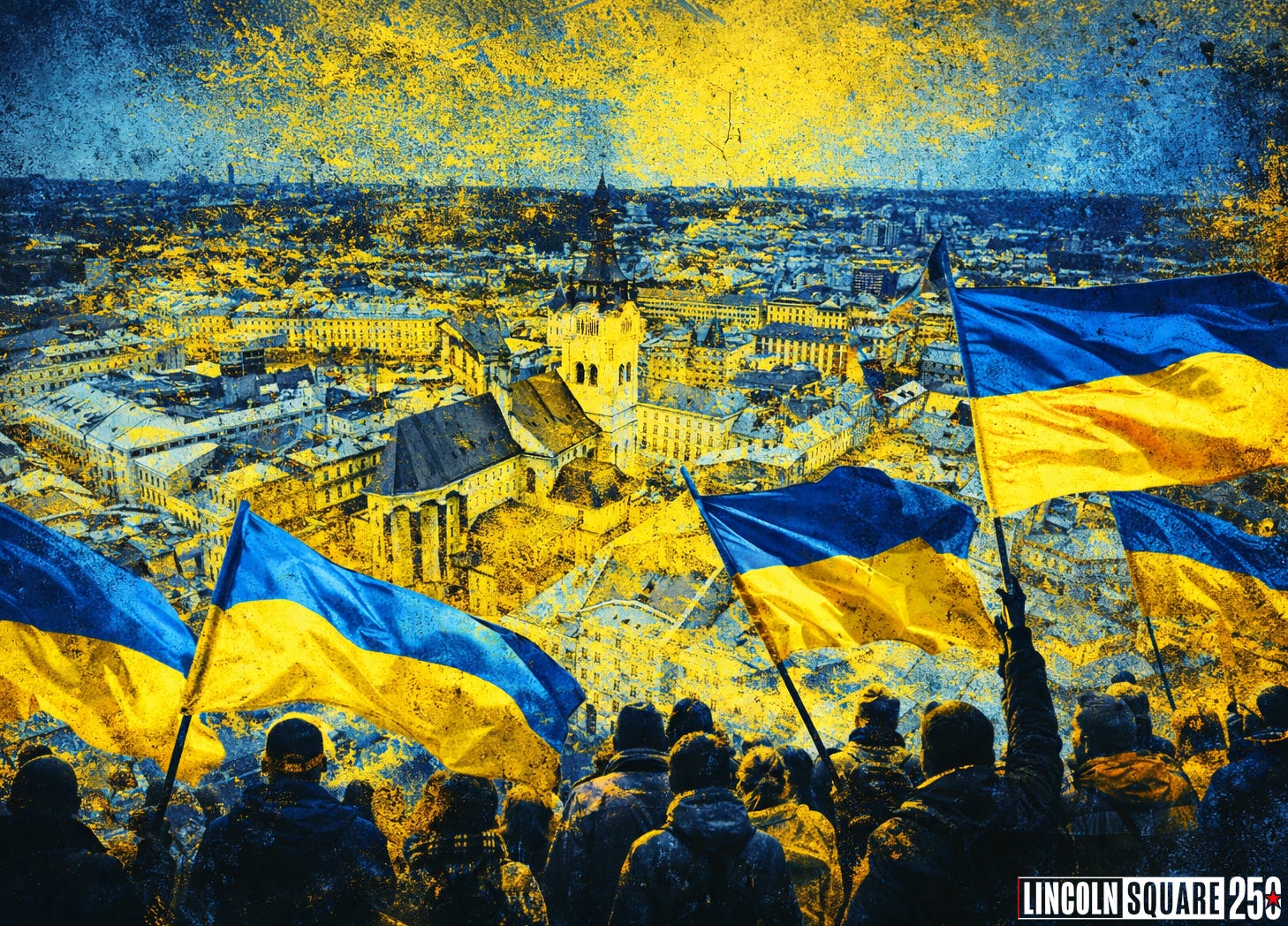
I spent last week’s Ukrainian Independence Day in Lviv, Ukraine. It was an unintentional choice, a function of scheduling the travel days of an aid convoy from Helsinki to Kyiv. But it was the perfect place to consider a country caught between forces of darkness that tried to drag it into the past and a people determined to live in a better world of their own creation.
It was a beautiful, sunny day with streets full of Ukrainians wearing variations of their vyshyvanka, the traditional embroidered shirts and dresses. In the center market square, first built in the 14th Century, hundreds crowded around for an afternoon-long program of singers, dancers, and speakers. The sidewalk cafes were full. The war seemed a long way away.
Lviv is at the epicenter of the world described in Timothy Snyder’s Bloodlands, the land between Berlin and Moscow where millions died in the genocidal madness before and during the Second World War. A short walk from the center of Lviv is the site of the Janowska concentration camp, where the Germans murdered tens of thousands of Jews, ending Lviv’s centuries-long role as a Jewish cultural and economic center.
It was there that SS-Untersturmführer Richard Rokita, the camp’s deputy commandant, who had played violin in a jazz band, assembled an orchestra of some of Europe’s finest Jewish musicians and forced them to compose and play The Tango of Death while their fellow inmates were murdered. For their final performance, the orchestra was made to play for its own members before they, too, were murdered.