


Brian Daitzman is the Editor of The Intellectualist. Subscribe to his Substack.
A person today can send a message across an ocean in less than a second. A child can speak by video with a grandparent on another continent. A lonely teenager can find strangers who share their exact fear, desire, diagnosis, fandom, grievance, dream, identity, obsession, or wound. A worker can collaborate with people they have never met. A writer can publish without a printing press. A musician can release a song without a label. A dissident can document abuse before power can bury it. A citizen can watch events unfold in another country almost as they happen.
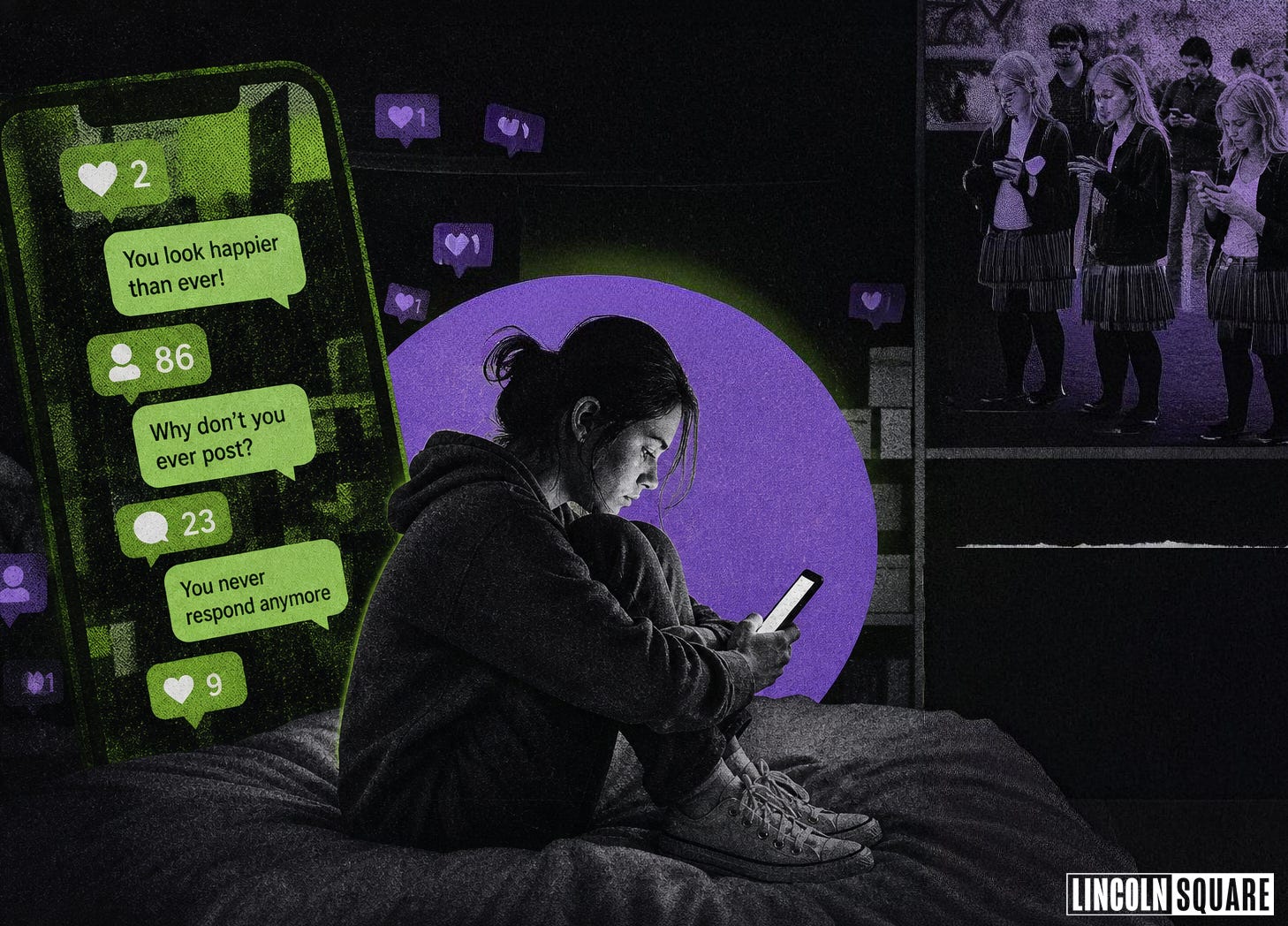
No previous generation has had anything like this scale of instant, everyday communicative reach. Technically, the distance between people has never been easier to cross. And yet reach is not attachment. Availability is not intimacy. Contact is not belonging. A person can be reachable by everyone and held by no one. A message can cross the sea instantly and still fail to become a relationship. A feed can contain thousands of human signals and still leave the body alone in a room. A society can build extraordinary communication systems and still face an epidemic of loneliness.
That is the contradiction at the heart of modern life. People communicate constantly: texting, posting, replying, reacting, liking, sharing, streaming, commenting, subscribing, swiping, and broadcasting. The problem is that communication has become easier than connection, and connection has become easier to simulate than to secure. The modern world has multiplied the signals of social life while weakening many of the structures that once made social life durable.
Modern loneliness is not simply the absence of people. It is loneliness inside access.
Everyone may be reachable. That does not mean anyone has a secure connection.
A secure connection is not the same as a notification. It is the person who notices when you have gone quiet. It is the friend who knows the difference between being busy and disappearing. It is the neighbor who remembers that your car has not moved. It is the family member who does not need a crisis before calling. It is the room where absence registers because presence had a place.
This is what the language of connection now so often hides. A person can have followers, contacts, group chats, unread messages, dating matches, work notifications, family threads, reaction emojis, and algorithmic recommendations and still lack a stable bond through which their life is known. A person may be reachable by dozens of systems and still not be expected anywhere in particular. The signal travels. The person remains unheld.
That distinction matters because a society can mistake communication infrastructure for social infrastructure. It can believe that because people can reach one another, they must be connected. It can believe that because people can publish, they must be heard. It can believe that because people can find others who resemble them, they must belong. But the human need is not merely to transmit. It is to be recognized, remembered, expected, corrected, forgiven, and held inside relationships durable enough to survive silence.
The loneliness of the present is not simply that people are alone. People have always been alone in different ways. The more unsettling fact is that loneliness now occurs inside a world of total reach. It occurs with the phone in the hand, the message field open, the feed moving, the names visible, the faces appearing, the world available. It occurs not in the absence of communication, but amid communication so abundant that its failure to become belonging can feel like an accusation.
If everyone can be reached, why does the person still feel alone?
The answer is that reachability has been confused with attachment. A person can be visible without being known. A person can be contacted without being cared for. A person can be watched without being held. A person can be surrounded by human traces and still have no place where their full life is expected to arrive.
