


Brian Daitzman is the Editor of The Intellectualist. Subscribe to his Substack.
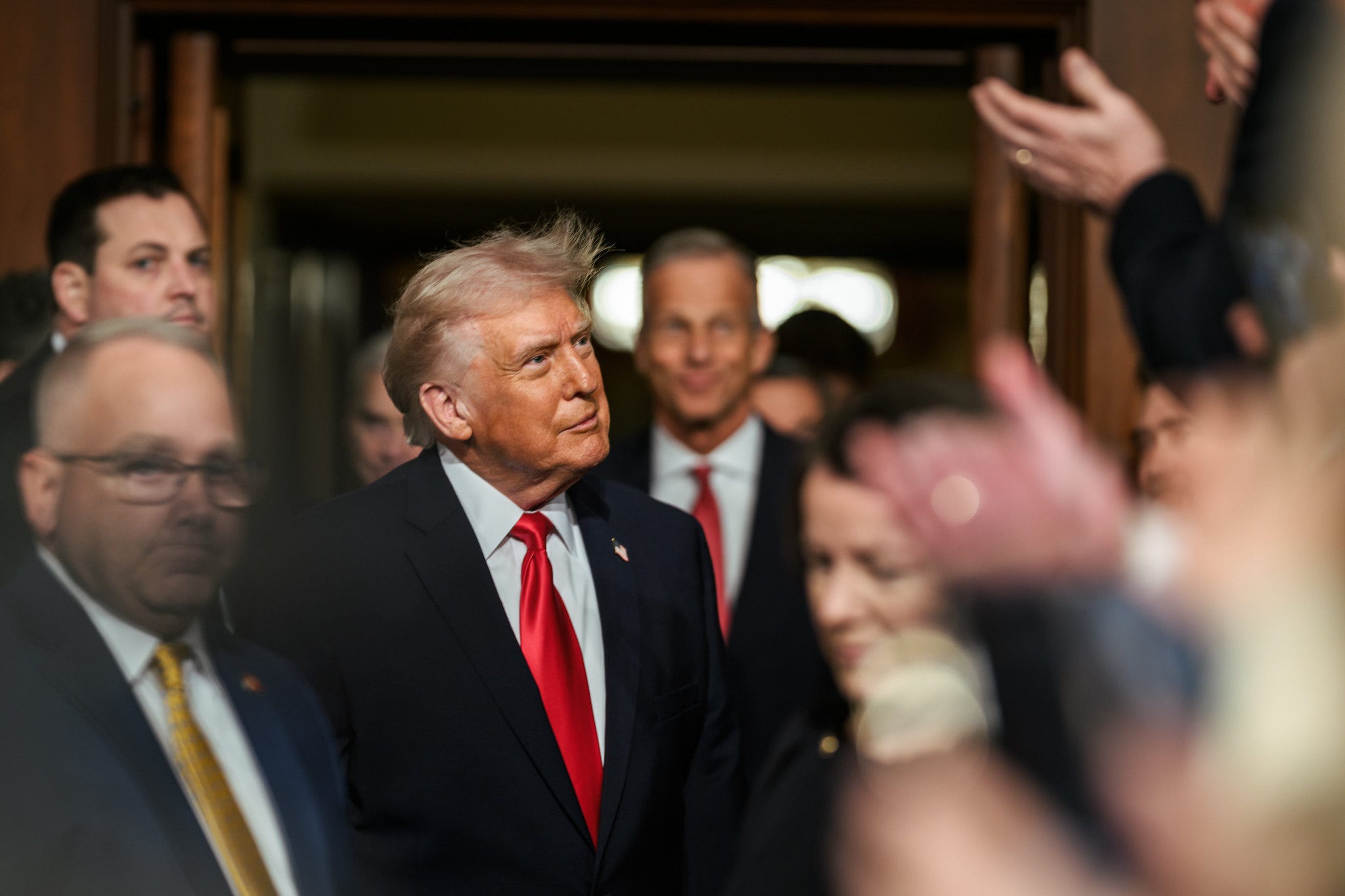
Republicans look unified, but the numbers point to a deeper problem heading into 2026. President Donald Trump still dominates his base, yet independents have moved sharply away, with approval stuck in the 20s across multiple polls. That is not a dip, it is a warning. Midterms are decided in the middle, and the middle is already breaking. If those voters stay locked in place, the party is not expanding, it is shrinking in real time, with fewer paths to win competitive races.
President Donald Trump continues to command the Republican Party at a level that few modern presidents have achieved. Among Republican voters, his approval remains in the 80-percent range across multiple surveys.
However, outside that coalition, the data present a fundamentally different reality.
Across multiple national polls conducted in March 2026, Trump’s approval among independents sits in the high 20 percent range. Economist/YouGov places his approval among independents at approximately 29 percent, and comparable cross-tabulations across the polling packet show that his support with these voters consistently remains in the mid-to-high 20 percent range. This pattern is not a marginal fluctuation; it is a structurally weak position.
Independent voters are not a peripheral audience in American politics. They constitute the decisive bloc in competitive districts and statewide elections. Historically, presidents who remain politically viable in midterm environments tend to maintain substantially higher levels of support among independents than what is observed here. Approval levels in the 20 percent range indicate that the president has lost access to the only segment of the electorate that can expand his coalition.
This leads to the governing rule of the current political moment: a presidency can be dominant within its own party and still be weak in the country as a whole.
Trump has achieved near-total partisan loyalty within the Republican Party. However, he has not achieved national consent across the broader electorate.
The topline numbers reinforce this structural imbalance. Economist/YouGov places Trump’s overall job approval at 38 percent, with 56 percent disapproving. Quinnipiac reports a nearly identical result at 37 percent approval and 57 percent disapproval. These are not transient readings; they are convergent measurements across different polling instruments and voter universes.

The distribution of those numbers is even more revealing. Among Republicans, Trump’s approval remains in the low-to-mid 80 percent range. Among Democrats, his approval collapses into the single digits. Among independents, his approval remains stuck in the 20 percent range.
Because Democratic opposition is already consolidated, independents represent the only viable path for coalition expansion. When approval among that group falls into the 20 percent range, the structure of the electorate becomes fixed. Under those conditions, the presidency becomes dependent on base turnout rather than persuasion, which significantly narrows the path to electoral success in a midterm environment.
The weakness is not confined to personal approval. It extends across an array of policy issues.
