


Brian Daitzman is the Editor of The Intellectualist. Subscribe to his Substack.
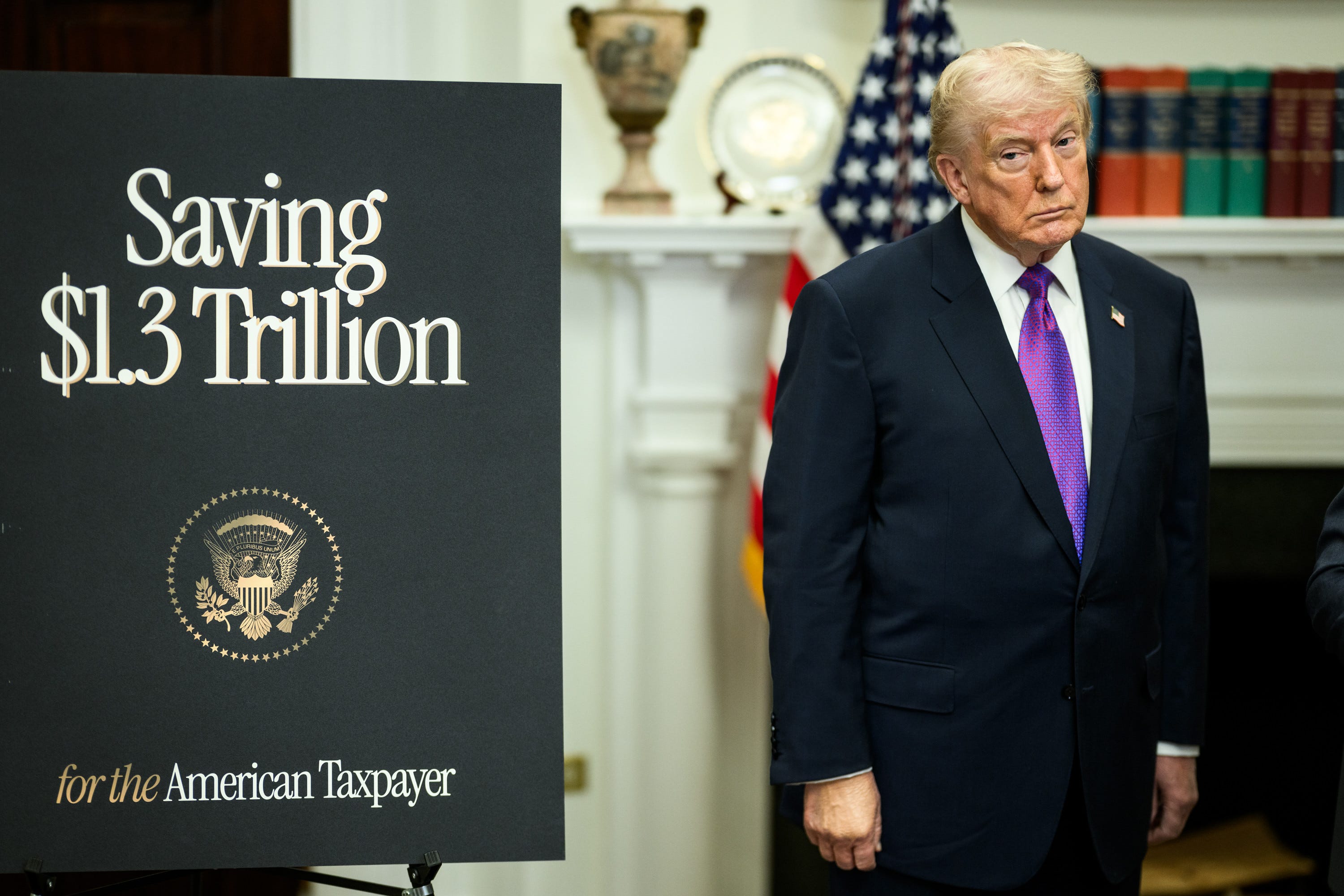
In 2025, President Donald Trump imposed the largest U.S. tax increase since 1993, measured as a share of GDP. It did not come through income brackets or payroll deductions. It came through tariffs — raising the effective tariff rate to its highest level since 1946 and costing the average household about $1,000 last year alone. The modeled long-run economic drag approaches $200 billion annually. The tariff regime is structural. The costs are no longer theoretical.
In the aftermath of World War II, the United States began dismantling the high-tariff regime that had defined the interwar period. The 1947 General Agreement on Tariffs and Trade marked the beginning of a multi-decade shift toward trade liberalization as a central pillar of American economic policy. Over the following decades, tariffs receded as a source of federal revenue and rarely shaped macroeconomic outcomes.
That posture has reversed.
As of early 2026, the average effective tariff rate on U.S. imports — measured as duties collected relative to total import value after behavioral adjustments — stands near 9.9 percent. The import-weighted applied rate — reflecting statutory tariff schedules across products and trading partners — is approximately 13.5 percent. By historical comparison, those levels are the highest observed in the postwar era.
“Our peaceful trading partners are not our enemies; they are our allies. We should beware of the demagogues who are ready to declare a trade war against our friends — weakening our economy, our national security, and the entire free world — all while cynically waving the American flag.”
— President Ronald Reagan, Presidential Radio Address to the Nation on the Canadian Elections and Free Trade, November 26, 1988.
In 2025, U.S. customs duties — taxes on imported goods — totaled roughly $264 billion in gross collections.
Tariffs raise input costs and consumer prices, slowing economic activity and reducing income and payroll tax receipts. After accounting for those macroeconomic effects and expected shifts in trade and consumption, the net additional federal revenue attributable to newly imposed and expanded tariffs relative to pre-2025 policy is estimated at approximately $132 billion.
Allocated evenly across roughly 135 million U.S. households, that amounts to about $1,000 per household in 2025. Under the currently enacted and scheduled tariff structure — assuming no repeal or escalation — the comparable net figure rises to roughly $1,300 per household in 2026. Actual impacts vary by income level and by exposure to goods that rely heavily on imported inputs.
Tariffs are taxes imposed on imported goods at the border. Importers remit them to the federal government at the point of entry, but the economic burden passes through prices, wages, and profit margins across the domestic economy.
📊 Tariffs Quantified
Largest tax increase since 1993 (GDP share)
Highest tariff rate since 1946
~$1,000 per household (2025)
~$200B annual GDP drag
~0.7% long-run GDP loss
~436,000 jobs
In 2026, projected tariff revenue approaches $171 billion — roughly 0.54 percent of GDP. Measured relative to the size of the economy, that represents the largest single-year federal tax increase since 1993.
Over a ten-year horizon, conventional budget projections — which assume no economy-wide feedback effects — estimate roughly $2 trillion in tariff revenue from 2026 through 2035. On a dynamic basis, incorporating the projected reduction in economic output and the resulting decline in income and payroll tax receipts, the estimate falls to approximately $1.6 trillion. The difference reflects revenue lost to slower growth.
“We call a tariff a protective measure. It does protect; it protects the consumer very well against one thing. It protects the consumer against low prices.”
— Milton Friedman, “Free Trade: Producer versus Consumer”, lecture delivered April 27, 1978 (part of the Milton Friedman Speaks series).
Long-run macroeconomic modeling indicates that, before accounting for foreign retaliation, the current tariff structure reduces U.S. GDP by roughly 0.5 percent.
Including imposed and threatened retaliation, the estimated reduction approaches 0.7 percent. In an economy producing approximately $28 trillion annually, a 0.7 percent reduction corresponds to nearly $200 billion in foregone output each year.
These are long-run steady-state estimates — the economy after businesses, workers, and consumers have fully adjusted to the tariff structure. They are not projections of an immediate quarterly downturn. They measure the persistent economic drag embedded in the policy itself.
