


Brian Daitzman is the Editor of The Intellectualist. Subscribe to his Substack.
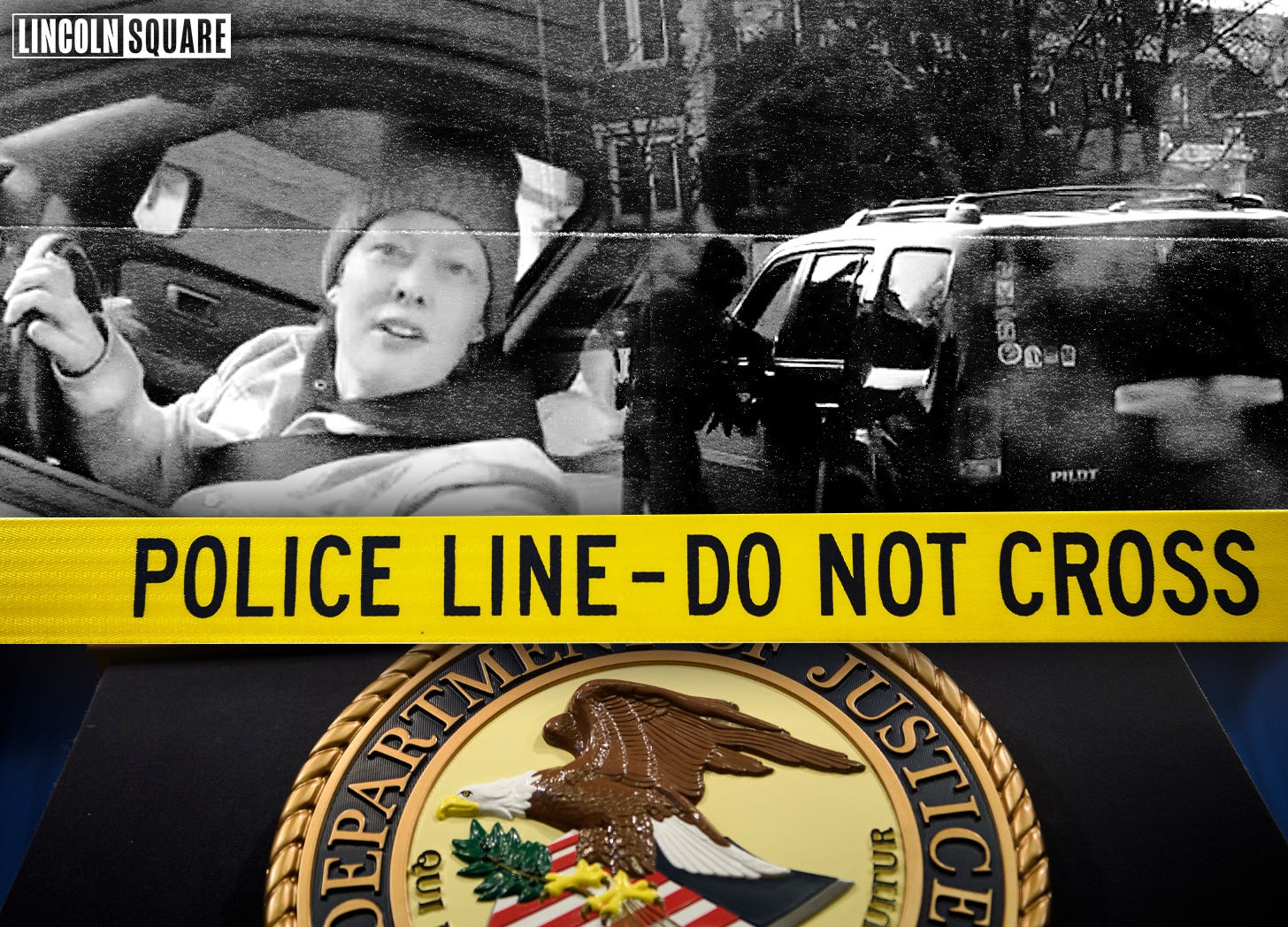
After Renée Good was shot and killed by a federal agent in Minneapolis, the case moved through the familiar machinery of accountability—warrants, evidence, civil-rights review. Then Washington intervened. Investigators were told to stop. Prosecutors resigned. The inquiry was quietly rerouted. What followed was not a scandal, but something colder: a demonstration of how investigations can be interrupted, institutions thinned, and accountability reshaped without changing the law—only the order in which it is allowed to operate.
The investigation began the way accountability is designed to work—and then it was halted.
In the hours after Renée Good was shot inside her S.U.V. on a Minneapolis street, the case moved where such deaths usually go. A senior federal prosecutor sought a warrant. Investigators prepared to document blood spatter and bullet trajectories. The work was procedural, unglamorous, and—by the standards of American law enforcement—routine. Then the work stopped.
What halted it was not a judge’s ruling or a missing fact, but an instruction from Washington. Federal agents who were ready to execute a signed warrant were told to stand down. According to people familiar with the episode, the concern was not uncertainty about what the evidence might show, but anxiety that the investigation itself would contradict the President’s public account of what had already happened.
In American civic life, this is a small moment with a long shadow. It marks the point at which a process designed to discover facts was asked to conform to a narrative already declared. The details of the Good shooting remain contested. The mechanics of the investigation that followed—or did not—are not. Together they illustrate how accountability can be rerouted without changing the law, simply by changing the order in which institutions are allowed to act.
Ordinarily, when a law-enforcement officer kills a civilian, the machinery that follows is deliberately slow. Evidence is preserved. Jurisdiction is negotiated. Civil-rights lawyers assess whether the use of force fits within constitutional bounds. The process does not promise indictment or exoneration, but it does promise sequence: facts first, judgment later. That sequence is not a courtesy; it is the architecture that distributes legitimacy across agencies so that no single actor decides what reality is.
In Minneapolis, that choreography began as expected. Prosecutors anticipated a civil-rights inquiry, a standard pathway in officer-involved shootings and one that could just as plausibly have cleared the agent as implicated him. Even lawyers advising the agent supported conducting such a review. In the absence of an independent investigation, suspicion compounds rather than dissipates.
The deviation came quickly.
