


Brian Daitzman is the Editor of The Intellectualist. Subscribe to his Substack.
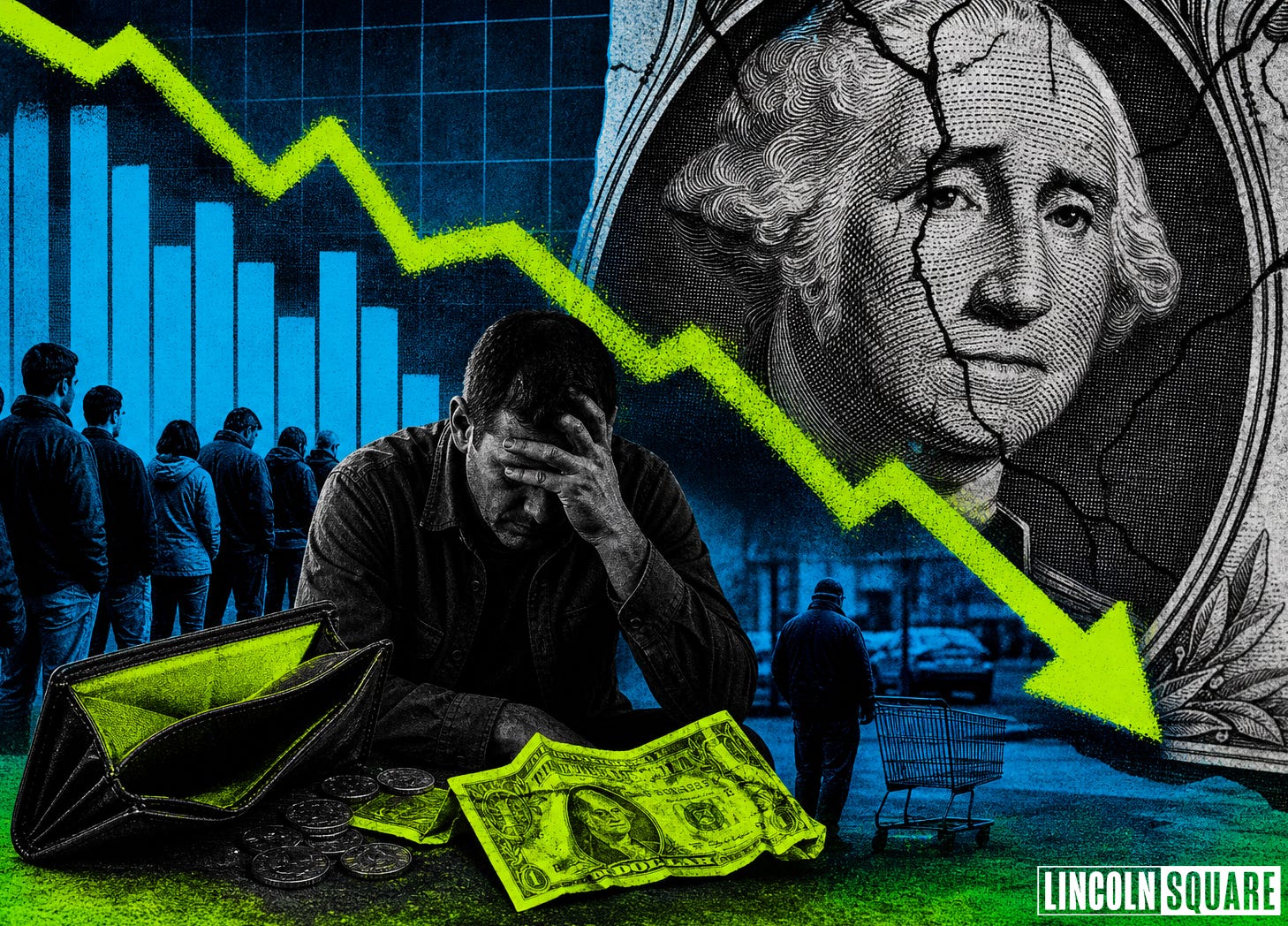
The cost of borrowing is rising while the purchasing power of money is falling. That means mortgages, credit cards, business loans, federal debt, and groceries all get harder at once.
Something important is happening in the bond market, and it is not as remote or technical as it sounds.
A bond is just a loan. When the United States government sells a Treasury bond, it is borrowing money. Investors give the government cash now, and the government promises to pay that money back later, with interest. The yield is the interest rate investors demand for making that loan.
When Treasury yields rise, the U.S. government has to pay more to borrow. That matters because Treasury yields help set the cost of borrowing across the American economy. They influence mortgage rates, business loans, car loans, credit markets, stock prices, and how much the federal government must spend on interest instead of everything else.
That is why the bond market is not just a Wall Street story. It is a household story. When borrowing becomes more expensive, it eventually shows up in monthly payments, business decisions, federal budgets, and the cost of living.
The moment is ominous because Americans are being squeezed from both directions. Borrowing is getting more expensive, while the purchasing power of money — what a dollar can actually buy — has already been weakened by years of higher prices.
We may be witnessing something historic: not necessarily a crash, and not necessarily one dramatic event, but a major repricing of debt after years when borrowing was unusually cheap.
The Cost of Money
The bond market is repricing borrowing for the government, businesses, and households.
On May 19, 2026, the 30-year Treasury yield reached 5.180%, its highest since July 2007. The 10-year yield rose to 4.668%, its highest close since January 2025.
These numbers matter because Treasury yields help set mortgage rates, credit-card costs, car loans, business credit, stock valuations, and federal interest payments.
The danger is scale. During the Volcker era — the early 1980s, when Federal Reserve Chair Paul Volcker pushed interest rates sharply higher to fight inflation — the federal funds rate reached about 19–20%. But federal debt was roughly 30% of GDP. Today, debt held by the public is roughly equal to the size of the economy.
That means the U.S. does not need Volcker-era rates to create a fiscal problem. One extra percentage point on $30 trillion of debt eventually means about $300 billion more in annual interest costs.
Americans are being squeezed from both sides: borrowing costs more, while inflation has weakened what a dollar can buy. The bond market is not just pricing debt. It is repricing daily life.
For much of the post-2008 era, the Federal Reserve kept short-term interest rates near zero. Debt became easier to carry. Stocks, real estate, private equity, venture capital, and other financial assets got support from a world where money was cheap. Federal deficits were easier to finance. Borrowing began to feel normal.
That period became known as the zero-rate era.
The phrase sounds technical, but the idea is simple: the central bank made money cheap on purpose. It kept interest rates extremely low to stabilize the economy, encourage borrowing, support spending, and push investors toward risk-taking. The goal was to prevent collapse and restart growth.
For a while, it worked.
But that era is ending.
