


Kristoffer Ealy is a political scientist, political analyst, and professor in Southern California. He teaches American Government and political behavior, with a focus on political psychology, voting behavior, and political socialization. Subscribe to his Substack, The Thinking Class with Professor Ealy.
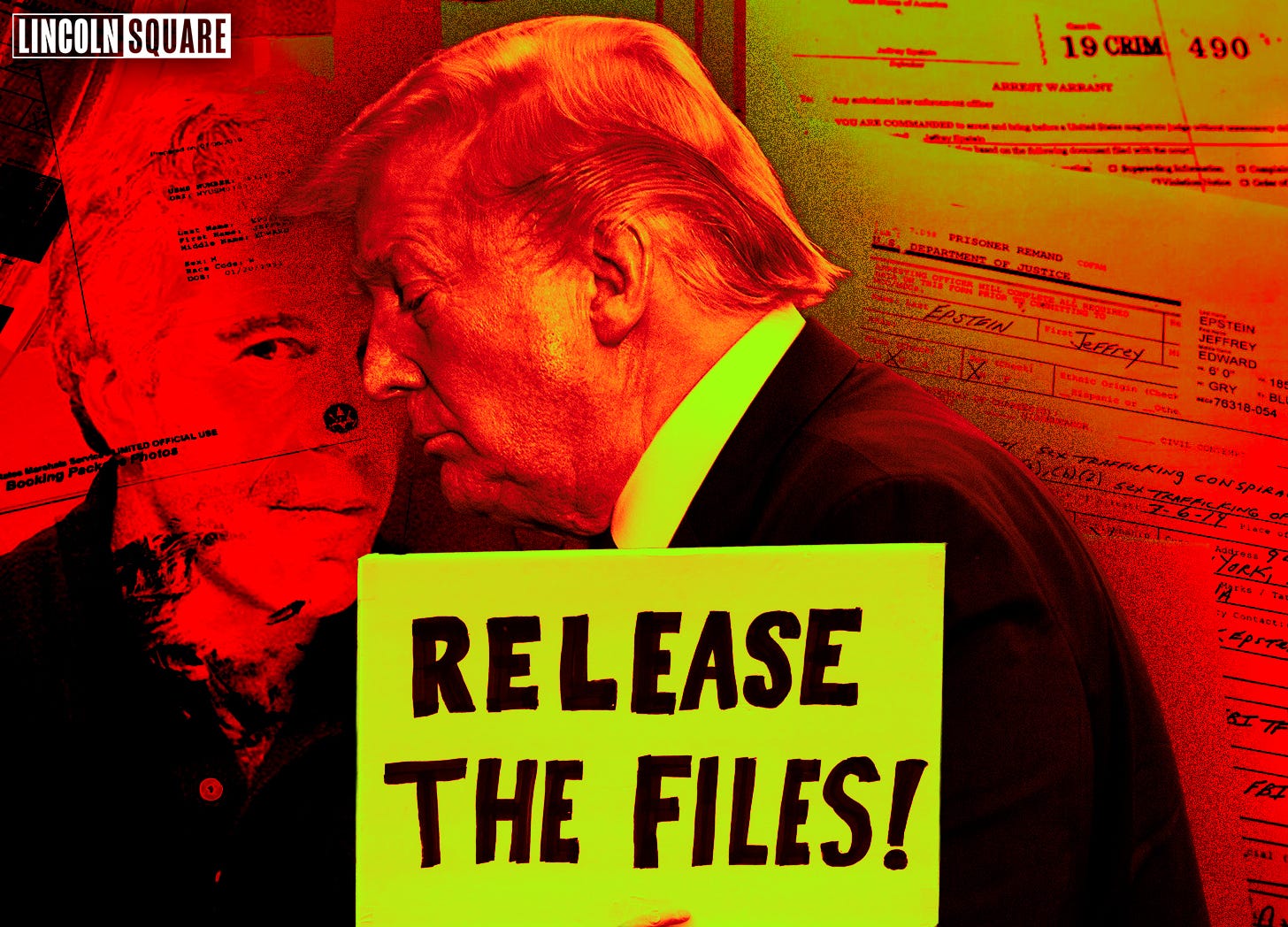
Donald Trump has done almost everything imaginable to get Americans to stop talking about the Epstein files.
He has thrown chaos at the country like a man emptying every drawer in the house because he cannot find the one receipt that matters. He escalated attacks on critics. He cheered punitive action against late-night enemies. He watched Don Lemon get dragged into a federal prosecution tied to anti-ICE protest coverage. He sent troops into American cities. He lurched into a widening war with Iran. He has tried almost everything short of faking his own death and reappearing as someone who never met Jeffrey Epstein. Yet the files are still there, hanging over him like a chandelier made of guilt and bad decisions that nobody will let him redecorate around.
That alone tells you something important.
Other stories come and go. They are born with a chyron, peak with a panel segment, and die somewhere between a podcast clip and the next algorithmic panic attack. Journalism students learn early that one of the central elements of newsworthiness is timeliness. Stories are supposed to age out. They get replaced by fresher outrage, newer horror, shinier scandal. That is how the modern news cycle works. It is an industrial shredder for public attention. But the Epstein files have refused to obey the normal rules of political gravity. They became front-page news, stayed front-page news, and then did something even more dangerous for Trump: they became permanent background noise. They are no longer just a story. They are the ringing in the administration’s ears that no amount of noise elsewhere can drown out.
That is why every attempted distraction now lands with the same response. Trump picks a fight with another media enemy. That’s nice. What about the Epstein files? ICE agents kill civilians in the middle of a crackdown. Horrible. What about the Epstein files? Trump ratchets up martial posturing in American cities and dares critics to stop him. Noted. What about the Epstein files? The administration barrels deeper into war with Iran. People rightly panic over that, protest that, analyze that. And then they keep asking what is in those files and why the government still cannot seem to tell a straight story about them. Reuters reported in February that Americans overwhelmingly believe the files show wealthy and powerful people rarely face real accountability. Which is another way of saying the public understood the moral of this story perfectly well and did not need the ending explained to them.
Some scholars might call what happened next the Streisand Effect. There is truth in that. Trump tried to smother public fascination and instead poured gasoline on it. But what happened on July 15, 2025 goes much deeper than a textbook example of suppression backfiring. July 15, 2025 may not have been the day MAGA died.
But it was the day the music died.
It was the day one of the movement’s most emotionally loaded myths cracked in public, on camera, in Trump’s own words.
That day, Trump did something that would have been hard to improve upon if his goal had been to humiliate his own most conspiracy-minded supporters. Asked about the Epstein story, he called it “sordid but boring” and said, “I think really only pretty bad people, including fake news, want to keep something like that going.” Reuters and other contemporaneous reports place those remarks on July 15, 2025. That date matters because it was the moment Trump stopped speaking to his followers as co-believers and started speaking to them like they were gullible little weirdos who should stop bothering him.
He could have said almost anything else and bought himself time. He could have said, “We’re looking into it.” He could have said, “The American people deserve transparency.” He could have said, “We’ll release whatever is credible.” He could have lied with craftsmanship. He could have done what politicians do every single day of the week and wrapped a non-answer inside a patriotic casserole. Instead he shrugged. He rolled his eyes. He treated one of MAGA’s sacred obsessions like a spam email he was tired of flagging. That was the mistake. And it was not a small one.
Because the Epstein files were never just another scandal inside MAGA world. They were a promise. More than that, they were a kind of secular scripture for a movement that had spent years marinating in Pizzagate-adjacent fantasies about a hidden elite of depraved Democrats, celebrities, financiers, fixers, and media ghouls. Trump was supposed to be the avenging hero who kicked the door open, turned on the fluorescent lights, and let the monsters scatter. He and the ecosystem around him helped build that expectation for years. The podcast bros fed it. The influencer class fed it. Republican politicians winked at it. Every half-literate fascist with a webcam and a supplement code fed it. For a significant portion of his base, exposing the Epstein network was not a side issue. It was the holy grail. It was the whole point.
That is why the right language here is not just political backlash. It is psychological rupture.
