


Brian Daitzman is the Editor of The Intellectualist. Subscribe to his Substack.
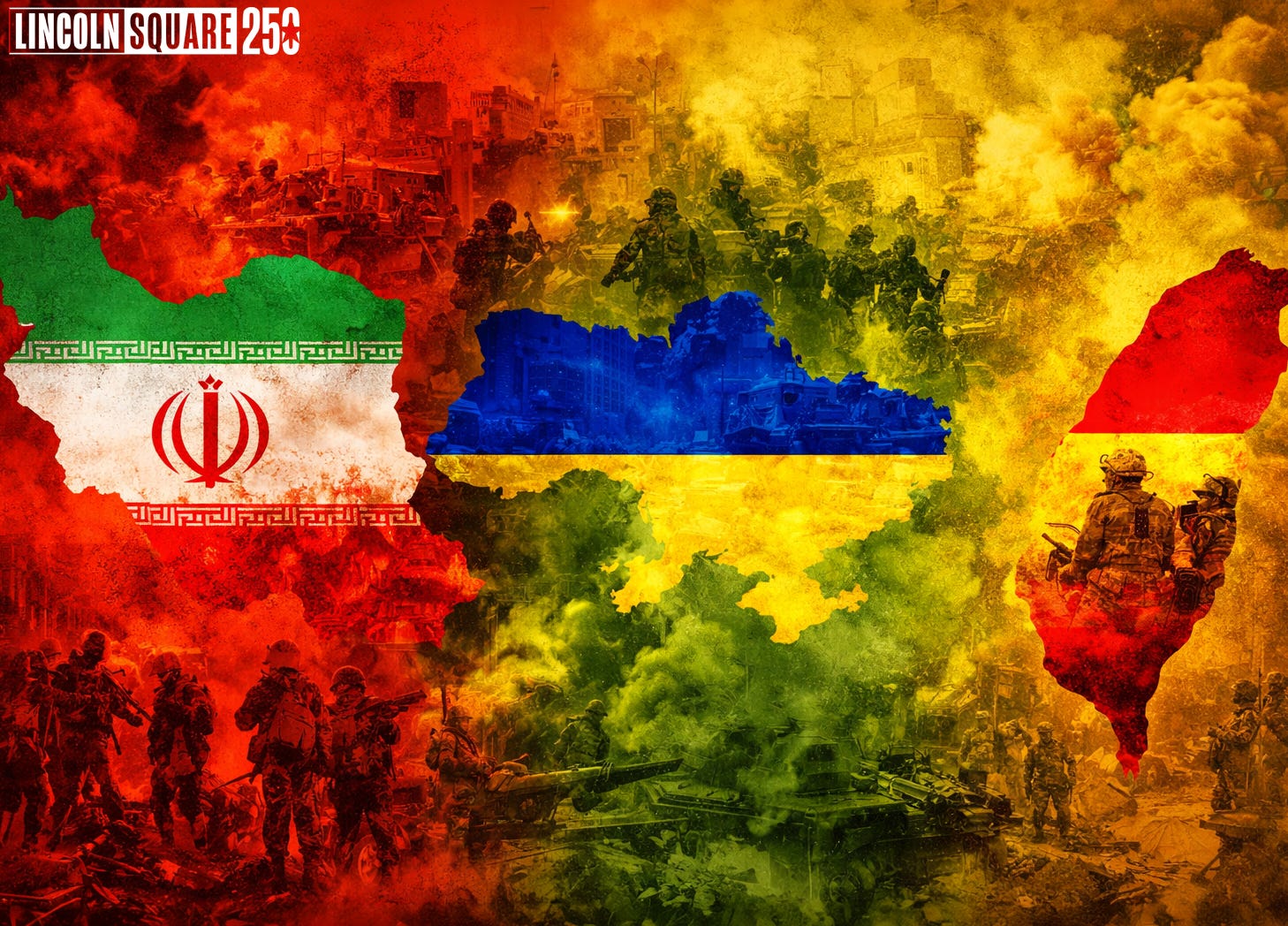
A third world war is not inevitable. The conditions at issue are not a predictive checklist. They are mechanisms through which conflicts that begin separately can start changing one another.
The danger is not simply that several wars are occurring at once. Regional wars can be extraordinarily destructive without becoming direct great-power wars. They remain regional when outside great powers—even while supplying weapons, intelligence, financing or political support—do not enter sustained direct combat against one another.
World War I and World War II crossed that boundary because the leading powers fought one another directly across multiple theaters. The American invasion of Iraq in 2003 did not. The United States and its coalition overthrew Saddam Hussein’s government, but Iraq was not a great power, and neither Russia nor China entered sustained combat against American forces. Scale does not determine the category. The identity of the combatants does.
That distinction matters now. For purposes of the present danger, the United States and China occupy the superpower tier of the international system. Russia, though much smaller economically, remains a nuclear great power capable of threatening the United States and its allies directly. The decisive boundary is sustained direct combat among powers at that level.
Ukraine has not crossed it. Russia is fighting Ukraine directly. The United States and its NATO allies have armed Ukraine, supplied intelligence and supported its defense, but there is no public evidence of sustained direct combat between American and Russian forces. The U.S. intelligence community itself describes the most dangerous Russian threat as an escalatory spiral in Ukraine or another conflict that produces direct hostilities.
Yet the distance between regional war and great-power confrontation is narrowing.
