


Frank Figliuzzi hosts The Frank Figliuzzi Show on Lincoln Square. He is an FBI Assistant Director (retired); 25-year veteran Special Agent; and author of the national bestseller, The FBI Way, and Long Haul: Hunting the Highway Serial Killers. Subscribe to his Substack.
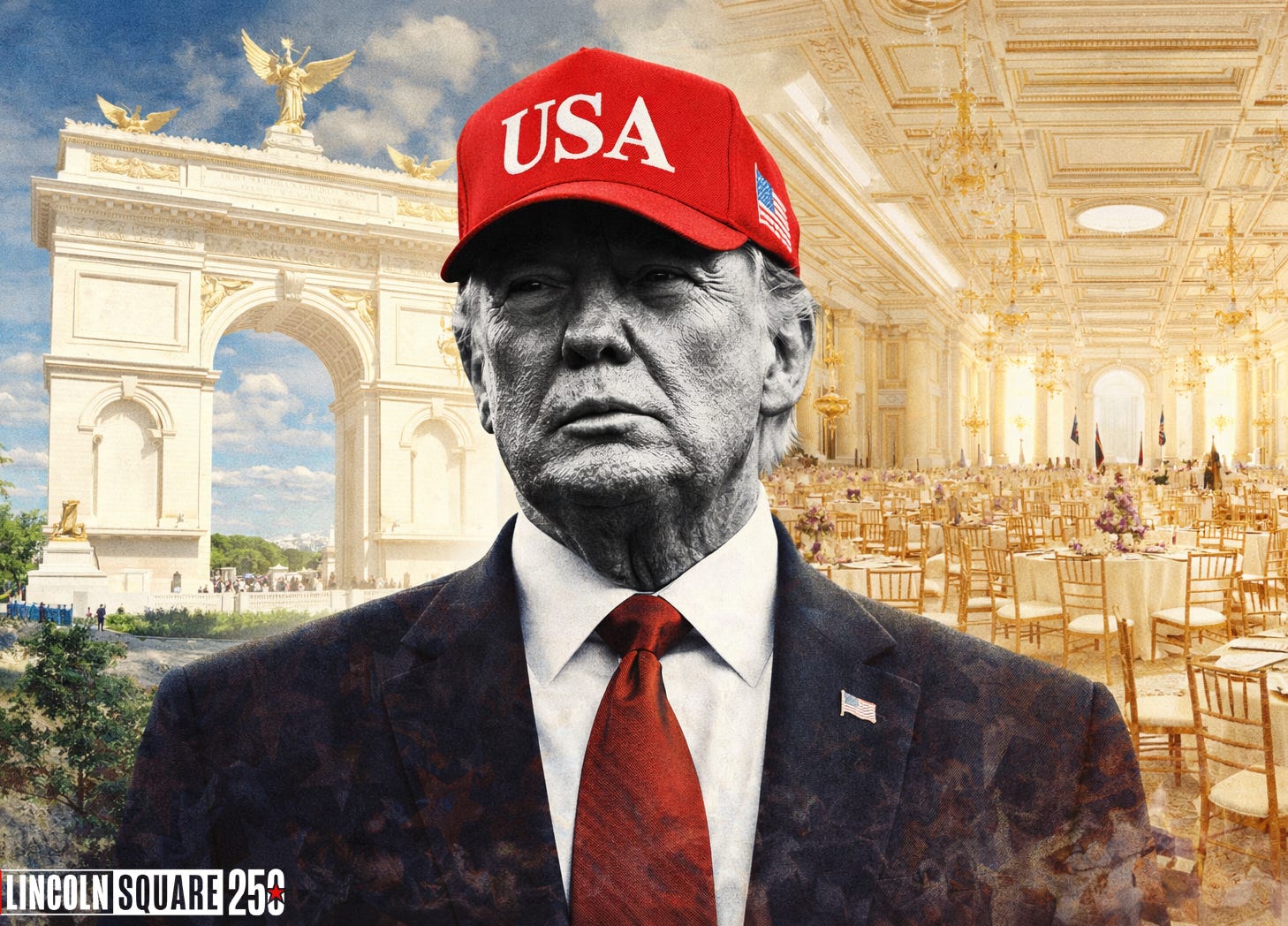
President Trump now says that his “triumphant arch” project near Arlington National Cemetery will be a “top grade” military installation replete with snipers and drones. This apparently last ditch attempt to save his 250 foot ego-sized monument comes as veteran groups and historic preservationists challenge the location and size of the arch in court.
Trump similarly pulled the “national security” card to defend his wasteful spending on his $400 million ballroom. Yet the arch project seems different and comes with disturbing historical context that should concern us all.
The arch’s sudden pivot from an architectural monstrosity to a military monolith is more than just a transparent legal strategy to overcome naysayers. The massive arch and its newly found purpose, seen through the lens of history, provide a kind of behavioral profile of a president as authoritarian and dictator. In times past and present, authoritarian figures or regimes built gargantuan gateways, and blended public monuments with military functions. They also used elevated architectural landmarks as vantage points against domestic or civilian adversaries.

Triumphal arches are historically rooted in classical empire-building and have been frequently used by autocrats to project absolute state dominance. In 1806, France’s Napolean Bonaparte commissioned Paris’s famed Arc de Triomphe – modeled after Roman arches, to enshrine his power, cement his legitimacy, and glorify his military conquests.
Throughout French history, rulers regularly referred to and molded the Arc’s symbolism to project state power as they saw fit. When construction stalled as Napolean abdicated in 1814, King Louis XVIII eventually restarted construction and recast the project as a symbol of royal authority and military prowess. The project was finally completed in 1836 under King Louis-Philippe I, and rededicated to the unified armies of the Revolution and the Empire.
The Nazi Party had its own triumphal arch plans. Under the envisioned redesign of Berlin into “Welthauptstadt Germania,” Nazi architect Albert Speer designed an absurdly towering, 400-foot-tall triumphal arch. It was explicitly engineered as a hypertrophic monument to the muscle and military dominance of the Nazi’s. Paris’ Arc de Triomphe could easily fit into just the opening of Hitler’s planned edifice. The objective of the arch was to paint Germany as a victim while projecting future military might by engraving the names of 1.8 million German soldiers who died in World War I. The regime’s collapse halted the project, but the intention and meaning remains as a reminder of the mindset of a megalomaniac.