


Kristoffer Ealy is a political scientist, political analyst, and professor in Southern California. He teaches American Government and political behavior, with a focus on political psychology, voting behavior, and political socialization. Subscribe to his Substack, The Thinking Class with Professor Ealy.
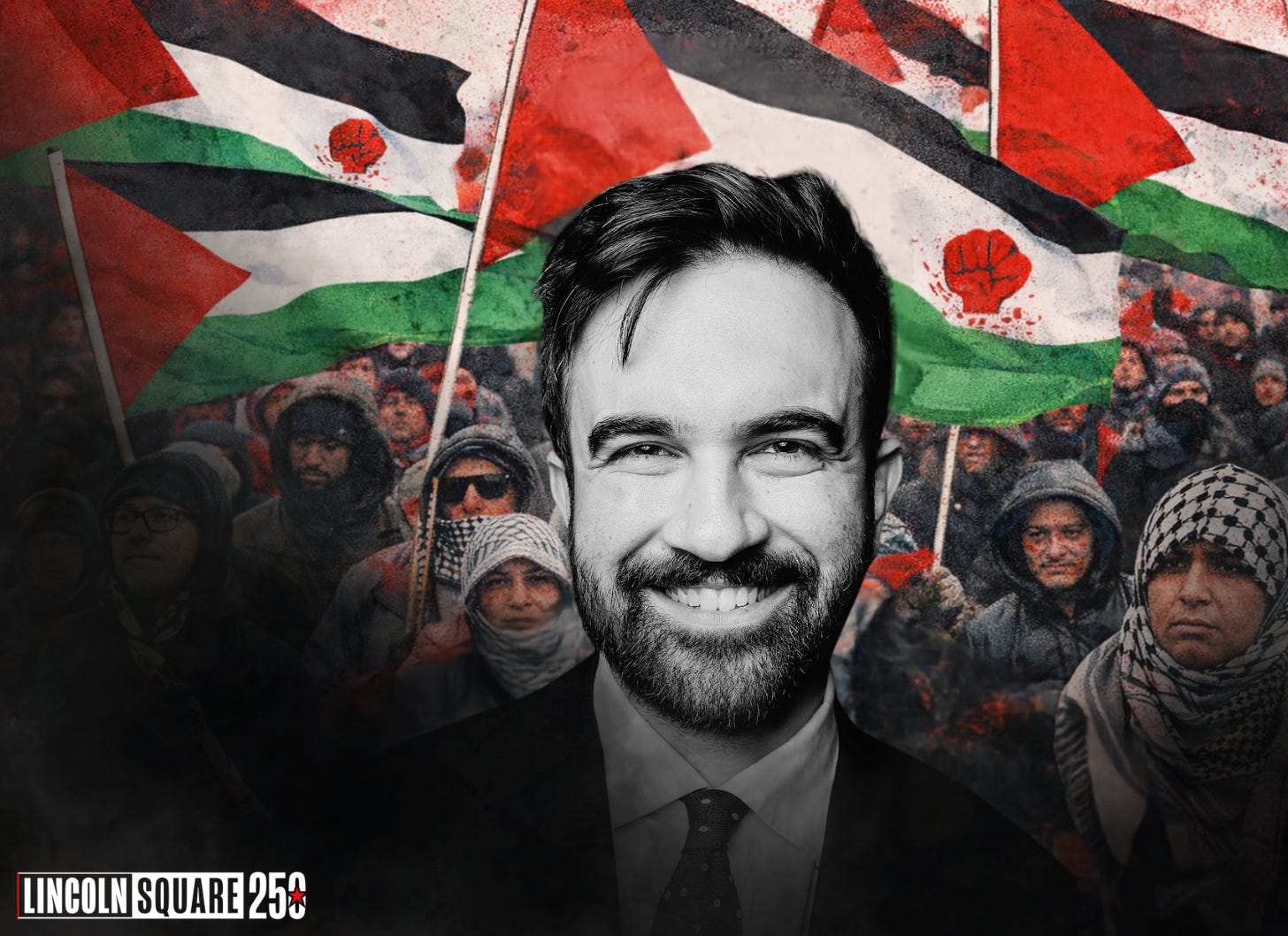
On the third anniversary of October 7, Mayor Zohran Mamdani performed an act of basic political triage that should not require a peer-reviewed defense.
He issued a statement acknowledging the Hamas attack for what it unambiguously was: a series of horrific war crimes that claimed over 1,100 Israeli lives and saw 251 hostages taken into Gaza. He expressed grief alongside New Yorkers who carry that trauma. Simultaneously, he characterized the Israeli government’s military campaign in Gaza as an ongoing genocide—a position he has held consistently for years. Then, demonstrating a rare willingness to face his own constituency in the flesh, he walked down to Union Square, lit a candle next to Comptroller Brad Lander, and stood in silence.
Predictably, the right-wing apparatus executed its pre-programmed routine. Israel’s U.N. Ambassador, Danny Danon, accused Mamdani of “hijacking” the anniversary, while AIPAC and its orbiters immediately launched their standard press release offensive. For anyone who has monitored political rhetoric over the last decade, this was entirely baseline behavior: hold Benjamin Netanyahu accountable for the destruction of Gaza, and an automated PR campaign with your name on it arrives on a predictable schedule.
What was far more remarkable—and far more absurd—was the flank attack from the left. Roughly 200 pro-Palestinian protesters materialized to surround a solemn vigil attended by perhaps 50 people. Rather than engaging in strategic activism, they proceeded to drown out the speakers, chant, “Long Live Hamas!” and denounce the mayor as a sellout.
As captured on video by City & State journalist Peter Sterne, the crowd broke into chants of “Traitor, traitor, come on out! You sold all your people out!” alongside a display of staggering tactical illiteracy: “Zohran, what do you say? How many kids did you kill today?” One protester even proudly announced to the crowd that he was a former Mamdani intern—a flex that says far more about the hyper-concentrated nature of local activist networks than it does about political principle. The mayor stood stone-faced, absorbed the noise, and left.
What makes this performance truly embarrassing from a social movements perspective is that the vigil they disrupted was not a right-wing rally or a pro-war rally. It was organized by Israelis for Peace, a group that explicitly read accounts of Israeli victims of October 7 alongside testimonies from Palestinians living under bombardment in Gaza. The protesters effectively screamed over a memorial designed specifically around joint grieving and dual-narrative humanization.
The institutional mechanics behind the protest were equally baffling. Promotional materials listed the NYC Young Democratic Socialists of America (YDSA) and chapters from City College, Hunter, Lehman, and the New School alongside Within Our Lifetime. Their promotional flyers framed October 7 as the moment “resistance against imperialism changed the fate of our world forever,” while their rap sheet against the mayor included his municipal strategies to combat antisemitism and security funding for synagogues. In a move of peak bureaucratic self-preservation, Mamdani’s own press office was forced to clarify the ideological lineage: “It’s not NYC DSA, it’s young DSA, a separate org.”
Left-wing purity politics isn’t new.
