


Kristoffer Ealy is a political scientist, political analyst, and professor in Southern California. He teaches American Government and political behavior, with a focus on political psychology, voting behavior, and political socialization. Subscribe to his Substack, The Thinking Class with Professor Ealy.
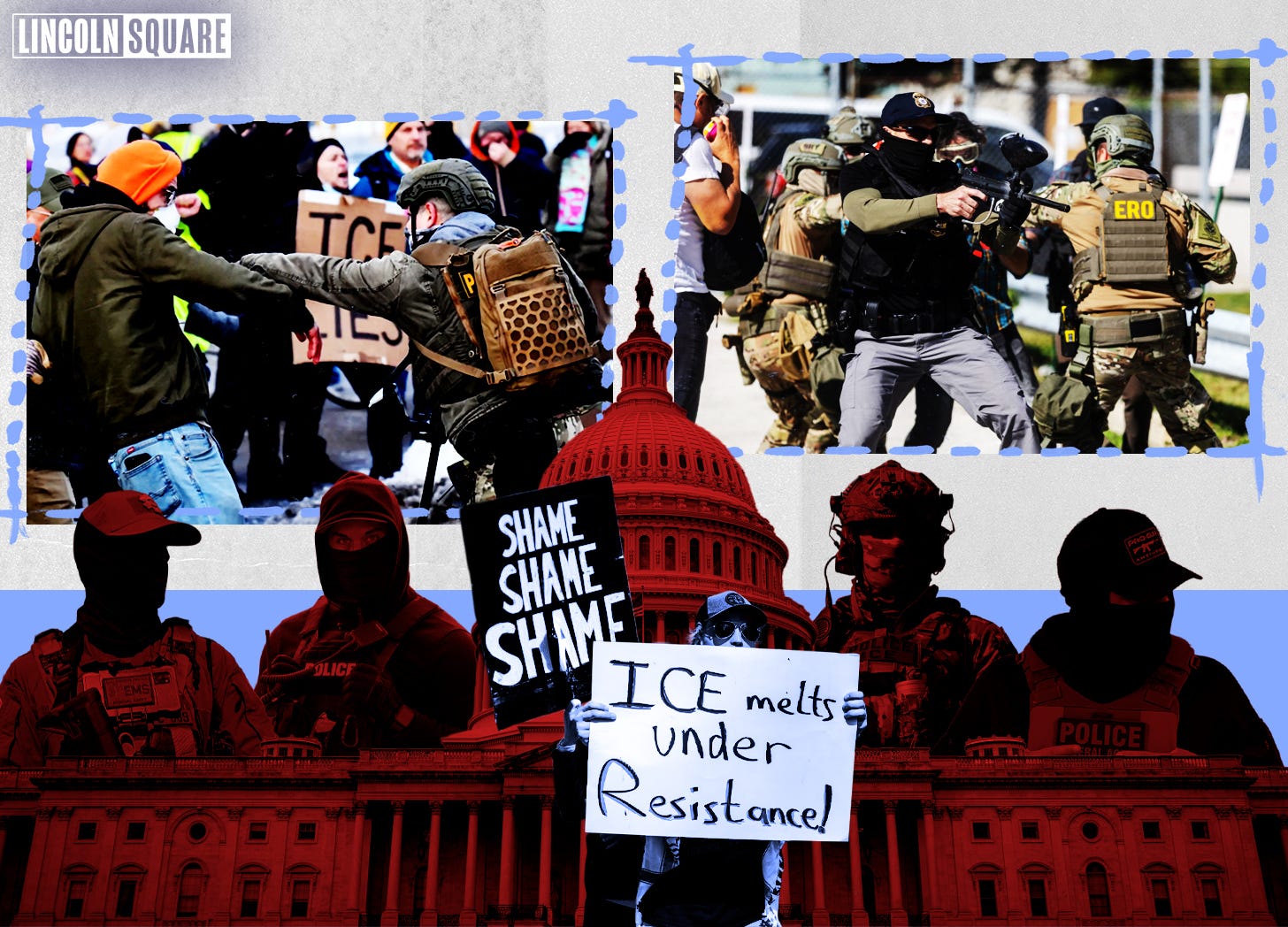
One of the most common questions people ask me—whether I’m standing in front of a classroom, arguing with a relative at a cookout, or out in the world trying to pretend I’m not the kind of person who will turn a casual comment into a seminar—is: does protesting actually make a difference?
And I always have to ask a followup, because “protesting” can mean ten different things depending on who’s talking. (Yes, I know. I have a penchant for being technical and precise with my words. It’s either a personality trait or a cry for help. Take your pick.) The word protest has multiple definitions, but the general idea is simple: expressing an objection to what someone has said or done.
So in that sense, “protest” can be posting a status on Facebook or Bluesky that says, “This is disgusting.” It can be writing a song, singing a song, making art, refusing to follow an order, boycotting, withholding labor, or building a mutual aid network that quietly says, “We’re not waiting for permission to care about each other.” But when most people say “protest,” they mean the term of the day: peacefully protest. Hit the streets. Bring signs. March. Chant. Organize. Do it legally. Do it peacefully.
And you can’t throw a rock on the internet without hitting someone telling you to hit the streets. People like Malcolm Nance have been adamant about it, and so have plenty of other voices with big platforms.
But now we arrive at the question underneath the question: is it even safe to protest in 2026—in Trump’s America? Because that is not a paranoid question. That is a practical one. And it’s a question that got shoved into the center of the country’s throat after the killing of Renée Good in Minneapolis.
Here’s what makes this moment so radioactive: it’s actually debatable whether Renée Good was even “protesting” when she was killed. She was shot by an ICE officer during a DHS operation in Minneapolis. The federal government has leaned hard into a self-defense narrative, while state and local officials have publicly disputed that account after reviewing video, and the case has sparked mass protests and a political tug-of-war over evidence and who gets to investigate whom. That’s not just a tragedy. That’s a formula. It’s the kind of incident that becomes a nationwide Rorschach test inside a week—because in this America, even the act of mourning has to fight through an obstacle course of labels.
And those labels matter, because labels aren’t just descriptive anymore. They’re weapons. “Citizen” can become “threat.” “Mother” can become “menace.” “Grief” can become “riot.” If you control the label, you control whether the public is allowed to empathize. And if you control empathy, you control how much force the state can deploy before people start calling it what it is.
Now, let me be clear about something: I’ve heard plenty of credible Black television and radio personalities tell people it isn’t safe to protest. I’ve heard credible journalists say Black people shouldn’t be the ones in the streets—leave that to white people—because the risk calculus isn’t the same. I’ve heard others argue nobody should protest at all. And the people saying this aren’t bad-faith actors. They’re not trying to demobilize the public to help Trump. They’re expressing real concern, because they’ve watched how quickly “peaceful protest” can be translated by the state into “permission to crack down.”
But there’s also a psychology to how that fear spreads—and how it can be engineered, or at least exploited.
One piece is the availability heuristic: when something vivid and horrifying is repeated, replayed, clipped, memed, and shoved into your eyeballs until it lives in your brain rent-free, your mind starts to treat it as the default outcome. Not because you’re stupid. Because your brain is doing what brains do: estimating risk based on what’s easiest to recall. And when the most “available” story is a person getting brutalized, your nervous system starts acting like the brutality is inevitable.
The other piece is fear appeals—messages designed to influence behavior by stoking fear. In other words: “If you do X, something terrible will happen.” There’s an entire research tradition on how fear messaging works and how it backfires when it produces panic instead of action, but the core idea is simple: fear can be a motivator, and it can also be a leash. Fear appeals don’t just warn; they shape what people think is “worth it.” They can push people into action—or they can shrink people into silence.
