


There was a time when Pennsylvania extended John Fetterman the kind of extraordinary electoral grace no politician has a right to expect.
When he suffered a debilitating stroke on the campaign trail, voters did not penalize him for his mortality; they waited. They watched him navigate debates with a real-time closed-captioning screen and halting, laboriously pieced-together sentences, and they offered him an indulgence rarely seen in modern politics—because he insisted his cognitive capacity remained intact, and the electorate genuinely wanted to believe him. When, just two months into his Senate term, he checked himself into Walter Reed National Military Medical Center for clinical depression, voters didn’t process his six-week inpatient stay as a political liability. They treated it as an act of courageous vulnerability, extending him a measure of human empathy that reflected far more on the decency of the public than on the man holding the seat.
Of course, that grace was heavily subsidized by the sheer absurdity of his opponent. Fetterman was running against Dr. Mehmet Oz—a daytime TV huckster who spent a decade leveraging the residual authority of Oprah’s brand to peddle raspberry ketones, garcinia cambogia, and miracle detox teas to vulnerable audiences. Oz was a carpetbagging infomercial salesman who possessed such a profound, almost sociological disconnect from the state he sought to represent that he famously wandered into a local supermarket, struggled to assemble a basic vegetable platter, and called it a “crudité.” Given the choice between a stroke-recovering, hoodie-clad former mayor from Braddock and a multi-millionaire celebrity doctor whose entire political persona was a poorly acted infomercial, Pennsylvania’s decision was less a blind endorsement of Fetterman and more a rational exercise in risk mitigation. Under those conditions, the vote made complete sense.
Now, whether Fetterman should have cleared the Democratic primary in the first place is a structural grievance for a different essay. But once he was framed as the sole bulwark against a daytime television snake-oil salesman, voters did what the binary mechanics of American politics demanded. No one should second-guess that defensive ballot.
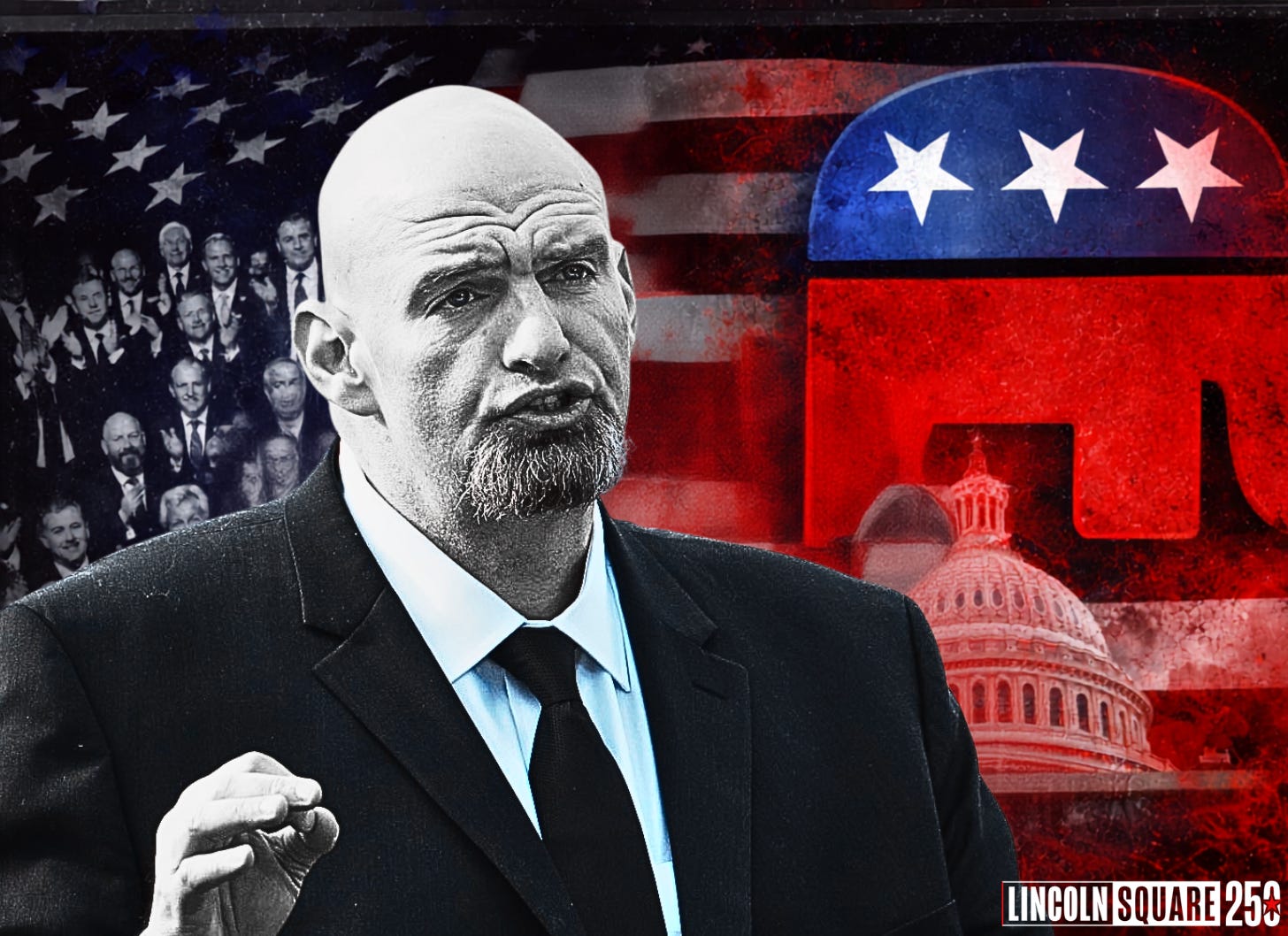
What makes Fetterman’s subsequent pivot so infuriating, however, is the complete bad faith with which he has repaid that public patience. Rather than governing with the humility of a man saved by the grace of his constituents, Fetterman has spent his tenure systematically alienating the base that sustained him. He has repeatedly crossed the aisle to vote with Senate Republicans on high-stakes legislation, made regular appearances on Fox News—even going so far as to suggest Donald Trump deserves a Nobel Peace Prize—and, most recently, allowed the GOP to parade a video appearance of him at their midterm convention. Make no mistake: this is not pragmatic, big-tent bipartisanship. By lending his image to that convention stage, John Fetterman actively deployed his political capital to aid Republicans who are trying to maintain control of Congress.
The Wall Street Journal investigation shifted the conversation entirely—from legislative voting records to basic professional competence. Citing over a dozen former staffers and internal texts, the Journal exposed a routine of breathtaking neglect. Three paralyzed military veterans traveled all the way from rural Pennsylvania to Washington to advocate for basic healthcare legislation. Fetterman canceled, claimed he had a stomach bug, and then miraculously resurrected less than an hour later to amble into his office and do a live hit on Fox News.
Seriously—of all the reasons on planet Earth to ghost three disabled veterans who just spent hours traveling in wheelchairs to see you, he blew them off for Fox News? I mean, come on. If you tell me you canceled a constituent meeting because you got stuck in an elevator, or because your dog ate your pants, or because you had a sudden, overwhelming urge to binge-watch three consecutive seasons of The Great British Baking Show, fine. I’d at least respect the honesty of a weird personal crisis. But claiming you were too sick to stand in front of paralyzed veterans, only to be miraculously healed by the studio lights of a cable news green room sixty minutes later, is a level of cynical laziness that defies satire.
It didn’t stop there.
