


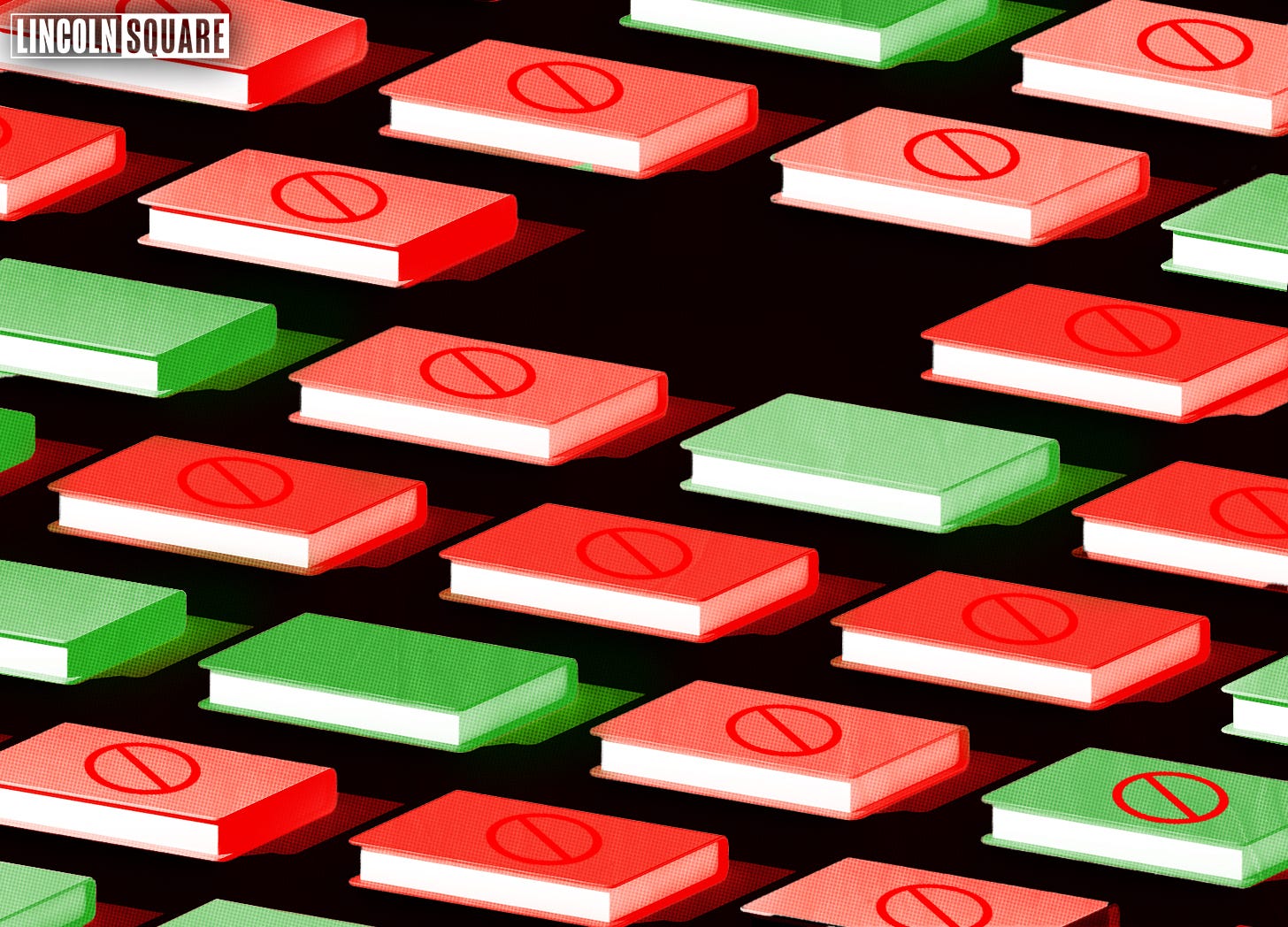
Book bans aren’t just rising. They are being engineered. The same titles and tactics are spreading across states. What’s changing is not the number. It is the system behind it.
Book bans in the United States remain near record levels, according to data compiled by the American Library Association and reported by the Associated Press. But the numbers tell only part of it.
The bigger shift, according to librarians and researchers, is who is driving them.
For decades, book challenges were typically brought by individual parents or local community members, often focused on a single title in a single district and resolved within a single school system, according to reporting and historical analyses of past challenges. Now, they are increasingly driven by organized groups and public officials, operating across districts and, in some cases, across state lines.
What has emerged, according to data and reporting from the American Library Association and PEN America, is a repeatable pattern — one that, while not uniform in every case, shows consistent features across jurisdictions — rather than a series of isolated complaints.
According to the American Library Association, 4,235 unique titles were challenged in 2025, just below the record of 4,240 set two years earlier. But removals — more than 5,600 — exceed the number of unique titles, indicating that the same books are often challenged and removed multiple times in different districts.
That distinction matters.
It suggests not simply volume, but replication.
The same titles recur, according to ALA data.
Sold, Patricia McCormick’s novel about sex trafficking, topped the list of most challenged books. Others included The Perks of Being a Wallflower, Gender Queer, and A Clockwork Orange — works contested in multiple communities, often for similar reasons tied to sexuality, identity, or depictions of violence.
