

How Trump Is Breaking Public Service
A bizarro rule means he can fire thousands of government workers.

Don Moynihan is the J. Ira and Nicki Harris Family Professor of Public Policy at the University of Michigan Ford School of Public Policy Subscribe to his Can We Still Govern? Substack.
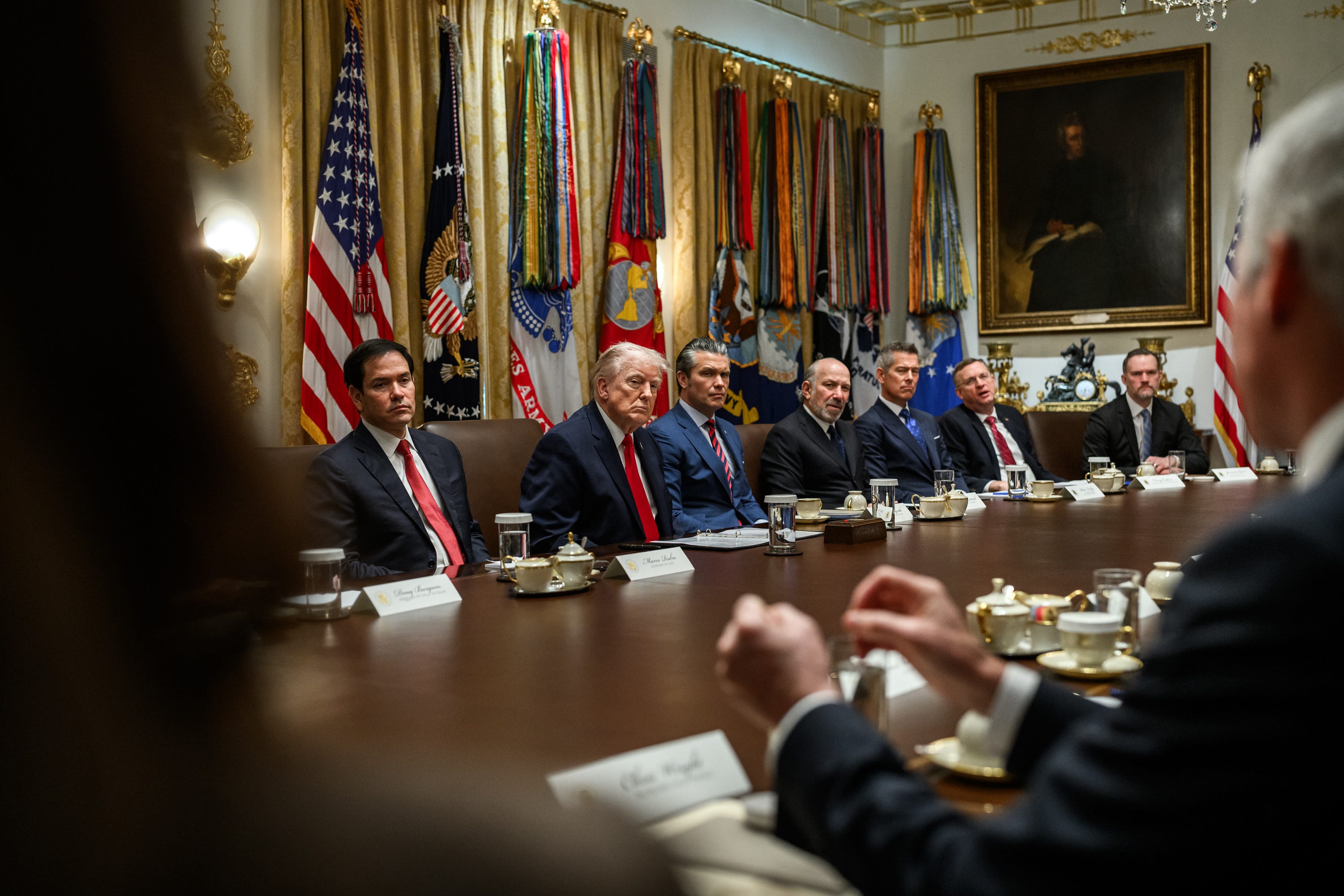
The Office of Personnel Management announced a final rule creating Schedule F (now renamed Schedule Policy/Career). This allows Trump to remove job protections and fire tens of thousands of federal employees who hold policymaking roles, another step in politicizing public services under his personalist regime.
Here are some quick takes, which I will revise and expand as time goes on. (If you are a congressional staffer, here is a very useful FAQ).
Even with Extreme Politicization, Schedule F Still Matters
When I started writing about the risks of a second Trump administration at the end of his first term in office I focused on Schedule F. Now, that focus seems a little naive. The degree of politicization we have actually witnessed is on a scale that I, who could be fairly counted as one of the biggest Cassandras on this topic, did not anticipate.
About 350,000 employees have been pushed out of government, disproportionately in agencies that are seen as more liberal. Federal hirings, annual performance evaluations, and even employee awards must now consider how loyal employees are to President Trump, and are closely monitored by political appointees.
As I’ve detailed previously, employees with stronger protections than those afforded by Schedule F have been fired because they are related to the wrong person, because the investigated abuses of power, because they were tagged by the MAGA online right as being disloyal, because they refused to break the law by firing others without cause, because they are trans, because they provided accurate information to a judge, because they made public statements about the effects of the President’s policies on their agencies, or, for no reason at all.
Even as politicized reprisals against career civil servants are a fact of life of life, internal protections against such reprisals, like the Merit Systems Protection Board, have been defanged to the point of toothlessness, meaning that an employee must now go to the courts if they are treated unfairly, even as the Supreme Court has offered little reason for optimism.
The President already effectively has an at-will work force. So, does Schedule F still matter? I think it does for three reasons.
The new rule both encourages politicization by making firing easier and by weakening whistleblower protections. Whistleblower claims no longer go to the independent Office of Special Counsel, but now stay inside the agency, reviewed most likely by a political appointee unlikely to want to expose wrongdoing by his fellow Trumpists and who could also expect to be fired for doing so. The rule removes one more brake against politicization, one fewer theoretical legal right that employees have to oppose the destruction of their workplace.
The new Schedule F becomes the most definitive legal pillar of the administration’s personnel policy for a President that has largely relied on ignoring personnel law, hoping to win in court. The Trump administration wants a legal fight to embed unitary executive theory and kill the civil service system, and have invested a lot of effort into building that vehicle with this rule. The ultimate audience here is not the public, or Congress, but SCOTUS.
As Don Kettl has documented, Trump’s job cuts were greater at lower levels of the federal government hierarchy (reflecting the cutting of new probationary employees), and among the most senior (SES) employees, who already lost their job protections. The employees who are in-between are now more vulnerable because of Schedule F.
The Rule Was Issued Despite Overwhelming Opposition
The new rule trumpets that “more than 40,000 people submitted comment from a variety of individuals (including current and former civil servants, scientists, Nobel laureates, and members of Congress).” Wow! Sounds impressive!
When we look at the mix of comments, they are massively opposed. According to OPM’s own assessment, 94% of those who commented opposed the rule, just 5% supported it, and 1% was mixed. While Trump has gotten more of his supporters on board with the politicization of the public sector, the mass public also broadly opposes his plan.
Never mind, the new rule blithely tells the people who weighed in, presumably including some Nobel laureates, that they “misunderstand the law.” The rule is good and must be implemented. This should be your first indicator that the rule is not a document terribly concerned with reality.
The Rule Pretends that a Completely Different President Is in the White House
It seems uncontroversial to say that President Trump does not like federal employees. But according to the rule, President Trump actually loves federal employees, and wishes them only the best:
Commenters overlook the many times the President has praised and lauded Federal employees as a whole, including in public proclamations. The President has also praised specific categories of Federal employees, such as when he told Immigration and Customs Enforcement employees “we love you, we support you, and we will always have your back.” Commenters inaccurately conflate the President’s criticisms of some Federal employees who have engaged in problematic behavior with a disdain for Federal employees writ large.
The opposite is true, of course. Trump makes very broad claims of public employees as being deep state, crooked and corrupt, and then praises specific groups of employees who are doing his bidding in invading Democratic cities, or whose unions endorsed him. This is is another measure of the bizarro nature of the rule.
The Rule Pretends Politicization Is Not Occurring
The revised rule says that there is nothing worry about for good federal employees. The OPM guidance for implementing the rule promises that there will be no “discrimination based on political affiliation, coercion or reprisal based on political activity, and retaliation for reporting violations of law or waste, fraud and abuse to appropriate authorities.”
OPM head Scott Kupor told journalists: “This is not about political appointments or terminations. There is no involvement of the political process in the hiring or firing of these individuals. Everybody will be hiring under the merit hiring principles, they’ll be reviewed under the merit hiring principles.”
That is just not true. New hiring guidelines that Kupor’s office issued explicitly call for agencies, for the first time, to get applicants to identify how they would serve Trump, and called for political appointees to be directly involved in hiring decisions.
The evidence on politicized firing is even stronger. The Trump administration has spent the last year engaged in discrimination based on political affiliation, coercion and reprisal based on political activity. It is nakedly committed to retribution as a defining regime value. What about the FBI or DOJ officials who were fired for ties to January 6th investigations? What about whistleblowers who were fired?
There is an extraordinary irony in the administration arguing that Schedule F is justified to improve performance and reduce corruption. It has been clear to any observers of government that the Trump administration is largely disinterested in government performance, and has weakened it in many instances. For example, DOGE was a disaster.
As for corruption, mentioned 19 times in the rule, there is no administration in living memory that has so brazenly opposed oversight designed to reduce corruption (such as Inspectors Generals, ethics officers and judge advocates general, as well as Congressional watchdogs), flouted conflict of interest laws, and rewarded contributors and friends with preferential treatment.
If corruption was grounds for firings, the White House would be empty.
The Rule Misrepresents and Ignores Actual Research
It is not just that the rule ignores the actual abuses undertaken by the Trump administration, they ignore or misrepresent the most credible and careful research on the topic.
OPM guidance for the rule states that: “As stated in the Final Rule, the Federal civil service suffers from the longstanding, pervasive problems of misconduct, poor performance, and policy resistance. The Final Rule documents surveys, academic research, and examples of these problems to illustrate exactly why reform is necessary to address these issues at some of the highest levels of government.”
Uh, no it doesn’t. When Professor Nick Bednar posted that: “The rule cites a lot of political science research, and I would describe it mostly as a bastardization of that research” he was, if anything, being too kind. I don’t think anyone who took the social science evidence around government personnel would take it seriously as a summary of that evidence.
The document is an exhausting 250-plus pages of legalese and misdirection. I submitted 42 page comment that summarized the best evidence I could bring to the table (shorter summary here), which was mostly ignored. For example, here is how the rule responded to my comment:
Commenters 30055 [me] and 30408 [Professor Nicholas Bednar] provide a collection of research on the topic of public policy, specifically the politicization of the U.S. Government and its effect on performance. Commenter 30055 posits that civil service protections lead to a reduction in turnover, a greater investment in skills, lower costs, greater democratic capacity and responsiveness to more than the President, greater communication of program flaws, and an increase in public trust. The creation of Schedule Policy/Career, on the other hand, increases political control on the civil service beyond what was contemplated by Congress in the CSRA and concentrates that control with the President, who has already demonstrated that he will fire employees without regard to their performance. As discussed in Section V(A) below, OPM strongly disagrees with the notion that the final rule returns the Federal civil service to the spoils system or will lead to mass firings without regard for employee performance.
But…they never actually rebut the key claims of my “collection of research.” They just say, we are not going to allow Schedule F to be used to create a spoils system, so no worries.
We are literally Through the Looking-Glass, specifically at the point where Humpty Dumpty tells Alice, “When I use a word, it means just what I choose it to mean—neither more nor less.” What they are doing cannot be politicization because they say they will not be engaged in politicization.
This reaches bewildering levels of dishonesty when we get a discussion of chilling effects. I was one of many commenters who pointed out that more politicized systems create information bubbles because government employees will be reluctant to share information their political masters dislike.
But again, the rule simply says there is no concern, since the new rule, which strips employees of job protection in the face of the most partisan and corrupt administration in living memory, will “reinforce the merit-based, nonpartisan character of the civil service and improve the democratic responsiveness of the Federal Government…Nothing in the rule authorizes or encourages discipline or removal of employees based on the content of their good-faith professional advice.”
Up is down, black is white, politicization is nonpartisan merit.
Have these people ever seen a Trump cabinet meeting? This is not an administration where frank and fearless advice is welcome. For example, a general whose intelligence assessment contradicted Trump’s claims about the success of the US bombing Iran was purged. Scientists at the CDC were fired when they refused misrepresent research clams. A Department of Justice lawyer was fired for not being coerced into advising that a prominent celebrity supporter of the President have his gun rights restored.
The administration simply ignores this. It acts as if they are above petty punishments of those who contradict them, even as they have shown us time and again that this is not true. They pretend to be a normal administration who would never stoop to politicization even though that is the purpose of the rule.
Evidence is used and abused. For example, the rule selectively cites Federal Employee Viewpoint Survey data, even as they have stopped collecting that data in the second Trump term because they know how bad the numbers will be. It cites a policy report by the right-leaning Manhattan Institute suggesting that at-will employment has worked well in state governments, a claim that the non-partisan Partnership for Public Service and I took apart when we looked more closely at the evidence.
This is Potemkin policymaking: it has the facade of evidence. Lots of words, some numbers, but push gently at it and it all falls apart. If the courts require that a rule should reflect the best scientific and technical evidence available, this rule would be tossed out.
The Rule Is Moving toward the Claim that the Civil Service is Unconstitutional
The first version of Schedule F made the case that Congress intended to allow the President to remove civil service for-cause protections from tens of thousands of employees. Never mind that no reasonable reading of the legislative history of the Civil Service Reform Act supports this claim, as I noted in my comment.
But over time, the revised Schedule F has taken a more aggressive posture: it would be unconstitutional for Congress to even try to impose restraints on Trump’s right to fire whole classes of civil servants. (Watch for Nick Bednar at Lawfare to write more about this). See, for example p175:
Construing the CSRA to prevent the President from dismissing these officers at-will would contravene Article II’s vesting executive power in the President
p182:
the implication of the Court’s Article II precedents is that Congress cannot shield non-officer employees who exercise meaningful executive power from accountability to the President.
p188:
OPM believes that the President and/or his agency heads must have sufficient constitutional authority to effect removals when deemed necessary. Interpreting subchapter II to deny the President this flexibility would render the statute unconstitutional in these applications. By contrast, OPM’s reading of the CSRA—that the President can discretionarily remove adverse action procedures from policy-influencing positions—eliminates this constitutional difficulty.
It is quite an evolution to go from the claim that the CSRA enables Schedule F, to the claim that it would be unconstitutional if it didn’t. But that is precisely the direction the administration was going all along.
Writing in 2021, I noted how early iterations of the policy proposed a more explicit “constitutional option” consistent with unitary executive theory. The first Trump administration didn’t pursue that policy, because they thought it was too aggressive. But that was the desired end point all along. For example, in a 2023 interview, James Sherk, the author of the original Schedule F executive order said: “All executive authority is vested in the President. Every federal employee should serve at the pleasure of the president.”
The new rule commits more explicitly to unitary executive theory because they think the Supreme Court will now go along with it, given that they have done little to stop the administration’s politicization and mass firings, and look set to strike other Congressional protections for public employees against Presidential removal.
What happens next?
Expect lawsuits. Democracy Forward and unions have already promised to sue. And the Trump administration wants this legal fight.
The new rule takes effect in 30 days. Agencies will create lists of employees to be converted to Schedule F, and will be pushed to take an aggressive approach. How many? The figure of 50,000 has been tossed around a lot, but it is not based on any substantive analysis, beyond a guessestimate by James Sherk.
The truth is, we have no real sense of how many people will be covered by Schedule F. We will soon find out, but there are mixed signals.
On the one hand, it would be strategically smart for the Trump administration to start small and not reclassify egregiously, since that will weaken their position in the court case to come. By starting with more defensible policy-making roles, they are more likely to win in court. Once they do, and the rule is cemented as law, they can always broaden its reach, deeper and deeper into the administration. The patient development of the Schedule F rule suggests that at least some of its authors are playing the long game.
On the other hand, some key members of the Trump administration want to use it aggressively. When Russ Vought was previously in charge of OMB, he tried to convert the vast majority of his employees to Schedule F. Another sign here is that the rule pushed back against comments that argued that certain positions should be excluded from reclassification. For example, the rule argues that it would be unconstitutional if more than 10,000 administrative law judges were not converted to Schedule F.
In either scenario, I think the long-run outcome is the same. The purpose of Schedule F is to hollow out the civil service system.
The aggressive invocation of unitary executive theory suggests an administration that wants to implement Schedule F broadly, rather than reassure public employees. And the vague nature of the terms involved does not establish a meaningful limit. If it is employees “who exercise meaningful executive power” that would include, for example, every ICE and CBP official. In the long-run, if Schedule F stands, there will be considerable pressure for a Democratic President to use it to deconstruct Trump’s militarized and personalized version of the administrative state. And so, we get to the instability of the spoils system.
Once those lists are submitted, Trump will issue another executive order formalizing the conversions. Some federal employees may decide to exit at this point, but my guess is that this will not be a large number, since this is already a group that has stuck it out through a year where the administration committed to Russ Vought’s mantra of “put them in trauma.” I also don’t expect an immediate wave of firings for the good reason that employees viewed as uncooperative have already been fired. At this point, the Trump administration mostly wants loyal lackeys. That is the purpose of Schedule F.
Many of those reclassified will have their union protections removed. OPM guidance states “collective bargaining units may not include positions the duties and responsibilities of which require or authorize the individual to formulate, determine, or influence the policies of the agency. Positions moved into Schedule Policy/Career based on their policy-determining or policymaking responsibilities may meet these criteria.”
And what happens when personnel abuses occur? We will not know about many of them. After all, most employees know that internal appeals, whistleblowing, or going to an Inspector General controlled by the President are either not available to them or pointless. The point of Schedule F is to not just to enforce control, but to make public employees less able to talk to the public. And so, quietly, the curtain will drop around an ever-more authoritarian government.
 | A guest post by
|
Thank you, Mr. Moynihan. What I understand is that the oligarchs basically have two uses for government: deregulation and tax breaks. Oligarchs do not need government services. They do not need Social Security. They do not need medical support: Medicare, Medicaid, etc. They do not need nutrition support for themselves or their children. They do not need early-childhood learning for their children. They do not need student aid. There is a pattern here. I call it: the devil takes the hindmost and, with enough money, you are never the hindmost.
Project 2025 called for a loyal to the president and his agenda federal workforce. This is what Schedule F is attempting to accomplish.