


Brian Daitzman is the Editor of The Intellectualist. Subscribe to his Substack.
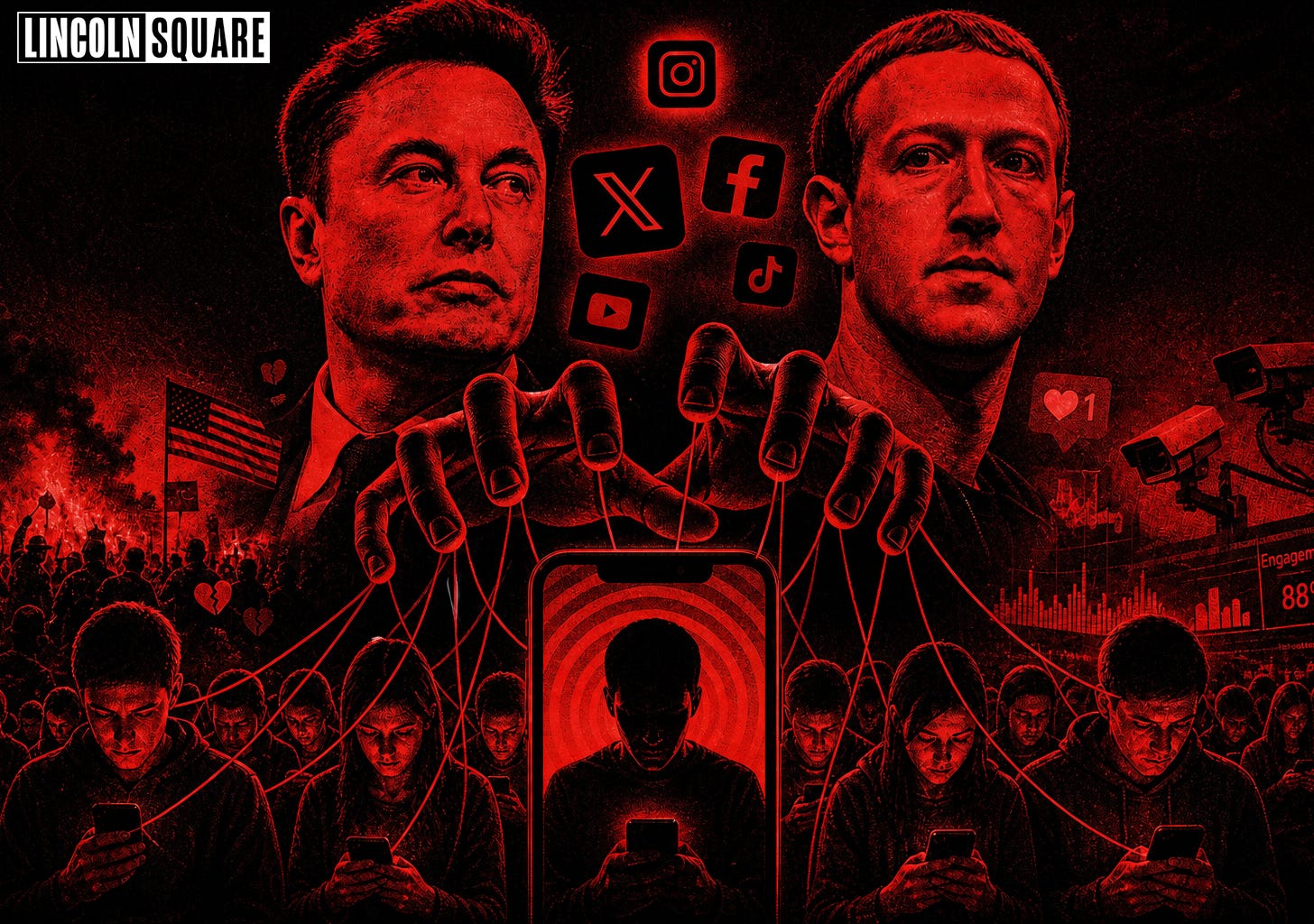
In Genesis, the people of Babel build a tower toward heaven.
They build it to make a name for themselves, but also to keep themselves from being scattered. The tower is not only an act of pride. It is an act of coordination: one people, one language, one city, one project, one attempt to hold themselves together against dispersal.
God does not burn the city. He does not massacre the builders. He does not erase them from the earth. He does something stranger and, in some ways, more politically devastating: he confuses their language.
The punishment is disorganization.
The people can still speak, work, desire, build, remember, and dream. But they can no longer coordinate. Their shared project collapses because shared language collapses. Babel is not only a story about human arrogance. It is a story about collective power broken by making mutual understanding impossible.
That is why Babel is the right metaphor for the platform age.
The internet promised connection. The platforms delivered a new kind of scattering: not physical dispersal across the earth, but informational dispersal across incompatible realities. Everyone remained connected. Everyone kept speaking. Everyone could publish, react, and broadcast. But the shared language of public life began to break.
That is the Digital Babel: not a world where no one can speak, but a world where speech no longer reliably becomes shared meaning.
Social media had been sold as connection. In practice, the public square became a set of privately owned behavioral environments, each optimized to keep its occupants inside. The platforms did not merely host conversation. They shaped the conditions under which conversation became visible, viral, profitable, or invisible.
That is how the Great Fragmentation moved from culture into reality itself.
First, culture stopped arriving together. Then the old gatekeepers hollowed out the institutions that had once assembled the shared room. Now the platform age completed the turn: the public did not merely lose common cultural sequence. It began to lose common reality.
Once movies, music, television, and public arguments stopped arriving together, the same break moved into news, politics, evidence, and civic life. Everyone could publish, react, and broadcast. Fewer people inhabited the same informational world.
That is the central difference between pluralism and fragmentation. A pluralistic society contains many voices inside a shared civic frame. A fragmented society contains many voices inside incompatible frames. The first can produce argument. The second produces babble.
The difference is felt in ordinary life. One person arrives at dinner with a newspaper story. Another arrives with a clip. Another arrives with a rumor from a group chat. Another arrives already certain the first two have been deceived.
The platform age did not invent that danger. It industrialized it.
The old public square was not simply destroyed by the internet. It was divided, privatized, optimized, and sold back to the public as freedom. The ancient logic was divide and conquer. The modern innovation was to turn divide and conquer into a business model.
This created a collective-action problem at civilizational scale. Political science, sociology, and economics all describe versions of the same dilemma: people can share interests, grievances, and dangers, yet still fail to act together when coordination becomes too costly, trust collapses, incentives misalign, or common knowledge disappears. A public does not become powerful merely because its members can speak. It becomes powerful when enough people can recognize the same reality, name the same problem, and believe that others recognize it too.
The platform order did not require old-fashioned censorship to weaken public power. Its incentives pointed toward something more efficient: a public that could speak constantly while understanding less together. A divided public was easier to monetize. An enraged public was easier to retain. A confused public was easier for concentrated power to govern around.
The internet was sold, at least in its most hopeful form, as a democratic expansion of the public square. It would let people find one another. It would let outsiders speak without waiting for permission. It would make information abundant. It would make institutions more accountable. It would weaken old monopolies over visibility. It would let communities form across distance. It would give ordinary people the tools of publication, documentation, organization, and memory.
Some of that promise was real.
Families stayed connected. Dissidents documented abuse. Artists found audiences. Marginalized people found one another. Independent writers built readerships. Citizens recorded violence, corruption, neglect, and hypocrisy. Archives opened. Expertise traveled. Subcultures flourished. Institutions that had once depended on silence or scarcity became easier to challenge.
But the public square was not rebuilt.
It was privatized.
The oligarchs who bought it wired explosive incentives into it.
