


Kristoffer Ealy is a political scientist, political analyst, and professor in Southern California. He teaches American Government and political behavior, with a focus on political psychology, voting behavior, and political socialization. Subscribe to his Substack, The Thinking Class with Professor Ealy.
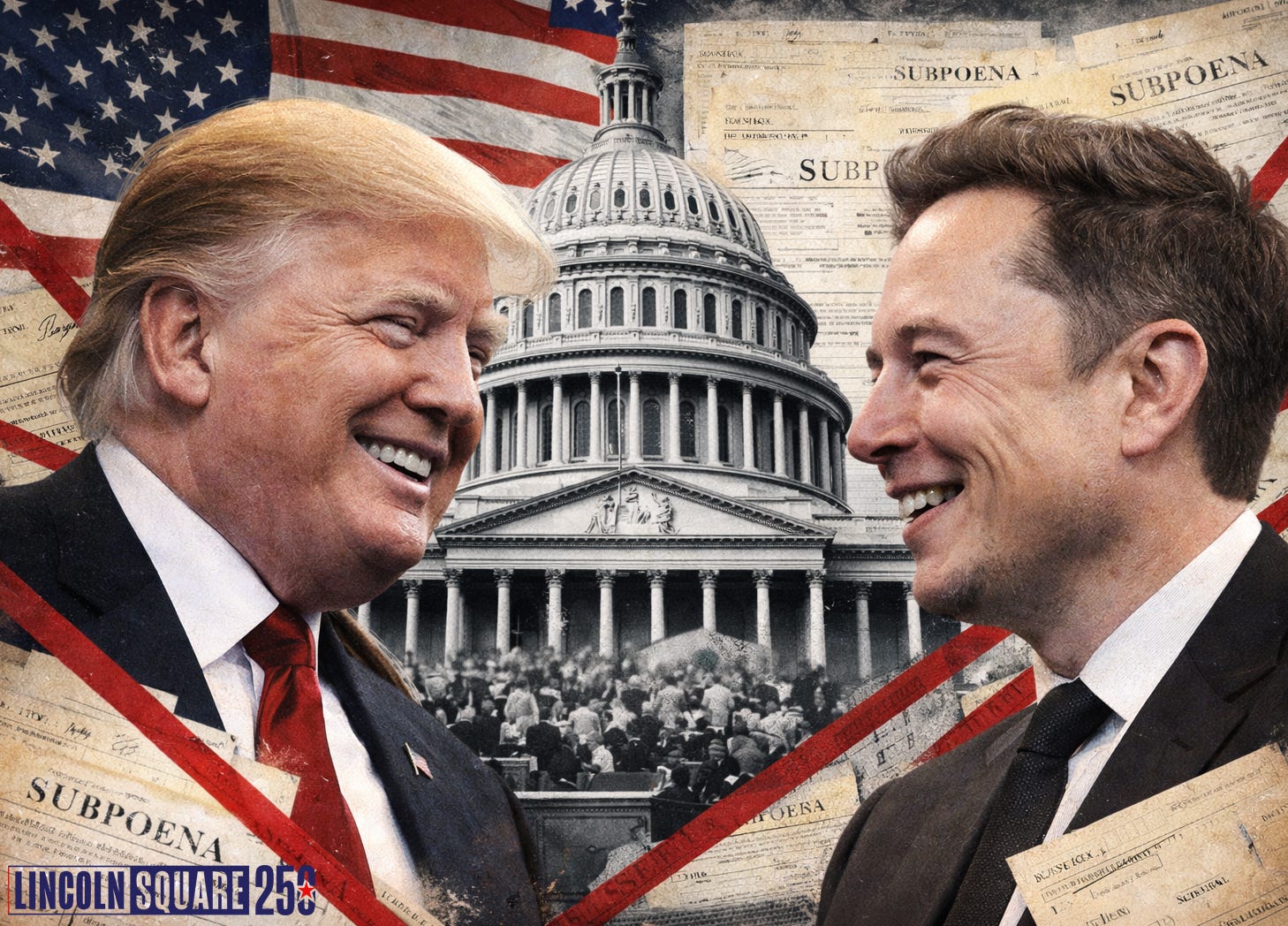
Over the last year, we’ve watched people put varying amounts of daylight between themselves and MAGA. Tucker Carlson, Marjorie Taylor Greene and Candace Owens found their exits before the votes were counted.
Then the GOP got curb-stomped in the midterms, and suddenly the cult had more former members than it ever had skeptics. Everybody remembers having doubts now. They always knew the war with Iran was a bad idea. They always had questions about Trump slapping tariffs on everything short of a library card. A few are even willing to suggest, in the hushed tone you’d use to tell a stranger his fly is open, that ICE may have gone a little too far. But nobody is asking us to forget more footage than Elon Musk.
This week, Musk beamed into The New York Times’ DealBook Summit from China, where he was traveling with Trump’s delegation, to announce that he was “not MAGA.” You have to admire the logistics. Most people would at least wait until they got off the man’s plane. And of all the people who could have hosted this dweeb’s rehabilitation segment, of course it was CNBC’s Andrew Ross Sorkin, presiding over the DealBook stage like the maître d’ at a reputation laundromat. Sorkin can take a man traveling overseas with Donald Trump, ask him about his political independence, and somehow make the whole thing sound like a quarterly earnings call. That’s one way to normalize Trump. Keep the lighting warm, call everybody a consequential figure, and ask what they’re working on next. Put enough people in nice chairs and somebody will forget what the people in those chairs did.
Sorkin opened by calling Musk “the most consequential private citizen in the world.” He meant the richest crybaby in America, second only to Donald Trump in the amount of paid staff it takes to get him through a criticism. Sorkin promised to cover “just about everything” and asked if we remembered Musk’s last visit. I do. In 2023, with advertisers fleeing Twitter after Musk endorsed an antisemitic post, he told them, “Go fuck yourself. Go. Fuck. Yourself. Is that clear?” Then he waved to Disney’s Bob Iger. That same evening, he told Sorkin he’d only come because they were friends and called him Jonathan. Andrew, if a man forgets your name on the stage you booked him for, you’re allowed to make him work a little harder for the second invitation. You can even start by asking him a question you’d still want answered if he stopped returning your calls.
Instead, when Musk dared him to name one of his extreme views, Sorkin offered a foggy reference to immigration in Europe, let Musk argue with the fog, and moved on. This man had Elon Musk on a giant screen asking for a specific example of his own extremism. Andrew, he gave you the fucking question. All you had to do was finish it. He found time to ask about a Starlink phone. DOGE, the salute, and the USAID cuts that a study in The Lancet projected could cause more than 14 million additional deaths by 2030 if sustained all missed the cut. I hope the phone has a calculator. Somebody at DealBook ought to be able to count that high.
This is how a business interview helps launder a political reputation. You can spend twenty minutes on what a billionaire says he’ll build in five years. All of that is speculative, and he gets to pick the specifications. Ask him what happened to the programs he helped gut last year, and suddenly there are people other than Elon Musk who can tell you how it went. There are employees who lost their jobs, researchers who can measure the consequences, and people who depended on those programs and had to figure out what the hell they were going to do without them. I’d have liked to hear what Musk had to say about any of that. Instead, the man got to talk about the future, where every Elon Musk project is still on schedule.
Then Musk said he wasn’t sure what MAGA meant. In Butler, Pennsylvania, he bounded onto a stage in a black hat and declared himself “dark MAGA.” By Madison Square Garden he’d promoted himself to “dark, gothic MAGA,” because the first hat hadn’t made him look enough like the assistant manager of a Spirit Halloween who’d just been given the keys. The man gave his political allegiance a sequel, a wardrobe change, and a fucking subtitle. Now he needs somebody to explain the acronym. He could have saved Sorkin a lot of time by wearing the hat and reading it into the microphone. The words were right there, assuming he could make it past the font he picked out to scare the substitute teacher.
