


Kristoffer Ealy is a political scientist, political analyst, and professor in Southern California. He teaches American Government and political behavior, with a focus on political psychology, voting behavior, and political socialization. Subscribe to his Substack, The Thinking Class with Professor Ealy.
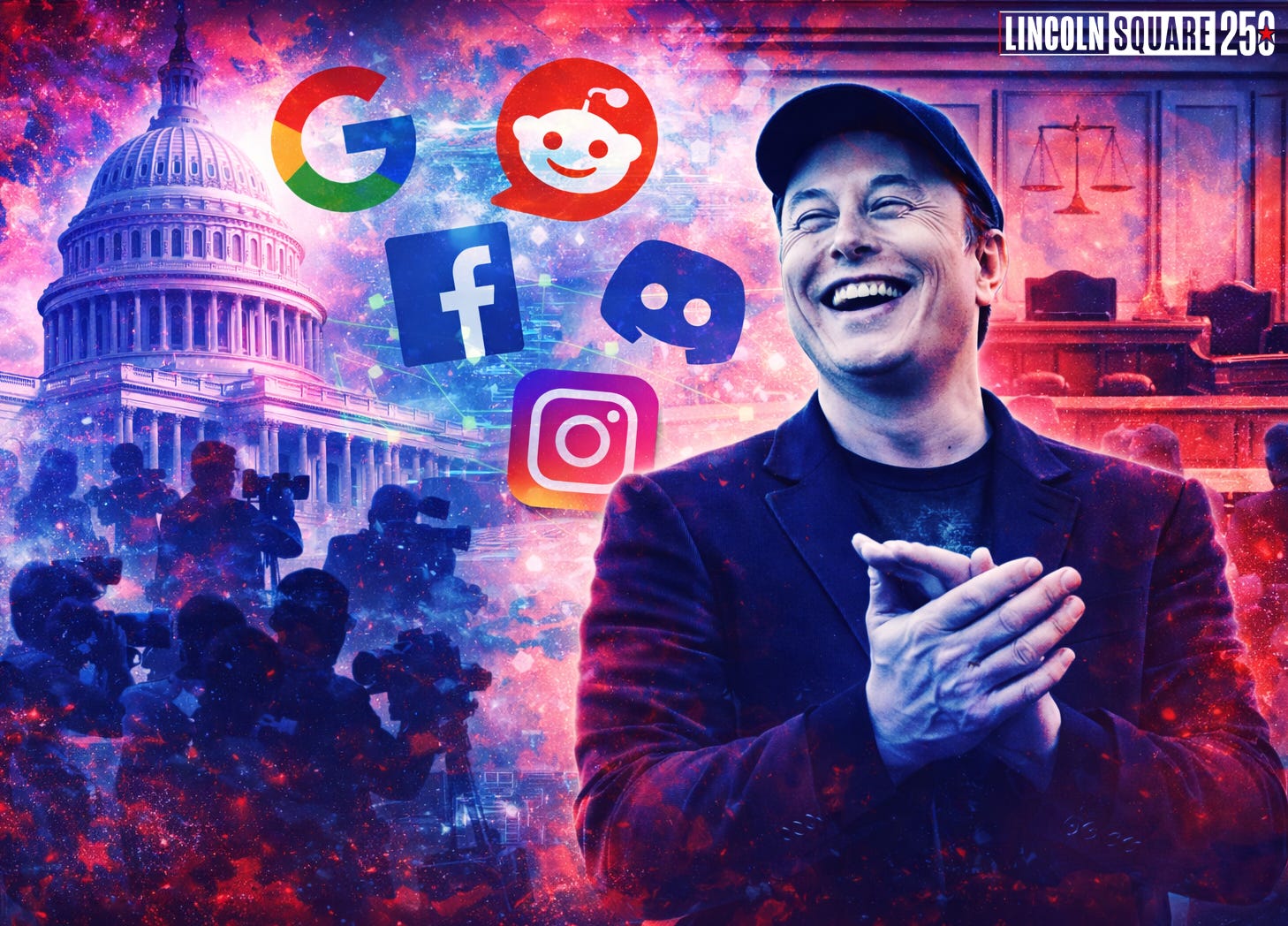
Virginia Attorney General Jay Jones and Oregon Attorney General Dan Rayfield on Monday went on Don Lemon’s show to explain why their states are suing Elon Musk’s SpaceX over Grok.
The states allege that users got Musk’s chatbot to generate sexualized images of women and children from photos posted on Twitter. I’ll get to what the attorneys general found. First, I’d like to thank the gentleman who saved me the trouble of digging through four years of tweets to find out what Elon Musk believes about free speech. Elon pinned the damn thing to the top of his profile. Then he went on Don Lemon’s show and said it again on camera, just in case anybody needed the audiobook.
Musk started musing about buying Twitter after the platform suspended the Babylon Bee, one of his favorite MAGA accounts. Most people who think a moderator made a dumb call file an appeal. Elon spent $44 billion to speak to the manager and wound up having to do the job himself. After the deal was announced, he offered this definition: “By ‘free speech,’ I simply mean that which matches the law.”
Virginia and Oregon would like a word about the matching part. A month into owning Twitter, Musk declared that removing child sexual exploitation material was “Priority #1” and accused the previous management of doing nothing about it. During those same weeks, the team responsible for that work went from roughly 20 experts to fewer than 10.
I’d hate to find out what happened to the people working on Priority #2. In July 2023, Twitter banned a QAnon influencer who posted an image from a child abuse video. Musk personally reinstated the account. “For now, we will delete those posts and reinstate the account,” he wrote. So the people who still had jobs did precisely what he’d announced was their highest priority, and the boss stepped in to reverse their decision. I hope somebody kept the email where he explained how that would work on their performance reviews.
In March 2024, Musk sat down for what was supposed to be the first episode of Don Lemon’s new show on Twitter. I teach the First Amendment, and this dumbass gave the kind of answer I get from a student who memorized one sentence from the reading and is counting on me to move on to somebody else. Free speech should exist “as much as possible within the bounds of the law,” he told Lemon.
Okay, Elon, how do you decide what stays on Twitter?
