

Bennie Thompson Asked the Obvious Question — and Exposed a Dangerous Fiction
Absolute confidence paired with complete incoherence — that's the Trump administration in a nutshell.

Today was supposed to be my day off. And not “academic day off,” which is a lie we tell ourselves so we don’t scream into a pillow. I mean a real one. The kind where you don’t open your laptop, don’t doomscroll, don’t think about deadlines, and don’t remind yourself that the winter semester is ending and you are staring down over 500 papers that all believe, with complete confidence, that they deserve thoughtful, individualized feedback and a closing note that says, “Great work—keep it up.” And since I consider myself serviceable at my job, I owe it to my students to show that kind of love. So before a treacherous week of grading, I wanted to just chill today.
That was the plan. Then a C-SPAN clip crossed my screen and stopped me cold because I burst out laughing — not a polite chuckle, but the kind of involuntary laugh that surprises you and immediately makes you ask, “Why am I laughing at this?” Not because it was silly, but because it was so revealing. The kind of moment where the humor hits first and the realization follows: this isn’t just funny, it’s about the country, and about how low the bar has fallen for people in powerful jobs to know what they’re talking about — a bar that at this point is less a standard and more a tripping hazard.
Before getting into the exchange, I need to be clear about something: I’ve always liked Congressman Bennie Thompson. He’s not loud, he’s not performative, and most of the time he stays so low-key that people forget how much power and experience he actually brings into the room. In an era of personality politics and viral grandstanding, Thompson is one of the most serious members of Congress we have. He has represented Mississippi’s 2nd Congressional District since 1993 — a district that has long been treated as disposable by the very institutions that claim to protect it. He earned his degrees at Tougaloo College and Jackson State University not as résumé ornaments, but as preparation for the work. He chaired the House Homeland Security Committee. He understands how power actually operates, not how it performs on cable news.
The record on Thompson doesn’t need to be hyped, but it does deserve to be stated plainly. He doesn’t have the name cachet of an AOC, a Maxine Waters, or Jasmine Crockett, but that has never made him less formidable. And at 77 years old, he is not the caricature people sometimes lazily project onto older Democrats — or, in other cases, legitimately worry about when it comes to relevance and sharpness. Thompson doesn’t fall into either category. He’s sharp, patient, and methodical. You can hear it in how he asks questions — not to score points, but to test whether claims can survive contact with reality.
That distinction matters, because the moment that sent me into laughter was not a dunk. It was a demonstration.
I’m not a habitual watcher of C-SPAN. Even as a political scientist, I’m not going to pretend it’s riveting television. Watching C-SPAN is like voluntarily attending a meeting that could have been an email, except the email is 12 hours long and no one is allowed to emote. Still, every now and then, a clip cuts through the boredom and lands with surgical precision.
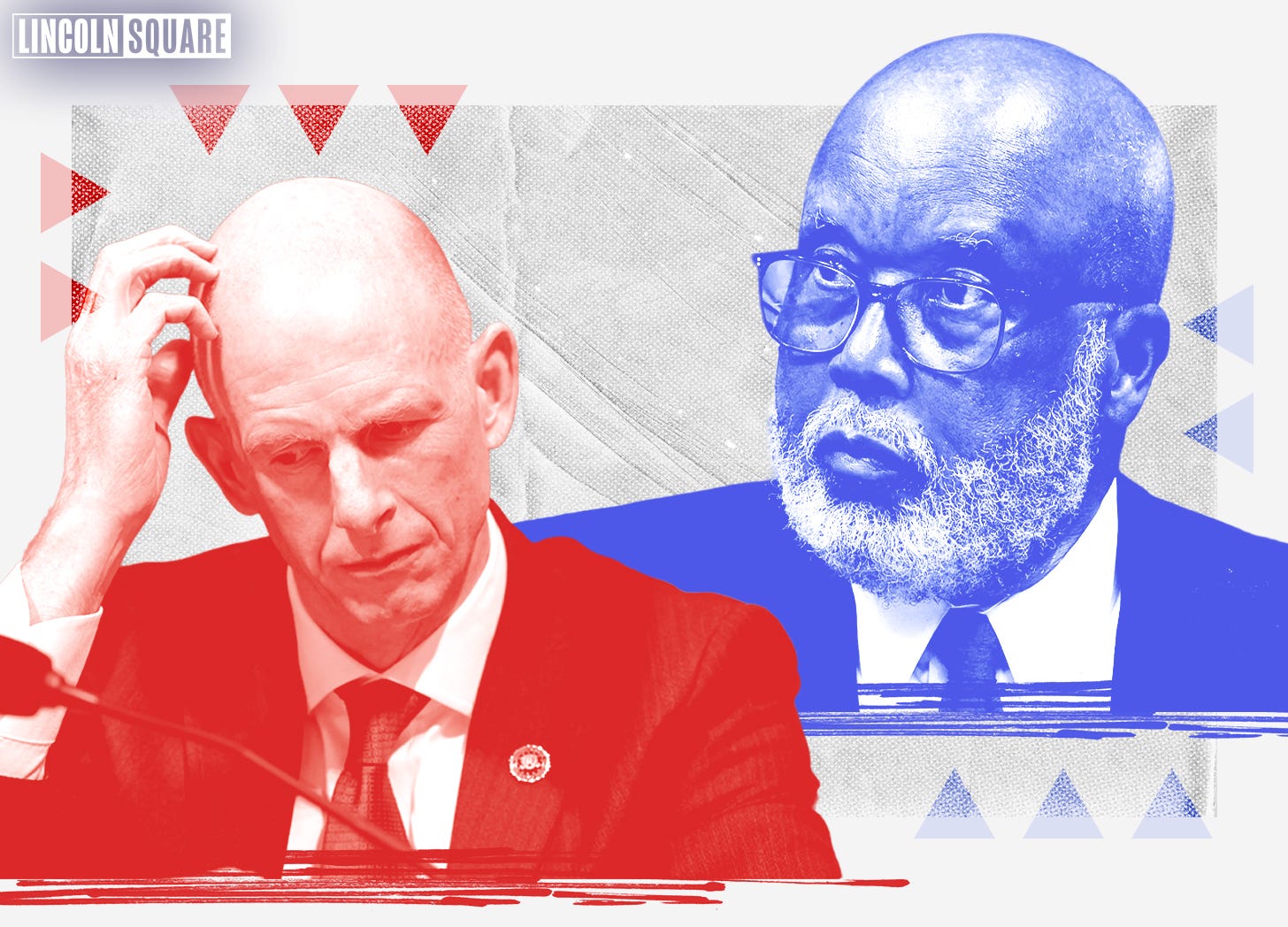
In this exchange, Thompson is questioning FBI Security Operations Director Michael Glasheen after Glasheen has already asserted that antifa represents a major domestic threat. The sequencing is everything. Thompson doesn’t interrupt him. He doesn’t argue. He doesn’t try to one-up him rhetorically. He lets Glasheen fully commit to the claim, lets it sit in the room as if it belongs there, and only then begins asking the most basic follow-up questions imaginable: where antifa is based, who leads it, and where its central location is. And when Glasheen inevitably can’t answer, Thompson delivers the quietest, funniest dagger of the entire exchange. In the calm, disappointed tone of someone explaining professional standards to a grown man, he says something to the effect of, Sir, I know you wouldn’t come before this committee and make a claim you can’t prove. There’s a brief pause, a slight shake of the head, and then the line that makes it land: But you just did. It’s not said with anger or sarcasm — it’s said with resignation, like a teacher realizing a student studied absolutely none of the material.
The tone is calm. Even polite. There’s no sarcasm, no raised voice, no cable-news cadence. Thompson speaks the way someone speaks when they assume that if a threat is real, describing it shouldn’t be difficult. He isn’t mocking Glasheen. He’s doing something far more devastating: he’s treating him like a professional whose claim deserves to be taken seriously.
That’s why the exchange works. The moment you take the claim seriously, it collapses.
It’s not showmanship. It’s pedagogy. It’s the same energy as a curious young adult asking Bill Nye the Science Guy how clouds are formed — not to be clever, but to see whether the explanation can survive five seconds of contact with reality. In this case, it can’t. And once you see that, you can’t unsee it.
According to his biography, Michael Glasheen has been with the FBI since 2001. Until this exchange, I had never heard of him, which under normal circumstances is exactly how it should be. Most people should not know the names of mid-level federal security officials. In a functioning administration — regardless of who’s running it — the public should be able to trust that the work is being done quietly, competently, and without spectacle. At the absolute bare minimum, if someone is going to come before Congress and name a domestic terror threat, you should reasonably expect them to be able to identify it, describe it, and explain where it exists. That’s not a high bar. That’s not a partisan demand. That’s the professional equivalent of knowing which building you work in and what your job actually is.
And that’s what makes Glasheen’s performance so pathetic. On paper, he is not a clown. He is not Kash Patel, a man whose entire public persona is built on grievance cosplay and unearned confidence. Again, Michael Glasheen joined the FBI in 2001. He has spent more than two decades inside an institution that understands, at least formally, how threats are identified, assessed, and documented. I am fully convinced he knows better. Which is precisely the problem. This wasn’t ignorance speaking. It was acquiescence. A conscious decision to launder a political narrative through the credibility of a badge and a résumé, because in Trump world, repeating the story matters more than whether it’s true.
The problem with Trump’s second act is that quiet competence has been replaced with performative nonsense. When you’re not looking, Trump either installs people who don’t understand their roles or incentivizes people to speak in slogans instead of substance. And once that happens, we are all forced to pay attention.
Understand this man is Michael Glasheen. Not a Twitter pundit. Not a backbench congressman riffing on cable news. This man is the fucking FBI Security Operations Director, and that title should come with a baseline expectation that he understands what words like “organization,” “leadership,” and “structure” actually mean. Now, to be clear, political science and criminal justice are not the same discipline — they’re cousins, not siblings — and while I’m qualified to teach criminal justice and have a graduate degree in it, it is not my primary lane. Under normal circumstances, I defer to the experts on the FBI, law enforcement, and national security. But even from the cheap seats, this was embarrassing. Operations directors are not hired to freestyle threats or vibe-check Fox News talking points. They are hired to assess risk, manage security posture, and operate firmly inside the reality-based community.
Which is where the laughter turns uneasy, because what Glasheen is describing bears a striking resemblance to the Space Police from South Park. If you remember the episode, intergalactic law enforcement descends on Earth over “space cash” and a criminal named Baby Fart McGeezax, all delivered with total seriousness and zero self-awareness. The stakes are cosmic. The logic is nonexistent.
That is Trump administration 2.0 in a nutshell: absolute confidence paired with complete incoherence. Serious authority chasing imaginary threats while refusing to name the real ones. At that point, you might as well hand Americans a sack of space cash and call it national defense.
Most of my readers don’t need what comes next explained to them, but if you have a MAGA person in your life, this is the paragraph they need to sit with.
Break Constitution in Case of Emergency

It seems like I can forget about normal days during this administration. I sat down this morning hoping for a quiet day — maybe throw on some cartoons in the background while I caught up on grading — maybe a little Batman: The Animated Series, something with a villain who doesn’t pretend to be the hero. But instead, I’m reflecting on the President’s dec…
In Trump world, antifa functions as a kind of racist, bigoted Shangri-La — a mythical paradise where you can aim at “antifa,” “the woke,” or whatever other shapeless menace is needed that day. It’s always talked about, never reached, and endlessly useful precisely because no one can ever point to it on a map. It’s always somewhere else, just out of sight, permanently looming but conveniently unlocatable. Which works, because antifa is not an organization. It is not a club, a union, a gang, or a secret society with jackets and a newsletter. There are no membership cards, no headquarters, no leadership hierarchy, no national convention where everyone votes on strategy. It is, at most, a label — a loose ideological descriptor that some people adopt. And because it has no fixed shape, no formal structure, and no identifiable center, it becomes a catch-all that can absorb whoever is already on the margins: immigrants, protesters, students, journalists, Black activists, LGBTQ people — basically anyone who makes certain people uncomfortable. That isn’t a coincidence. That’s the utility.
That’s why Glasheen can’t name a leader. There is no leader. That’s why he can’t name a central location. There is no location. And the word itself tells you that. “Anti” means against. “Fa” is shorthand for fascism — an ideology rooted in authoritarianism, enforced conformity, suppression of dissent, and loyalty to a strongman. Fascism isn’t theoretical. It’s not an abstract concept debated in seminars. It has a body count.
So when people hear “antifa,” the literal meaning is anti-fascist. Which leads to an uncomfortable but unavoidable question: if you are viscerally angry at the concept of being anti-fascist, what exactly are you defending?
This is where psychology matters, and not in a hand-wavy way.
Moral Panic Theory explains how political leaders manufacture fear by exaggerating or inventing threats in order to mobilize support and justify power expansion. The threat doesn’t need to be real; it needs to feel urgent. History is full of examples — crime waves that don’t exist, satanic cults hiding in plain sight, caravans that mysteriously disappear after elections. Moral panics work because fear lowers the standard of evidence.
Sometimes this is called group threat theory or stereotype threat theory, depending on which academic lane you’re standing in, but Symbolic Threat Theory gets at the same basic idea: the target doesn’t actually need to harm anyone. Symbolic threats don’t endanger your physical safety; they threaten your sense of identity. They’re framed as attacks on “who we are,” not on anything that can be measured, tracked, or responded to by people doing actual work. That’s why the danger always feels enormous and urgent, while remaining conveniently vague. The threat is emotional, not operational — which is perfect, because you can’t SWAT-team a feeling, but you can scare people into voting over one.
That’s how “antifa” functions. It’s not a real enemy; it’s a symbolic container. It absorbs anxieties about social change, racial reckoning, generational shifts, and cultural discomfort. And crucially, it has no fixed shape.
These are amorphous enemies — threats without a fixed shape, without leadership you can name, without a location you can point to, without boundaries that ever quite hold. They don’t organize, they don’t convene, and they don’t announce themselves in ways that can be verified. And that’s not an accident. When the enemy is indistinct, enforcement becomes infinitely flexible. Suspicion can move. Definitions can slide. “They” can be whoever the moment calls for.
Here’s a simple analogy. I’m a Halle Berry fan. Have been since middle school. Let’s say I meet some like-minded people and we jokingly call ourselves “Haberries.” The term spreads. A few Haberries are annoying online. Then an idiot becomes president and announces that the Haberries are the greatest threat to national security.
Who do you arrest? Where do you go? What law do you write? There is nothing to police, because the “group” exists only in someone’s imagination. Glasheen could have said the Beyhive or the Swifties and the logic would be identical.
So while my first reaction to Glasheen’s performance was laughter — genuine, involuntary laughter — that reaction doesn’t get the last word. Because what’s happening here isn’t just incompetence. It’s not a slip of the tongue or a bad answer under pressure. It’s something more deliberate, and something worth paying attention to. This isn’t simply stupidity. It’s strategy. Amorphous enemies allow governments to police thought instead of behavior. They shift power away from proving harm and toward punishing suspicion, and that’s the part we should be wary of — not because it’s dramatic, but because it’s effective.
Political theorist Timothy Snyder warned about this dynamic in On Tyranny, particularly the idea of obeying in advance. Authoritarian systems don’t rely solely on explicit orders; they rely on people internalizing expectations and complying reflexively. Fear creates that reflex.
That’s why Trump deploys federal agents theatrically. Why immigration enforcement becomes spectacle. Why entire communities are treated as suspect. That’s why Trump can casually revive language like “shithole” and know exactly what permission structure he’s creating.
This is also why proximity to power doesn’t protect you. Take Salman Fiqy, a Somali-American Republican who proudly supported Trump. When asked whether he regretted his vote — even after Trump’s open hostility toward Somali immigrants — Fiqy made it clear that he did not. And that’s the part that should give you pause. Not Trump’s racism, which is consistent and well-documented, but the confidence with which Fiqy seemed to believe that his loyalty placed him outside the blast radius. In an amorphous enemy framework, it never does. Categories expand. Exceptions expire. And the moment you think you’re different is usually the moment you’ve misunderstood the entire system you’re defending.
You can see the endpoint of this logic in Jordan Klepper interviews, where MAGA voters openly admit they’d rather have Trump as a dictator than a democratic president. That’s not hyperbole. That’s a psychological surrender — the desire to outsource moral responsibility to a strongman and call it strength.
And Glasheen wasn’t alone. Pam Bondi echoed the same antifa fairytale the same day. These stories only work if they’re repeated, normalized, and treated as reasonable. They are political boogie men — useful not because they’re real, but because they’re emotionally efficient.
The only genuinely surprising thing about the exchange is that it took this long for someone to ask the obvious questions Thompson asked. Antifa is not the KKK, the Proud Boys, or neo-Nazis. Those groups have leaders, structures, recruitment pipelines, and documented violence. You can investigate them because they exist.
Policing an invisible organization is MAGA’s roundabout way of policing thought. And when fear governs, democracy doesn’t last long after that.
That’s why the laughter catches in your throat. The joke is funny. The strategy is not.
What makes Salman’s response especially telling is that he didn’t deny what Trump said. He didn’t minimize it. He expressed genuine sadness about the way Trump talked about Somali people — and then, instead of drawing the obvious conclusion, he tried to appeal to Trump’s “better angels.” That’s the move. The quiet faith that if you explain yourself clearly enough, or support him loyally enough, he’ll suddenly discover a capacity for empathy he has never once demonstrated in public. It’s the political equivalent of writing a heartfelt letter to a brick wall and waiting for it to write back. And this is where the danger sharpens: when the enemy can be anyone, no one is safe — not you, not me, and not even the people who convinced themselves they were “the good ones.”
The laughter fades once you realize that the people most confident they’ll be spared are usually the ones standing closest to the blast radius. They keep waiting for the exception, the footnote, the moment where the rules magically stop applying to them — as if authoritarian movements are famous for their nuance and careful distinctions. History suggests otherwise. When the category is vague and the enemy is imaginary, the list of targets never gets shorter. It just gets updated.
And that’s the least funny part of the whole story.
Kristoffer Ealy is a political science professor who teaches at California State University Fullerton, Ventura College, Los Angeles Harbor College, and Oxnard College. He is the author of the upcoming book, Political Illiteracy: Learning the Wrong Lessons.

 | A guest post by
|
My college years were 1967-1971. I would have loved to have had classes and discussions with a professor like you who can so succinctly break down the state of our present politics and lived experience. I also saw Congressman Thompson interview and quietly humiliate Mr. Glasheen, and I thought the essence and delivery of Bennie’s last comment was delicious.
I am clinging to the hope that the Michael Glasheens in the system will reach a limit to how much they are willing to play the game. Being so complicit in the degradation of their own careers and organizations cannot feel good. You have hit at the core. And of course, God bless Bennie Thompson!