


Kristoffer Ealy is a political scientist, political analyst, and professor in Southern California. He teaches American Government and political behavior, with a focus on political psychology, voting behavior, and political socialization. Subscribe to his Substack, The Thinking Class with Professor Ealy.
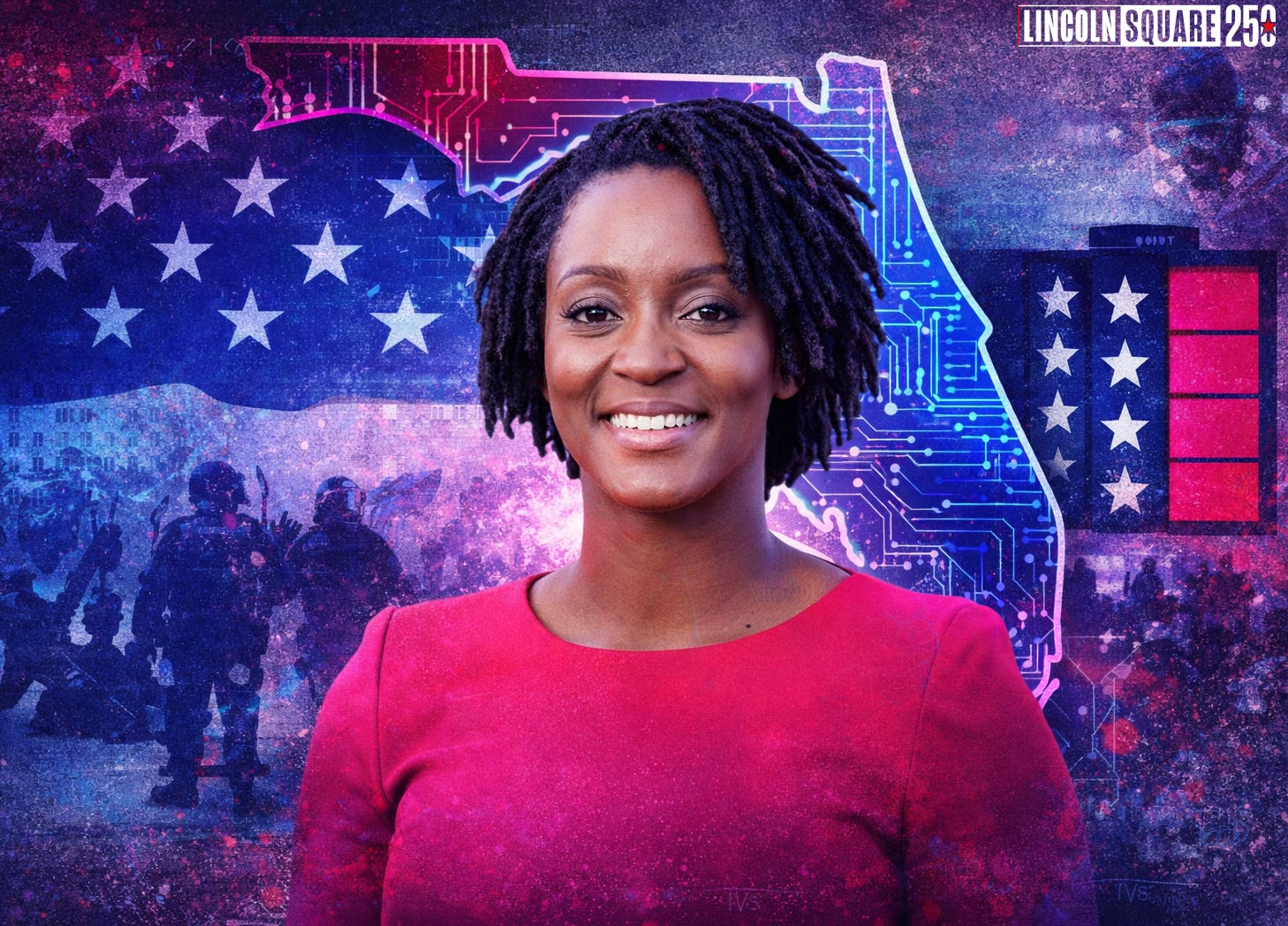
On August 16, Angie Nixon was a Florida state representative most of the country couldn’t have picked out of a lineup. Two days later, she had beaten Alex Vindman—a nationally recognized impeachment witness who outraised her roughly sixteen to one—for the Democratic nomination for U.S. Senate. By August 19th, her phone had become a fire hazard. Every network wanted five minutes with her. That is not a normal post-primary bounce. That is a woman going from national obscurity to the political story of the week in under seventy-two hours.
The problem was that most of those five-minute segments weren’t really about Nixon. They were about finding the appropriate ideological box to stuff her into, and when she refused to climb inside and close the lid herself, several hosts seemed genuinely frustrated.
Start with Gayle King. I want to be specific because I am not accusing King of having some personal problem with Nixon. I am, however, asking whether we should expect more of this kind of media illiteracy once the Paramount/Warner Bros. Discovery merger closes and even more of the news business is consolidated beneath fewer, more risk-averse roofs. If this interview was a preview, somebody may want to add basic research skills to the merger agreement.
On CBS Mornings, King asked Nixon whether she would want Hasan Piker “to campaign with you.” That was a loaded question wearing the cheap disguise of an ordinary one. It only made sense if Nixon already knew Piker, had some relationship with him, or had previously expressed an interest in campaigning alongside him. None of that had been established. The fair question was simple: Do you know Hasan Piker, and would you want him campaigning with you? Instead, King skipped the first half, penciled Piker onto Nixon’s campaign schedule, and asked whether she wanted him on the bus.
King then looked genuinely dumbfounded when Nixon explained that there was no bus, no scheduled campaign appearance, and barely even an acquaintance: “I don’t really know who Mr. Piker is.” Nixon had to correct the premise before she could answer the question, which is usually a sign that the interviewer has done more ideological matchmaking than reporting. Please do better, Gayle. You cannot introduce a woman to Hasan Piker on live television and then ask whether she wants him knocking on doors for her.
King wasn’t done. She warned Nixon that a “socialist message” might not survive the general election because “many people are very frightened of the positions”—Medicare for All, defunding the police, abolishing ICE. Apparently, if you stack enough scary phrases on top of one another and say “socialism” in a grave television voice, you have conducted an ideological examination. Nixon corrected that framing too, arguing that healthcare, housing, and voting rights aren’t frightening socialist abstractions. They are plain descriptions of things human beings need to live with some dignity.
CBS was hardly alone. Days later, Morning Joe ran the same play, asking Nixon whether she supported abolishing prisons—as though every progressive candidate receives a complimentary prison-demolition kit with her DSA membership card. Nixon once again had to correct a premise an interviewer could have checked before airtime: she does not support abolishing prisons. She supports abolishing for-profit prisons, the institutions that turned the school-to-prison pipeline into a business model and human captivity into a quarterly earnings report. That is a rather important distinction, particularly for anyone being paid to ask questions on television.
Nixon handled NBC’s Kristen Welker even more cleanly. Welker asked whether Nixon considered herself a capitalist. Nixon answered immediately: “I live in a capitalistic society. I’m a small business owner. I like to make money. I don’t see what the problem is.” That answer was direct, complete, and delivered in English. I have no problem with journalists asking hard questions; elected officials should face more of them. But a hard question makes a politician explain something difficult. A stupid gotcha question merely keeps returning after it has already been answered, hoping repetition will eventually manufacture a scandal.
Welker nevertheless came back with, “So are you a capitalist?” Nixon had just said she owned a business, liked making money, and lived within capitalism, but apparently Welker needed her to swear on a stack of Forbes magazines before the segment could continue. Nixon still didn’t flinch: “I’m a capitalist who believes that we need some strong regulation.” Two questions, one answer—and considerably more patience than the second question deserved.
